
Receitas fáceis para o backpacker que não abre mão da saúde
The Healthy Eating Every Backpacker Needs to Know
The healthy backpacker recipe guide brings together everything you need to eat well on the trail without weighing down your pack or breaking your budget. Here is a quick summary of essential recipes and strategies:
- Breakfast: muesli with powdered milk, bag omelet, squeeze pancakes
- Lunch: whole-wheat wraps with tuna, powdered hummus, cured cheese
- Dinner: Moroccan couscous (up to 767 kcal in 174g), one-pot pasta, dehydrated lentils
- Snacks: nut mix, peanut butter sachets, dried fruits, coconut chips
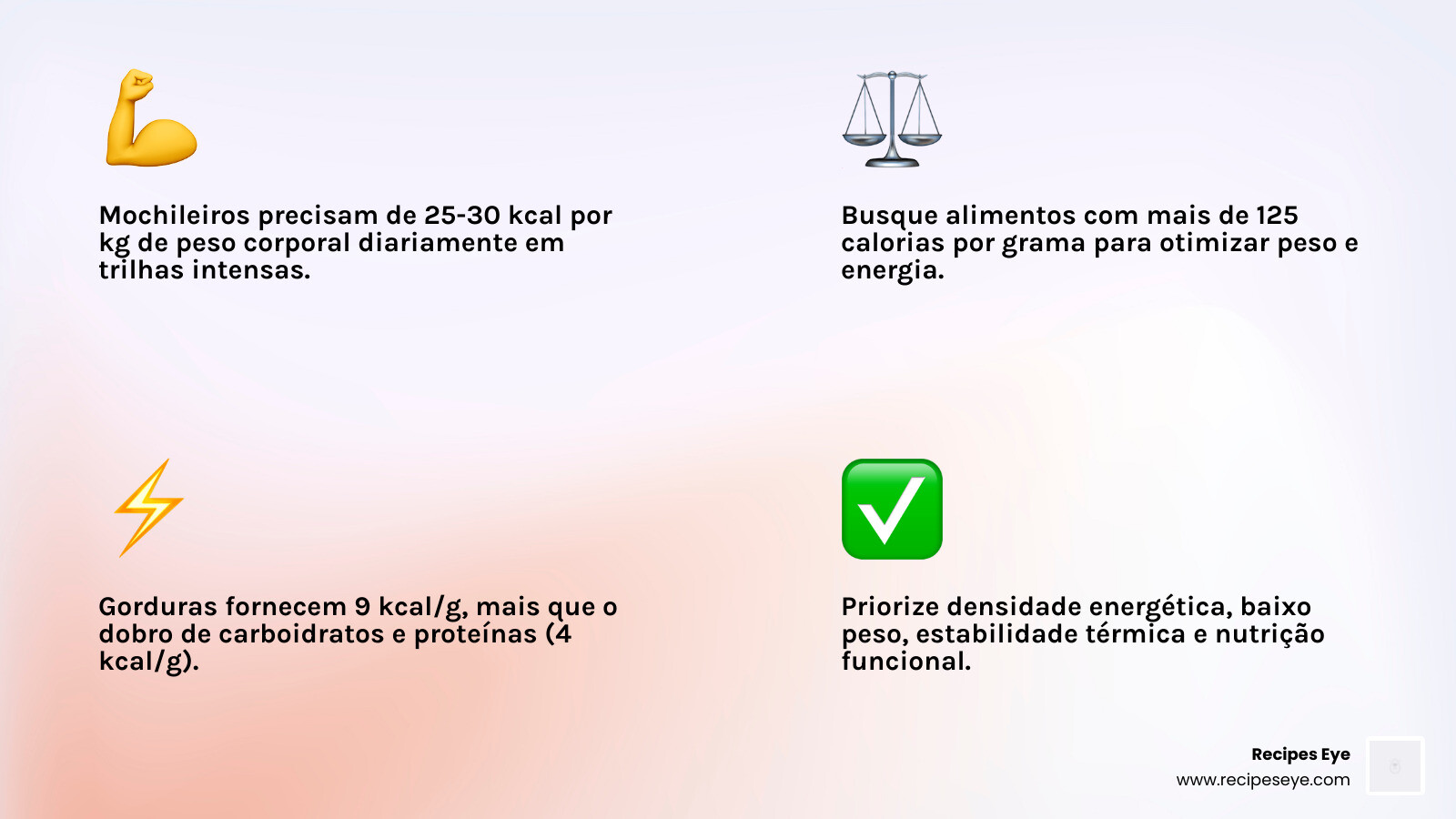
- Caloric goal: 25-30 calories per kg of body weight per day on heavy trails
- Golden rule: look for foods with more than 125 calories per gram to balance weight and energy
Eating well on the trail seems difficult. But it doesn’t have to be.
Most backpackers fall into the same cycle: they carry food that is too heavy, lacks real nutrients, or spend fortunes on ready-made freeze-dried products. The result? Low energy mid-way, a heavy pack on their backs, and wasted money.
The good news is that you can escape this. With simple planning and accessible ingredients, you can put together light, nutritious, and tasty meals — made at home or on the stove, on any trail.
This guide was created for the backpacker on a limited budget who doesn’t want to compromise on health. You will find practical recipes, preservation tips, calorie calculations, and options for different diets — all designed for the reality of the trail, with ingredients you can find in any market.
Principles of the healthy backpacker recipe guide
When we are in the middle of a crossing, every gram in the backpack counts. However, saving weight cannot mean saving on health. The basic principles we follow in our healthy backpacker recipe guide are based on four pillars: energy density, reduced weight, thermal stability, and functional nutrition.
High energy density foods are those that offer many calories in a small volume. Good fats (like olive oil and nuts) are essential here, as they offer 9 kcal per gram, while carbohydrates and proteins offer 4 kcal. To keep the body functioning on strenuous terrain, we need complex carbohydrates that release energy gradually, avoiding blood sugar spikes and crashes.
Furthermore, thermal stability is crucial. Since we won’t always have ice available, we prioritize ingredients that don’t spoil easily in the heat, such as dry grains, dehydrated vegetables, and cured proteins or vacuum-sealed sachets. To discover more about how to combine these ingredients in a delicious way, you can explore RecipesEye Home.
Calorie and macronutrient calculation
Planning the amount of food is not a “guess.” In April 2026, with the advancement of studies on outdoor nutrition, we know that precision avoids both hunger and excess load. The basic calculation we recommend is:
- Intense Trails (heavy backpack, climbs): 25 to 30 calories per kg of body weight per day.
- Short Days or Flat Terrain: 21 to 25 calories per kg of body weight per day.
During the hike, the body burns glycogen quickly. To avoid “hitting the wall” (sudden exhaustion), the ideal is to consume 30 to 60 grams of carbohydrates per hour. Don’t forget electrolyte replacement: sodium, potassium, and magnesium are lost in sweat, and their lack causes cramps and disorientation.
Criteria for choosing ingredients
When selecting what goes into the pot, we apply a rigorous filter:
- Shelf life: Does the ingredient last 3 to 5 days without refrigeration?
- Cooking Time: The less time on the fire, the less gas you carry. Thin pasta and couscous are better than regular brown rice.
- Volume: Can the food be compressed or removed from bulky original packaging?
- Versatility: Does that seasoning work for both breakfast and dinner?
Essential equipment for the trail kitchen
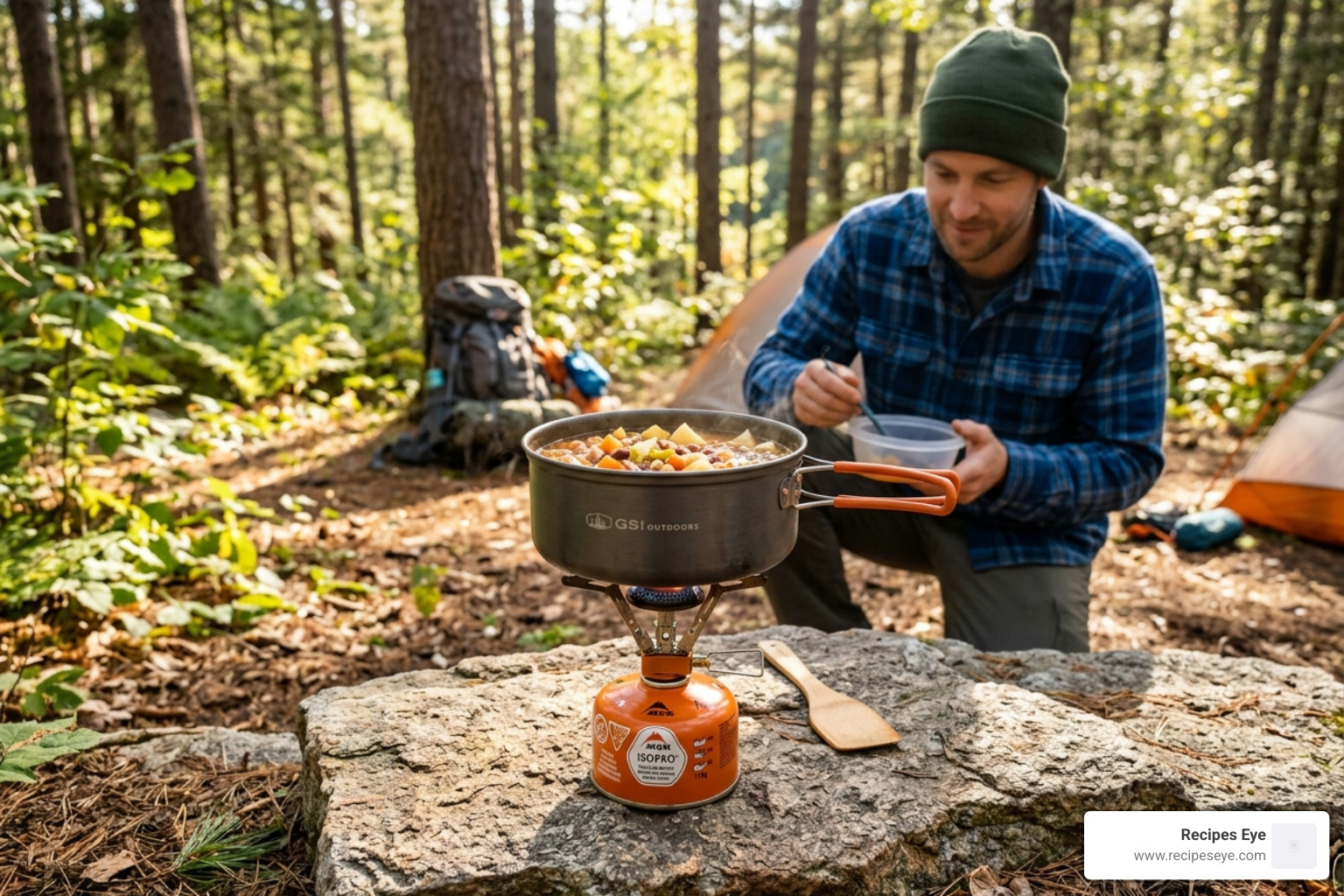
Cooking with an incredible view is a privilege, but the logistics need to be efficient. The basic kit for a conscious backpacker includes a portable stove (preferably isobutane/propane gas for practicality), aluminum or titanium pots, and a windbreak to save fuel.
In our experience, ultralight polycarbonate or titanium cutlery is the best. A golden tip: spoons are much more versatile than forks on the trail. If you have to choose only one, go with a spoon (or a spork). To better understand the technical choice of items, check out this guide on Cozinha de Mochileiro – equipamentos e dicas – A Natureza Humana.
Organization and intelligent storage
We have abolished original packaging. It takes up space and generates unnecessary waste. The secret lies in high-quality zip-lock bags, which can be reused. For fresh items or those that need to breathe a bit more, Bee’s wrap (fabric with beeswax) is a fantastic ecological alternative to plastic wrap or aluminum foil.
Small reusable jars are ideal for olive oil, salt, and seasonings. Mark everything with masking tape so you don’t confuse salt with sugar at breakfast time!
Food preservation in varied climates
If you are at a fixed campsite, coolers and ice are viable. However, on an itinerant backpacking trip, the technique is insulation. Wrapping sensitive foods in extra clothes in the center of the backpack helps keep the temperature stable for longer.
The food safety rule is clear: always separate raw from cooked foods and consume the “moister” proteins (like a cooked chicken brought from home) on the first day. In hot climates, focus almost 100% on dehydrated foods.
Breakfast and snacks in the healthy backpacker recipe guide
Breakfast is the fuel for the first hours of climbing. We like to start with something that doesn’t require washing many dishes.
- Bag omelet: Mix eggs, cheese, and vegetables in a heat-resistant zip-lock bag. Place in boiling water for a few minutes. The result is a perfect omelet and a clean pot (since you only used the water).
- Squeeze pancakes: Prepare the batter at home and put it in a “squeeze” type plastic bottle. On the trail, just pour it into a greased skillet.
- Muesli with powdered milk: A classic and nutritious option. Use whole powdered milk for more calories and add chia or flax seeds.
Quick snacks to maintain energy
Don’t wait to be hungry to eat. The concept of a “mobile banquet” means eating small portions throughout the day.
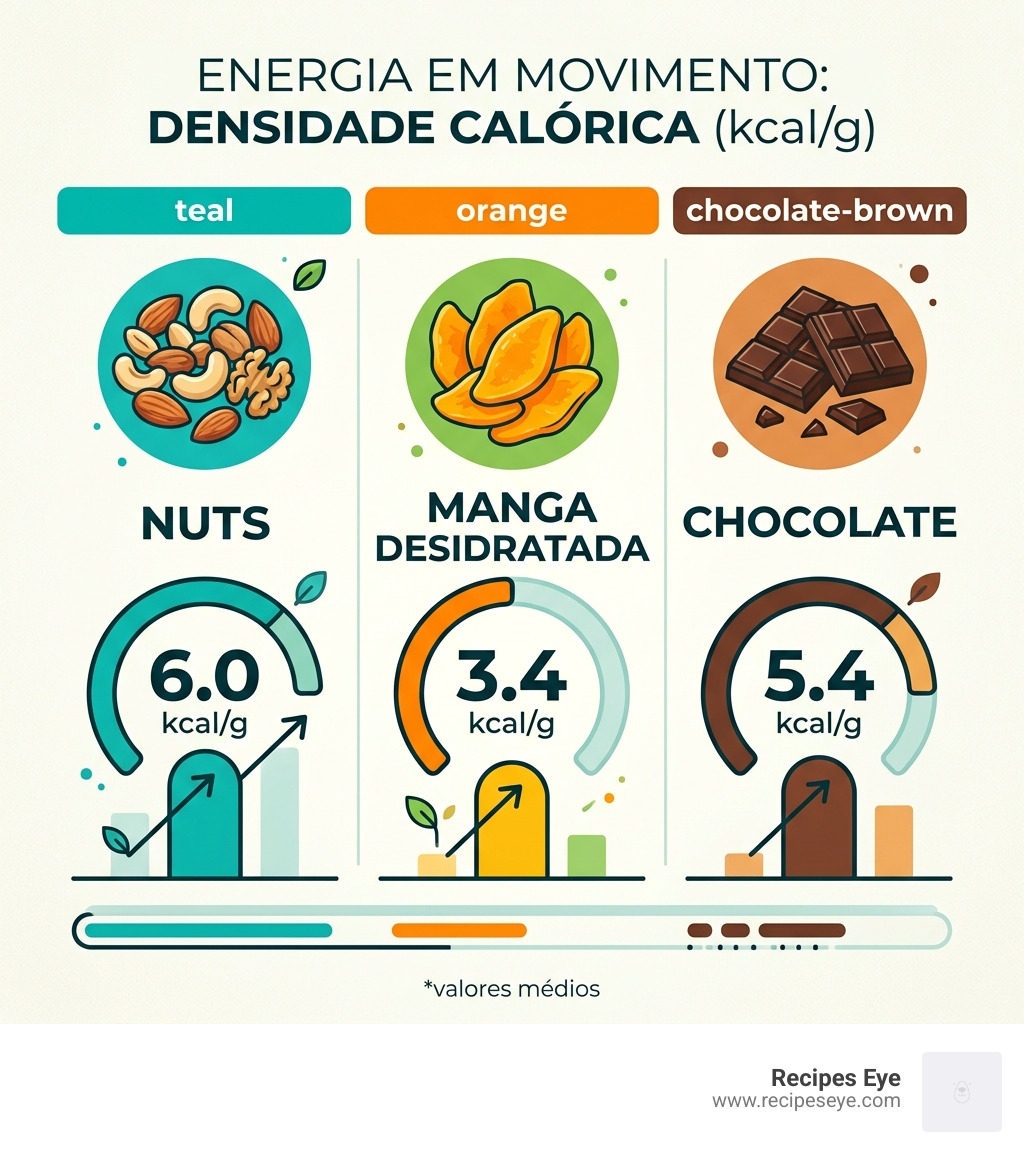
Mix of nuts, sunflower seeds, and coconut chips are unbeatable. Peanut butter in individual sachets is a healthy energy “bomb” that can be consumed even while walking. For more practical snack ideas, see these 63 ideias fáceis de comida para mochilas {2024} | Fresco fora da rede – Mochilão.
No-cook lunch options
Cooking at noon can be discouraging if the sun is strong or the clock is tight. Whole-wheat wraps are the perfect base: they are sturdy, take up little space, and don’t squash like bread. Fill with tuna in a sachet (lighter than a can), powdered hummus rehydrated on the spot, or cured cheeses (like parmesan or provolone), which hold up well out of the fridge.
Nutritious dinners in the healthy backpacker recipe guide
Dinner is the time for recovery. It’s when the body needs protein to repair muscles and carbohydrates to replenish energy stores.
Moroccan couscous is the king of trail cooking because it doesn’t need cooking — just hydrate with boiling water for 5 minutes. Other excellent options are one-pot pasta (where the sauce and pasta cook together to save water and gas) and instant polenta.
DIY Recipe: 767 kcal UltraLight Couscous
This is our “golden recipe.” It delivers an incredible caloric density of 4.4 kcal/g, weighing only 174g in total.
Ingredients (pre-packaged at home):
- 100g Moroccan couscous
- 30g dehydrated chicken (or chicken bologna baked in an air fryer until dry)
- 20g grated parmesan cheese
- 15g mix of seeds and dried vegetables
- Powdered seasonings (onion, garlic, salt) and a drizzle of olive oil
Preparation on the trail: Boil about 150ml of water. Pour over the couscous and vegetable mixture. Close the pot and wait 5 minutes. Add the cheese and olive oil on top, mix, and enjoy. It is a complete, light, and powerful meal.
Adaptations for restrictive diets
Maintaining a specific diet on the trail only requires a bit more planning:
- Vegans: Replace animal proteins with dehydrated lentils, fine textured soy protein, or hemp seeds. Powdered coconut milk is an excellent caloric substitute for cow’s milk.
- Gluten-Free: Flaked quinoa and polenta are your best friends. Corn couscous (Brazilian style) also works, but requires a bit more cooking time than Moroccan couscous.
Consult more healthy recipes to adapt your menu.
Economic planning and conservation
Backpacking doesn’t have to be expensive. Instead of buying imported freeze-dried meals, which cost a fortune, we recommend home dehydration. If you don’t have a dehydrator, your home oven at minimum temperature with the door slightly ajar can work for vegetables and lean meats.

Buying in bulk at local markets and supporting small producers along the trail ensures fresher food and helps the local economy. This is what we call conscious gastronomy.
Common errors and how to avoid them
- Excess weight: Don’t carry the whole tin of preserves. Transfer to bags or buy sachets.
- Lack of seasoning: Trail food without salt or pepper is sad. Carry a “survival kit” of seasonings.
- Not enough water: Dehydrated foods need water to be consumed. Calculate drinking water consumption including meal preparation.
- Fuel waste: Always cook with a lid and use a windbreak.
Packaging tips for prolonged freshness
For trips longer than 5 days, use manual vacuum: put the food in the zip-lock, close it almost all the way, insert a straw, suck out the air, and close quickly. This slows down oxidation. Oxygen absorbers (those silica-like packets, but specific for food) also help keep everything crunchy for weeks.
Frequently Asked Questions about the Recipe Guide
How to calculate the amount of food for 5 days?
Multiply your daily caloric goal (e.g., 2500 kcal) by 5. Divide this into daily portions and organize them in separate bags by day. This prevents you from eating the fifth day’s food on the second day due to anxiety or excessive hunger.
Which foods last longest without refrigeration?
Dry grains (rice, lentils, couscous), pasta, dried fruits, nuts, cured meats (salami, jerky), hard cheeses (parmesan), and eggs (if the climate is not extreme and the shell is intact).
Is it possible to maintain a vegan diet on long trails?
Absolutely! A vegan diet is naturally lighter and has a longer shelf life, as it doesn’t involve dairy or meats that spoil quickly. The secret is to focus on dehydrated legumes and plant-based fats like seeds and oils.
Conclusion
In our healthy backpacker recipe guide, we have shown that adventure and good food can (and should) go hand in hand. Eating well is not just a matter of pleasure, but of safety and performance for those who live the adventurous lifestyle.
When planning your next expeditions for April 2026, sustainability on the trail starts with what we put in our backpacks. Less waste, more nutrients, and respect for local producers transform any hike into a journey of conscious gastronomy.
We at Recipes Eye believe that every outdoor meal is an opportunity to celebrate nature. Prepare your stove, choose your ingredients, and we’ll see you at the top! For more inspiration, visit RecipesEye Home.

