
Arroz de Pato para quem não quer pagar o pato
The Portuguese Dish That’s Worth Every Minute in the Kitchen
Arroz de pato is one of the most beloved dishes in Portuguese cuisine — rice cooked in duck broth, mixed with shredded meat and chouriço, and then baked in the oven until golden and crispy on top.
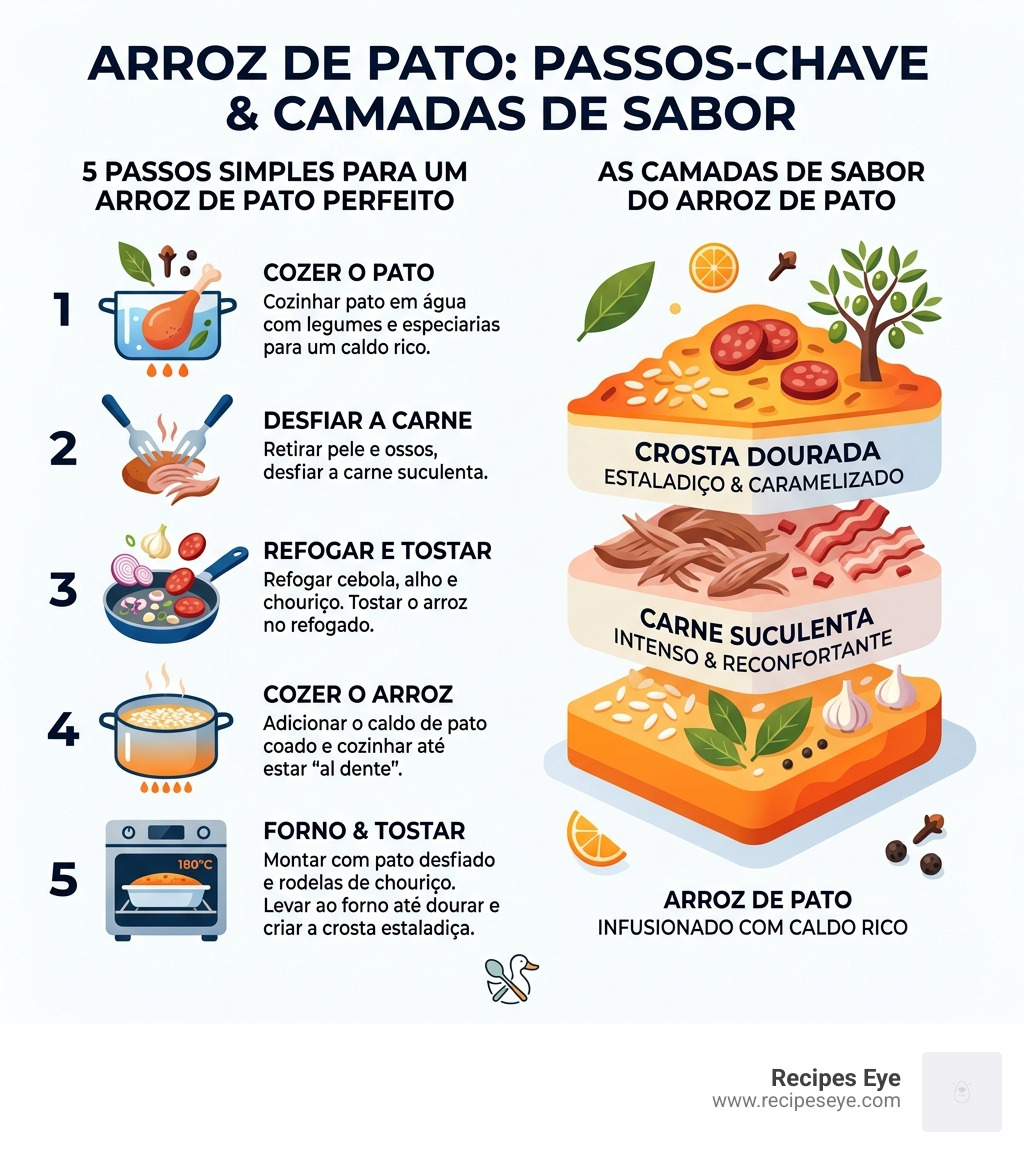
If you want to make duck rice at home, here is the quick summary:
- Boil the duck in water with vegetables and spices to make a rich broth.
- Shred the meat and set the broth aside.
- Sauté onion, garlic, and chouriço, then toast the rice in the same pan.
- Cook the rice in the duck broth for about 10-15 minutes.
- Bake at 180°C for 20-25 minutes until golden on top.
Portuguese people eat an average of 17 kg of rice per year — four times more than other Europeans. This is no coincidence. Rice is the heart of many traditional dishes, and duck rice is, for many, the most special of all.
It is the dish for Sunday family lunches. It is what appears at celebrations, birthdays, and gatherings that stay in memory.
And the good news? With the right recipe and some simple tips, you can make it at home — without spending a fortune or spending the whole day in the kitchen.
The Origin and Tradition of Arroz de Pato
To understand arroz de pato, we need to travel through time and space. Although it is a pillar of national gastronomy today, its history is a tapestry of cultural influences. It is believed that the dish has deep roots in northern Portugal, specifically in the city of Braga, where it is known as “Arroz de Pato à Moda de Braga”. However, the Alentejo region also claims a strong connection to this delicacy, often adapting it with its intense-flavored local sausages.
The introduction of rice to the Iberian Peninsula is due to the Moors, who brought the grain from North Africa over a thousand years ago. Interestingly, rice production in Portugal faced historical challenges; it was even banned due to malaria risks in swampy areas, only being rehabilitated in the 19th century. Since then, the Portuguese love for this cereal has only grown. As we have seen, the average consumption of 17 kg per person is impressive.
In April 2026, arroz de pato continues to be one of the most resilient comfort food trends. It is the dish that defines Sunday lunch. It is not just a meal; it is a ritual. It involves the aroma of chouriço frying, the steam of the broth reducing, and the expectation of seeing that golden crust come out of the oven. For those who want to explore more about the roots of this dish, Arroz de pato (Portuguese duck rice) – Caroline’s Cooking offers an excellent insight into its global popularity.
Differences between Portuguese and Peruvian Duck Rice
Often, when searching for this dish, we come across “Arroz con Pato”. Although the names are almost identical, the sensory experiences are worlds apart. Arroz con Pato is a gem of Chiclayo gastronomy in northern Peru and reflects the vibrant mountain and coastal culinary culture of that region.
Below, we have prepared a comparison so you never confuse them again:
| Characteristic | Arroz de Pato (Portuguese) | Arroz con Pato (Peruvian) |
|---|---|---|
| Rice Grain | Carolino or Agulha (focus on broth absorption) | Long-grain rice (often “arroz flor”) |
| Dominant Color | Golden/Brown (from the oven and sausages) | Vibrant green (from intensive use of cilantro) |
| Cooking Liquid | Rich duck broth and Port Wine | Dark beer, Pisco, and duck broth |
| Key Spices | Cloves, bay leaf, and black pepper | Yellow ají, mirasol ají, and cilantro |
| Finishing | Oven-baked to create a crust and decorated with chouriço | Stewed in the pot, served with Salsa Criolla |
While the Portuguese version focuses on comfort and the richness of the fats from the sausages, the Peruvian version is an explosion of freshness and acidity, where the duck is often marinated in beer for at least 8 hours to ensure a deep infusion of flavor.
Essential Ingredients for a Nutritious Arroz de Pato
At Recipes Eye, we believe that the secret to an incredible dish starts with the quality of the ingredients. For an arroz de pato that is both delicious and nutritious, we need to choose wisely.
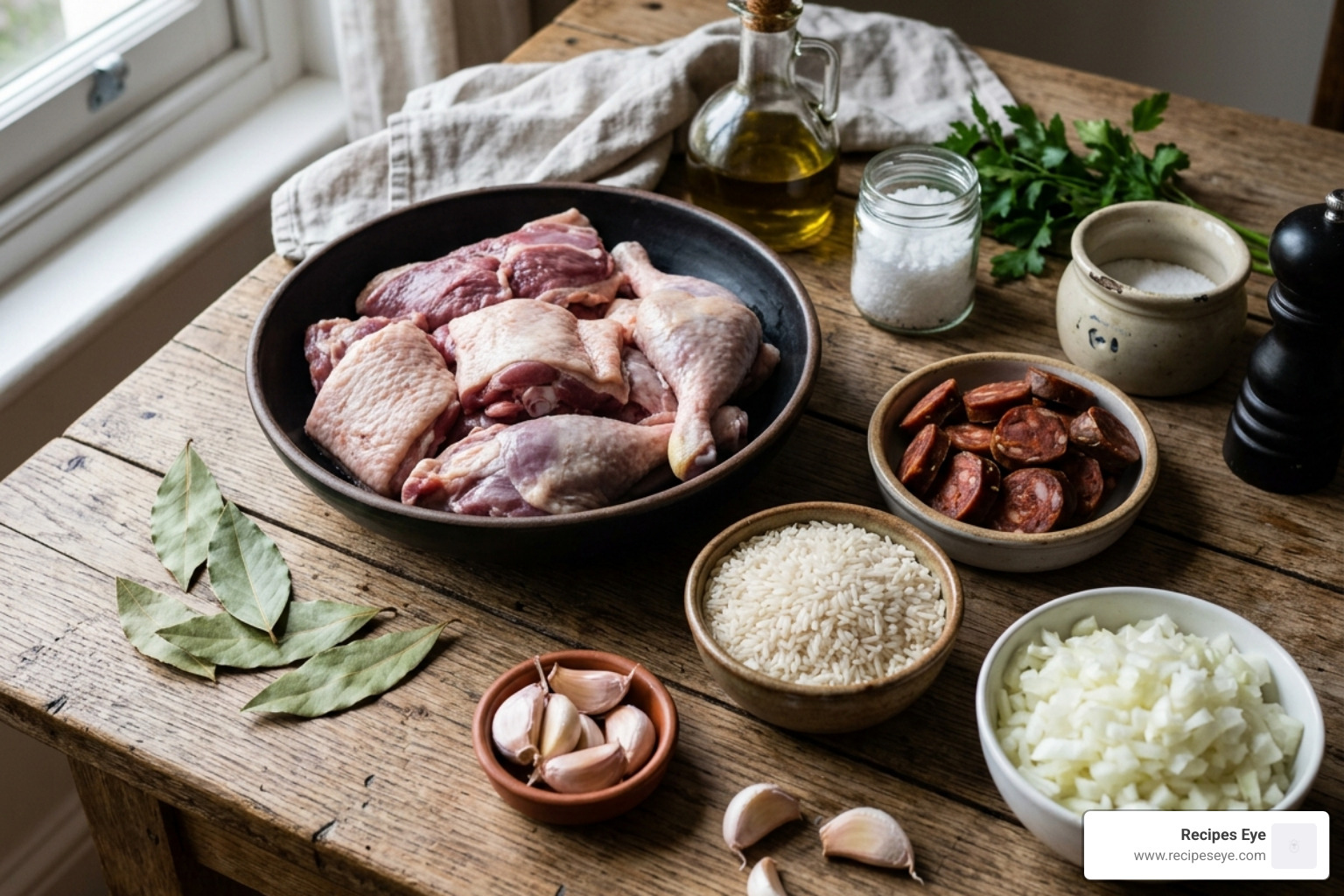
- The Duck: Ideally, use a whole duck. Duck fat is rich in monounsaturated fatty acids (similar to those in olive oil), which makes it a healthier option than other animal fats if consumed in moderation.
- The Rice:
- Carolino Rice: It is preferred for those who like rice that absorbs all the flavor of the broth and becomes creamier.
- Agulha Rice: Ideal for those who prefer “loose rice”.
- Sausages: Meat chouriço and smoked bacon are fundamental for the characteristic “smoky” flavor. If you want a lighter version, opt for artisanal versions with fewer preservatives.
- Aromatics: Onion, garlic, carrot, and leek for the broth. Don’t forget the orange peel — the citrus touch masterfully cuts through the richness of the duck meat.
- Port Wine: A small glass adds a depth of flavor that common white wine cannot achieve.
Step-by-Step: How to Make the Best Arroz de Pato
Making an authentic arroz de pato requires patience, but the process is logically structured. Follow this guide to ensure your rice doesn’t turn out dry or bland.
1. Preparation of the Duck and Broth
Start by boiling the duck in plenty of water with salt, pepper, cloves, bay leaf, carrot, and a whole onion. Let it cook until the meat easily falls off the bone (about 1h to 1h15m). Golden Tip: Remove the duck and let the broth cool. If you have time, place the broth in the refrigerator; the fat will solidify on top, allowing you to remove the excess and make the dish lighter and more digestible.
2. Shredding with Care
Remove the skin and bones. Shred the duck into generous pieces. Do not shred too finely so it doesn’t “disappear” into the rice.
3. The “Estrugido” Technique and Toasting
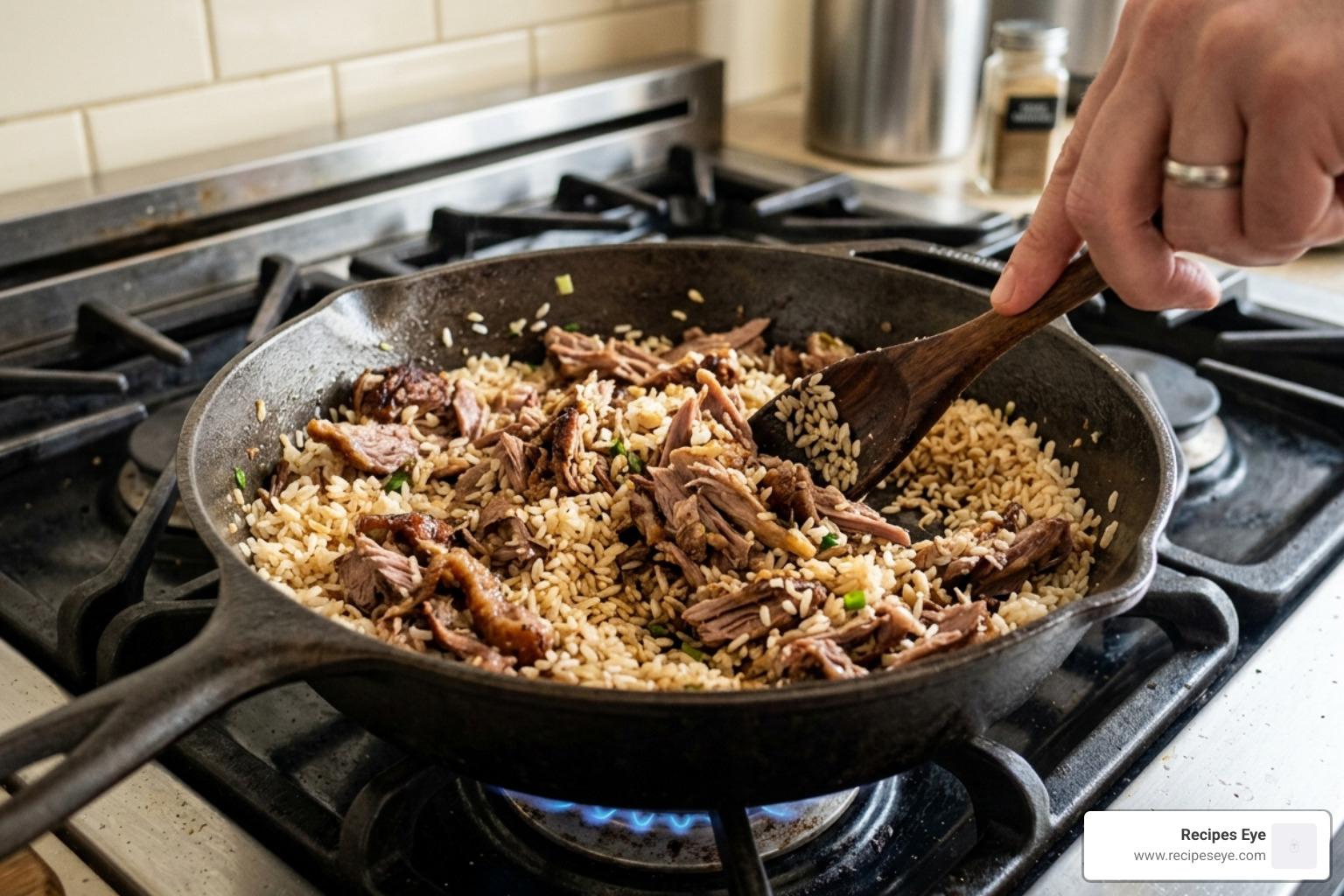
In a wide pot, sauté chopped onion and garlic with chouriço slices and bacon cubes. Here comes the chefs’ secret: add the raw rice to this sauté and let it fry for 2 to 3 minutes, stirring constantly. This seals the grain and ensures it absorbs the flavor without becoming mushy.
4. Cooking and Assembly
Add the hot duck broth (the ratio is usually 2 parts broth to 1 part rice). Add the shredded meat and mix. Let it cook over low heat until the rice is almost cooked but still has some liquid.
5. The Final Touch: The Oven
Transfer everything to a clay baking dish. Decorate the top with chouriço slices and bacon strips. For a professional finish, brush the top with a beaten egg yolk. Bake in a preheated oven at 180°C until the top is well-browned and crispy.
Chef’s Tips for Incomparable Texture and Flavor
Want to elevate your arroz de pato to the level of a Michelin restaurant? Here are the secrets that rarely appear in basic recipes:
- The Maillard Reaction: Before boiling the duck in water, try roasting the pieces in the oven at 220°C for 20 minutes. This caramelizes the meat and bones, creating a broth with a much more intense color and flavor.
- Necessary Acidity: Duck is a fatty meat. Adding a bit of fresh orange juice to the rice before it goes into the oven helps balance the palate and brings an unexpected freshness.
- Managing Sausages: If using farinheira, do not boil it in the broth, as it will fall apart. Fry it separately and place it on top only during the oven stage.
- Broth Ratio: For a “malandrinho” rice (moister), use 3 parts broth. For the traditional oven-baked version, a ratio of 1:2 or 1:2.5 is ideal to allow the rice to dry slightly and gain texture.
Frequently Asked Questions about Arroz de Pato
What is the best rice to use for duck rice?
It depends on your texture preference. Carolino Rice is the most traditional in Portugal because it has a high absorption capacity, making the dish richer and more cohesive. However, if you prefer each grain to be separate and firm, Agulha Rice (long grain) is the right choice. Avoid parboiled rice, as it does not absorb the flavors of the broth in the same way.
How to make duck rice loose and golden?
The secret to the golden appearance is twofold: first, toasting the raw rice in the sauté (estrugido) and, second, finishing it in the oven. Using an egg yolk brushed on top before baking creates that golden, shiny film we all love. To keep it loose, control the amount of broth and do not stir the rice too much while it cooks.
Can I freeze duck rice?
Yes! Arroz de pato freezes very well. We recommend placing it in an airtight container as soon as it cools. It can be kept in the freezer for up to 3 months. To reheat, the ideal way is to use the oven with a little extra broth or water on top to return moisture to the rice, preventing it from becoming dry. In the refrigerator, it keeps perfectly for 2 to 3 days.
Conclusion
Arroz de pato is more than a recipe; it is a celebration of patience and good ingredients. At Recipes Eye, we believe that cooking at home is the first step toward a more balanced and happy life. By preparing this classic, you are honoring a thousand-year-old tradition while creating new memories around the table.
If you enjoyed this detailed guide, we invite you to explore other ways to make your kitchen richer and more nutritious. After all, eating well is one of life’s greatest pleasures, especially when the result is a dish as comforting as this.
Discover more nutritious recipes

