
Refeições nutritivas low budget para viajantes econômicos
Why Eating Well on the Trail Doesn’t Have to Be Expensive
Pratos saudáveis para backpackers are lightweight, calorie-dense, and easy-to-prepare meals — and the best options cost much less than you think.
If you want a quick answer, here are the top 5 options:
| Recipe | Calories | Dry Weight | Estimated Cost |
|---|---|---|---|
| UltraLight Couscous | 767 kcal | 174g | Low |
| Peanut Lime Noodles | 716 kcal | ~156g | Low |
| Quinoa Burrito Bowl | 663 kcal | ~126g | Medium |
| Revamped Soba Ramen | 688 kcal | ~131g | Low |
| No-Cook Yogurt Parfait | 313 kcal | 61g | Low |
Maintaining a healthy diet during a backpacking trip is challenging. The temptation to rely on processed snacks is high, and ready-made trail options are often expensive.
But the reality is simple: your body needs quality fuel to endure hours of hiking. A poor meal means less energy, less focus, and less enjoyment of the adventure.
The good news? With common grocery store ingredients — like Moroccan couscous, instant noodles, peanut butter, and freeze-dried yogurt — you can assemble meals with over 700 calories in less than 200g of weight, spending much less than commercial trail products.
You will find 6 practical and economical recipes, with nutritional tables, storage tips, and step-by-step instructions to prepare before and during the trail.
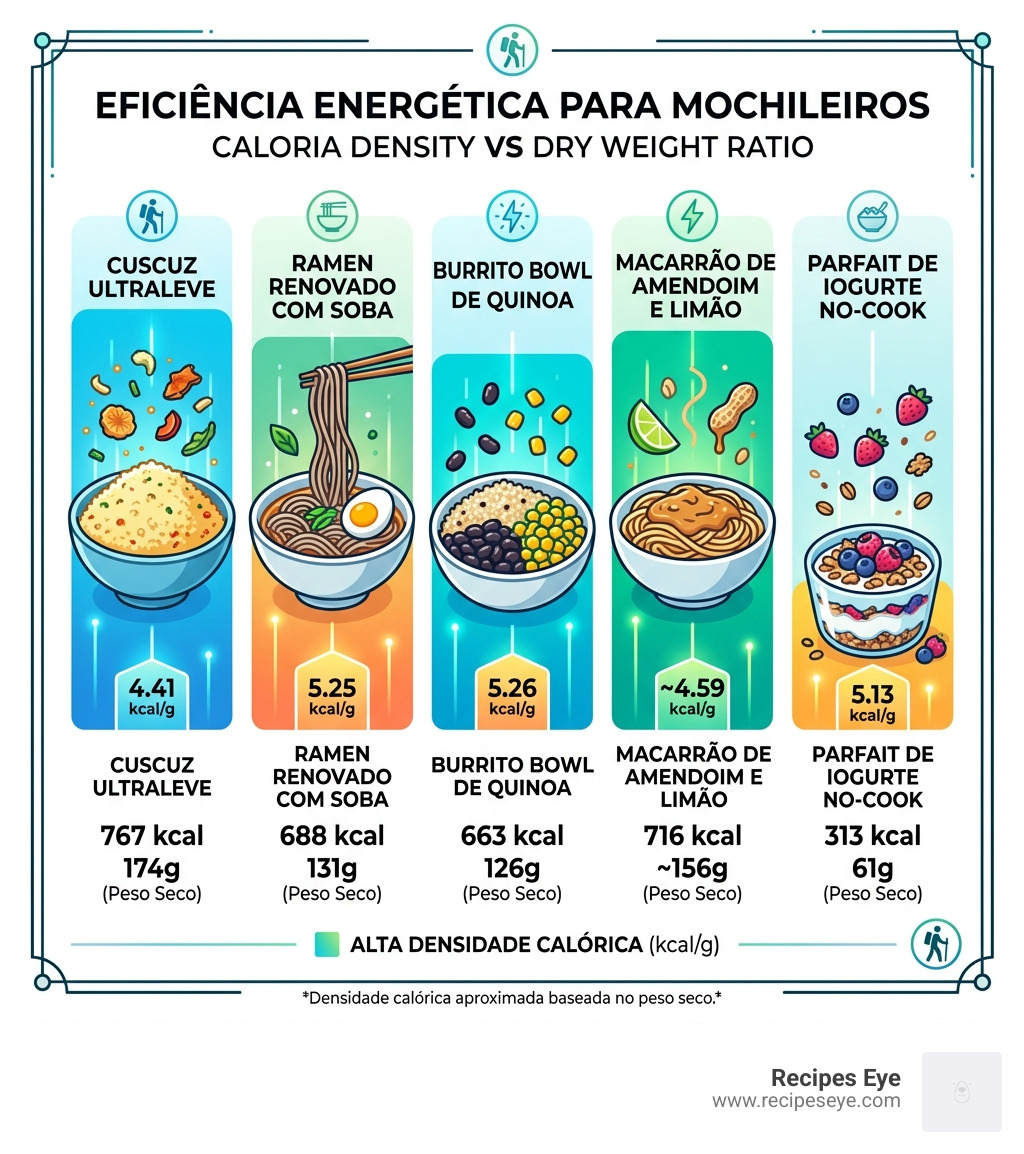
What defines the best pratos saudáveis para backpackers?
When we are in the middle of a trail in April 2026, our kitchen is limited and our body is the engine. Therefore, we cannot choose just any food. The best pratos saudáveis para backpackers must meet rigorous efficiency criteria.
The main concept here is caloric density. On average, we look for meals that offer about 130 cal/oz (calories per ounce) or around 4 to 5 kcal per gram. Why does this matter? Because every extra gram in the backpack takes its toll on your knees and back at the end of the day.
In addition to calories, the balance of macronutrients is vital:
- Complex Carbohydrates: These are our main source of energy. They ensure you don’t “bonk” in the middle of a climb.
- Healthy Fats: These are energy-dense and help with prolonged satiety.
- Proteins: Essential for muscle recovery after miles of effort.
Research on outdoor nutrition, such as general guidance on hiking and endurance activity, indicates that a hiker in intense activity can burn between 3,000 and 6,000 calories per day. Relying only on nutrient-empty instant noodles can lead to chronic fatigue. That’s why we focus on ingredients that keep dry weight low but nutritional value high.
Top 5 Economical and Nutritious Recipes for the Trail
Preparing your own food at home before hitting the road is the secret to saving money. Forget the expensive freeze-dried meal pouches from famous brands. With grocery store ingredients, you can create mountain-worthy feasts.
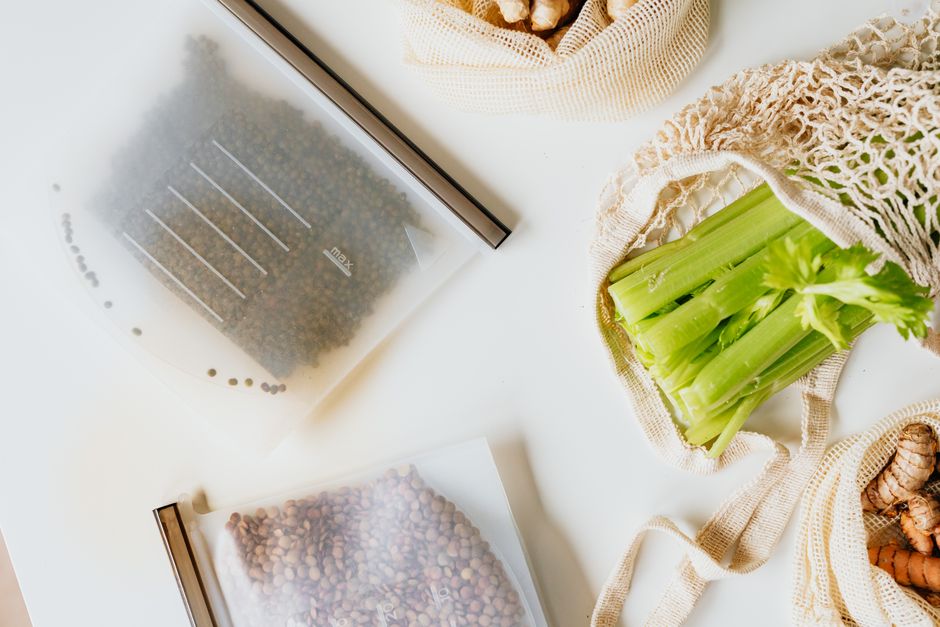
Below, we compare our favorite recipes to help you plan your 2026 menu:
| Recipe | Protein | Fat | Carbs | Trail Prep Time |
|---|---|---|---|---|
| UltraLight Couscous | 33g | 40g | 66g | 5 min |
| Peanut Noodles | 18g | 35g | 86g | 7 min |
| Quinoa Burrito | 23g | 21g | 95g | 15 min |
| Revamped Ramen | 20g+ | 12g | 75g | 12 min |
| Yogurt Parfait | 9g | 2g | 62g | 5 min |
UltraLight Couscous: The King of Caloric Density
This is undoubtedly one of our most efficient recipes. Moroccan couscous is a backpacker’s best friend because it doesn’t require prolonged cooking — just hydrate it with hot water.
With an impressive 767 kcal in just 174g, this dish offers a density of 4.4 kcal/g. We use chicken mortadella (prepared in an air fryer to make it crispy and shelf-stable), seeds, and dehydrated vegetables to ensure texture and flavor. It’s a meal that “wakes up the dead,” as we say among adventure friends.
Pratos saudáveis para backpackers: Peanut Lime Noodles
If you like Asian flavors, this Pad Thai-inspired recipe is perfect. With 716 calories, it combines soba noodles (buckwheat noodles, which are more nutritious) with a creamy peanut butter base.
The secret here is using “True Lime” packets (crystallized lime) or lime juice powder, which provides the necessary acidity without the weight of fresh fruit. Peanut butter ensures a caloric density of 130 cal/oz, making it one of the most flavorful and energetic pratos saudáveis para backpackers in our repertoire. And the best part: you don’t need a dehydrator for this one!
Dehydrated Quinoa Burrito Bowl (Vegan Option)
For those seeking satiety and plant-based nutrition, the Quinoa Burrito Bowl is unbeatable. With 663 calories and 23g of protein, it uses black beans, tomatoes, and quinoa — a complete superfood.
Unlike rice, quinoa cooks quickly and dehydrates very well. By adding olive oil and some tortilla chips at mealtime, you elevate the experience to a “trail party.” It’s a meal that fights the flavor monotony common on long trips.
Revamped Ramen with Soba and Extra Protein
Forget college ramen. Our revamped version has 688 calories and focuses on health. We swap white flour noodles for soba noodles and throw away that pure sodium packet.
Instead, we use freeze-dried vegetables, dried shiitake mushrooms, and chopped beef jerky. The result is a broth rich in umami that warms the soul after a rainy day. Preparation takes only 12 minutes and uses little fuel, which is essential for those traveling on a tight budget.
Pratos saudáveis para backpackers: “No-Cook” Yogurt Parfait
Who said trail breakfast has to be just oatmeal? The Yogurt Parfait is a refreshing and ultralight option (only 61g dry weight).
We use freeze-dried yogurt (those baby snacks that melt in your mouth) crushed into powder. On the trail, just add cold water, mix with crunchy granola and dried fruits. With 313 calories, it’s the ideal fuel to start the day without needing to light the stove.
Logistics and Safety: Dehydration and Backpack Storage
To ensure your pratos saudáveis para backpackers last the entire trip, correct storage is fundamental.
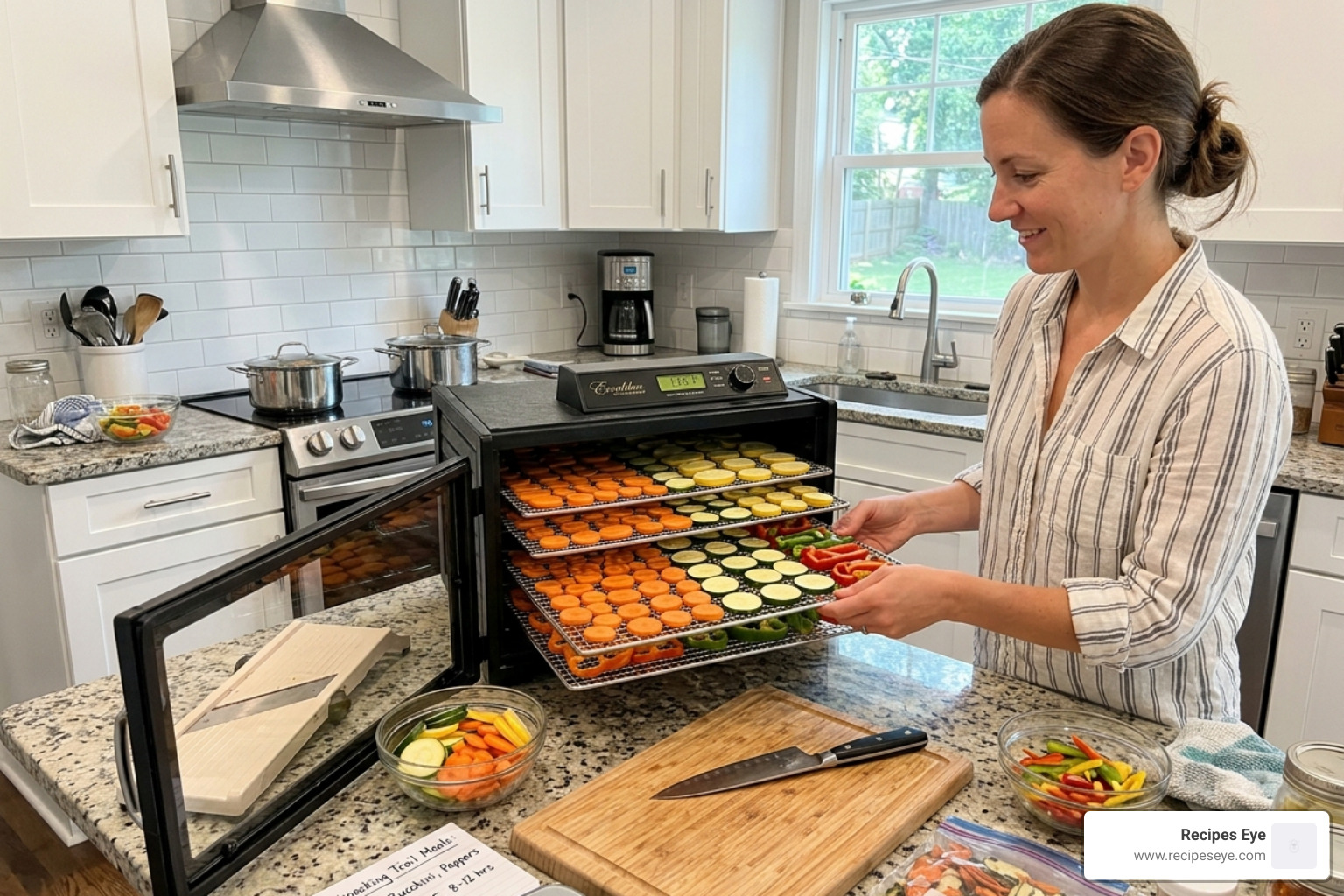
Home Dehydration
If you have a dehydrator, the golden rule is: 125°F (about 52°C) for vegetables and grains for 8 to 10 hours. Make sure everything is completely dry and brittle before packing. If you don’t have the appliance, many of the recipes above can be assembled with pre-dried ingredients bought at the market.
Packaging and Organization
- Zip Lock Bags: They are lightweight and allow you to add hot water directly to them (if they are high quality and BPA-free).
- Vacuum Sealing: For multi-day trips in 2026, vacuum sealing protects against moisture and oxidation, maintaining flavor for months.
- Pot Cozy: Use a thermal insulator for your pot or food bag. This keeps the heat in during rehydration, saving your precious gas.
Safety and Ethics (Leave No Trace)
Never discard cooking water in rivers or water sources. Drink the excess water (which is full of nutrients and calories!) or discard it in a 6-inch deep hole, far from campsites. Keep your food protected from animals using bear bags or hard containers if the region requires it.
Tips for Maximizing Nutrition on a Reduced Budget
Traveling as a backpacker requires financial intelligence. Here are some strategies to keep your pratos saudáveis para backpackers cheap:
- Bulk Buying: Grains like quinoa, couscous, and lentils are much cheaper when bought in bulk at natural food stores.
- Powdered Eggs and Olive Oil: Powdered eggs (like OvaEasy) are incredible protein sources. Olive oil is the ultimate “hack”: carry a small bottle and add a tablespoon to each meal for an instant 120 extra calories.
- Homemade Seasonings: Don’t buy pre-made mixes. Carry salt, pepper, garlic powder, and cumin in small tubes. Homemade flavor makes all the difference in team morale.
For more ideas on how to transform simple ingredients into incredible meals, you can check out More info about healthy recipes.
Frequently Asked Questions about Trail Food
How to ensure enough protein in vegan diets on the trail?
The combination of cereals and legumes is key. Quinoa with beans, or rice with lentils, offers all essential amino acids. Additionally, hemp seeds, chia, and peanut butter are excellent protein supplements that don’t weigh down the backpack.
What is the shelf life of artisanally dehydrated meals?
If well-dehydrated and stored in a cool, dry, and dark place, they easily last 6 months to 1 year. To ensure maximum freshness for your 2026 adventures, try to consume within 6 months. If there is meat or fat in the mix, the shelf life is shorter, which is why vacuum sealing is recommended.
How much water and fuel should I plan per meal?
Most of our pratos saudáveis para backpackers recipes use between 1 to 2 cups of water (250-500ml). In terms of fuel, if you use a pot cozy and only boil the water (instead of cooking the food over the flame), a small 100g canister can last up to a week for one person.
Conclusion
Eating well during a backpacking trip is not a luxury; it is a strategic necessity. By preparing your own pratos saudáveis para backpackers, you take control of your nutrition, save money, and ensure meals that are much tastier than any industrial option.
Whether it’s the robust UltraLight Couscous or the comforting Soba Ramen, planning is what separates an exhausting trail from an unforgettable adventure. In 2026, Recipes Eye remains committed to helping you explore the world with energy and health.
Pack your bag, choose your favorite recipe, and enjoy the journey! To discover more secrets of nutritious cooking, visit More info about nutritious meals.

