
Como fazer barras energéticas saudáveis e baratas
What are homemade energy bars and why make them at home?
Homemade energy bars are one of the simplest and cheapest ways to have a healthy snack always at hand — and making them at home is much easier than it seems.
Quick answer — how to make homemade energy bars:
- Choose the base — oats, dates, nuts, or puffed rice
- Add a binder — peanut butter, honey, or agave syrup
- Mix the ingredients — by hand or in a food processor
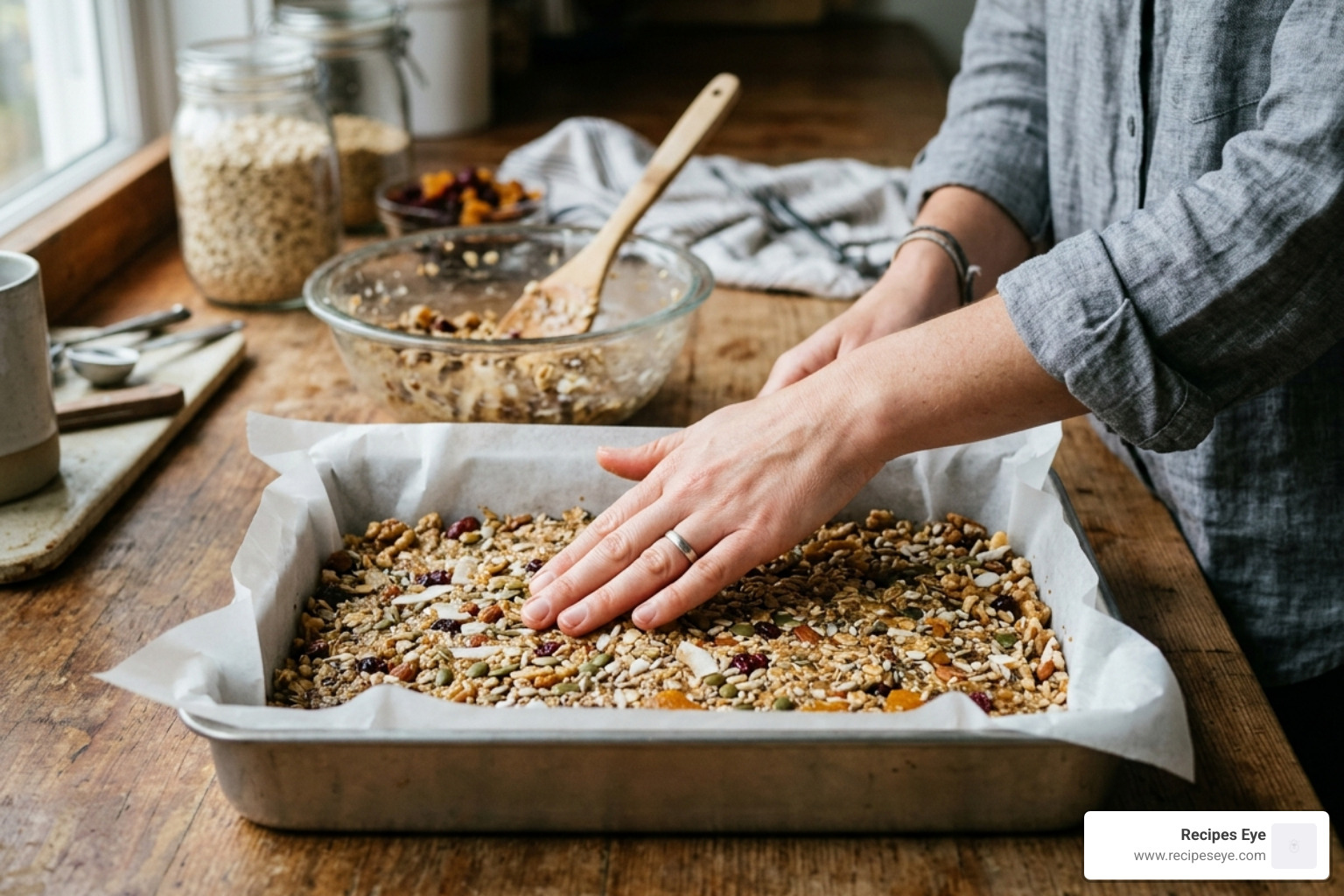
- Press into a mold lined with parchment paper
- Bake (about 15 min at 180°C) or refrigerate (minimum 2 hours) for no-bake recipes
- Cut into bars after cooling completely
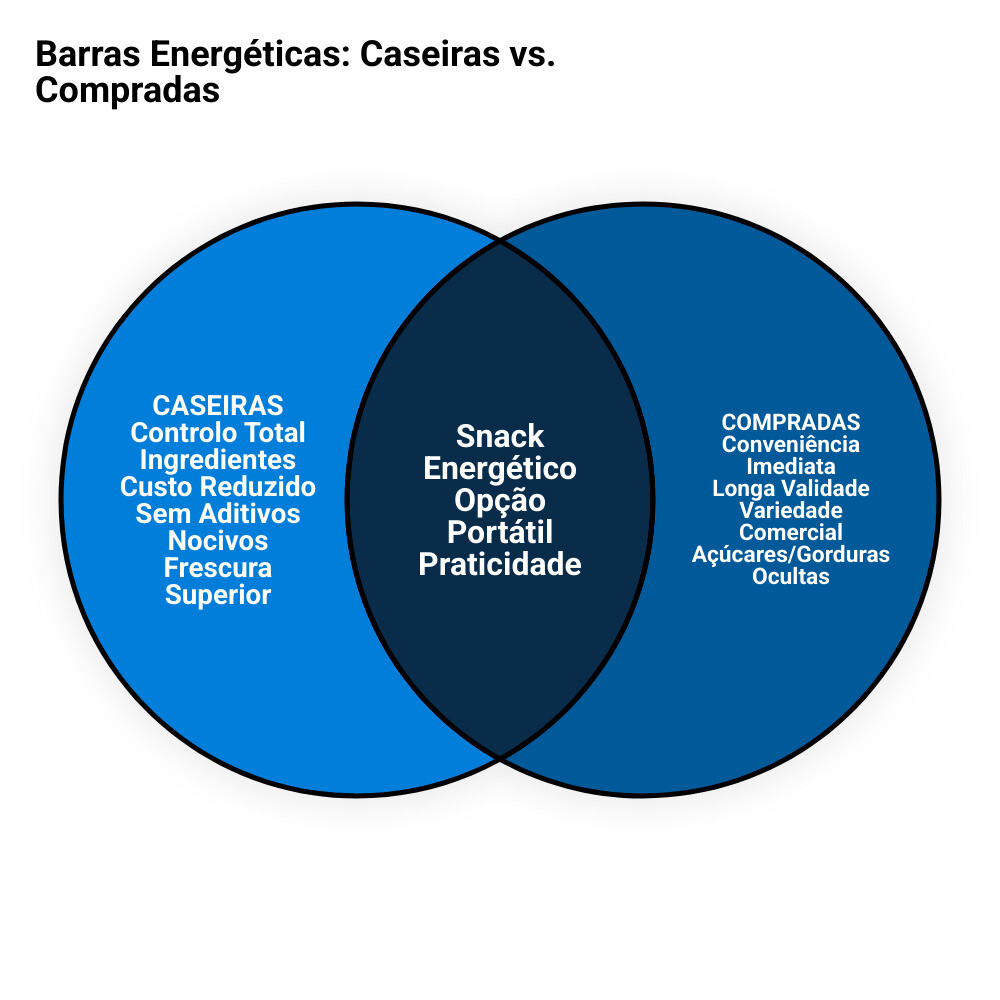
Unlike commercial bars, homemade versions have no added sugars, saturated fats, or preservatives. You control exactly what goes into the recipe.
They are perfect as a mid-day snack, before a workout, or during endurance activities like cycling or running. And the best part? They cost a fraction of the price of store-bought bars.
Advantages of preparing Homemade energy bars in 2026
As of April 2026, awareness of what we eat has never been higher. At Recipes Eye, we believe the kitchen is our health laboratory. Preparing your own homemade energy bars offers benefits that supermarket options simply cannot match.
The main difference lies in nutritional quality. Many commercial bars, although sold as “healthy,” are packed with glucose syrups, low-quality vegetable oils, and preservatives to increase shelf life. By making your own at home, you eliminate these unnecessary additives.
| Feature | Homemade Bars | Supermarket Bars |
|---|---|---|
| Ingredient Control | Total (you choose the quality) | Limited (many additives) |
| Added Sugars | Natural (honey, dates, agave) | High (refined syrups) |
| Cost per Unit | Very Low | High |
| Customization | Infinite (flavor, textures, allergies) | Fixed |
| Sustainability | Fewer plastic packages | High individual waste |
Beyond nutrition, there is the economic factor. With the price of processed snacks rising, buying ingredients in bulk (like large bags of oats and nuts) allows us to produce dozens of bars for a fraction of the cost. It is the same logic of efficiency we apply in other areas of life, such as when we learn How to Make a Simple Homemade Energy Generator: in 2026 to save resources — it’s about self-sufficiency and financial intelligence.
For athletes, especially those practicing endurance sports like cycling or trail running, customization is key. You can adjust the size of the bar for the duration of your workout and choose softer textures that are easier to chew while on the move.
Fundamental ingredients and equipment
You don’t need a professional kitchen to start. In fact, simplicity is what makes homemade energy bars so appealing.
Essential equipment:
- Food processor or powerful blender: Fundamental for grinding dates and nuts until you get a paste that binds everything.
- Large bowl: To mix dry and wet ingredients.
- Square or rectangular baking pan: To shape the bars.
- Parchment paper: Essential to prevent the bars from sticking and for easy removal.
- Rolling pin or spatula: To press the mixture firmly (this step is the secret to the bars not crumbling).
- Sharp knife: For a clean cut after refrigeration or baking.
Nutritious bases for Homemade energy bars
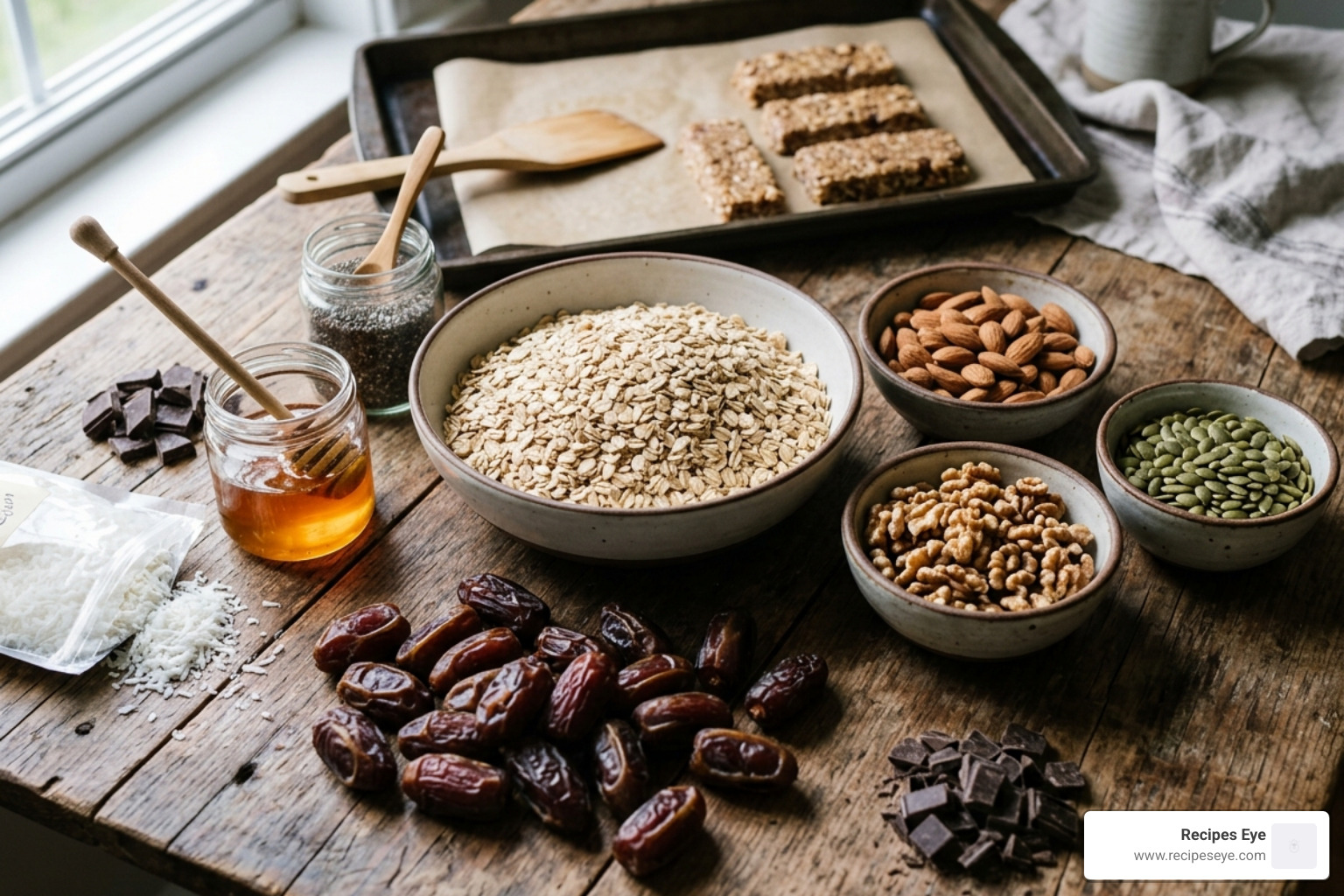
The base is what provides structure and complex carbohydrates for long-lasting energy.
- Oat flakes: The queen of bars. Rich in fiber and excellent for cholesterol.
- Dried dates (pitted): Act as nature’s “caramel,” providing sweetness and a sticky texture that binds the ingredients.
- Puffed rice or royal quinoa: Great for adding lightness and crunch without weighing on the stomach.
- Nuts (almonds, walnuts, cashews): Provide healthy fats and proteins.
- Superfoods: For an extra boost, we often add chia seeds, flaxseed, goji berries, or even spirulina for mineral density.
Binders and flavors for Homemade energy bars
The binder is the “glue” that holds everything together.
- Nut butters: Peanut, almond, or cashew butter. We always recommend versions that contain only the nut and salt, without added palm oils.
- Natural sweeteners: Honey, agave syrup, or rice syrup. If you heat these liquids slightly before mixing, they become more fluid and coat the dry ingredients better.
- Extra Virgin Olive Oil: An excellent technique (widely used in Spain) to add monounsaturated fats and a silky texture.
- Dark Chocolate: With at least 70% cocoa, for antioxidants and flavor.
- Spices: Cinnamon, vanilla, or a pinch of sea salt to enhance natural flavors.
8 Practical recipes: From the oven to “no-bake”
Here are our favorite recipes, adapted for different tastes and needs. Remember: in all of them, the secret is to press the dough very well into the mold before putting it in the fridge or oven.
1. Apricot and Cashew (Tropical and Creamy)
This bar is vibrant and sweet. Grind 1 cup of cashews with 1 cup of dried apricots and half a cup of shredded coconut. Add a little honey if you need more binding. No oven needed — just refrigerate.
2. Apple and Cinnamon (The Taste of Autumn)
Mix oats, chopped dehydrated apple, plenty of walnuts, and cinnamon. Use almond butter and a bit of applesauce as a binder. This version is delicious if baked for 15 minutes at 170°C.
3. Goji Berries and Superfoods
An explosion of antioxidants. Use a base of dates and almonds, and fold in whole goji berries and chia seeds. Add a teaspoon of spirulina for a complete nutritional profile. It’s an ideal “no-bake” bar for post-workout.
4. Dark Chocolate and Sea Salt
For chocolate lovers. Mix oats, low-fat cocoa powder, and dark chocolate chips. Use peanut butter and honey. You can melt some extra chocolate to put on top and sprinkle with coarse salt.
5. Homemade Puffed Rice and Chocolate
Want something light? You can make your own puffed rice by heating long-grain rice in a very hot non-stick pan (without oil) until it “pops.” Mix with melted chocolate and peanut butter. Let it solidify in the refrigerator.
6. Quinoa and Pomegranate
Cook the quinoa and let it dry well or use puffed quinoa. Mix with dried pomegranate seeds (or cranberries) and pumpkin seeds. Use agave syrup to keep the recipe vegan.
7. Whole Grains and Blackberries
Use a mix of grains (whole wheat, rye) and dried or freeze-dried blackberries. This bar benefits from a quick bake in the oven to toast the grains and intensify the fruit flavors.
8. PB&J (Peanut Butter and Jelly)
The classic combination. Use an oat base with plenty of peanut butter. Create layers: a layer of peanut mixture, a thin layer of natural strawberry or raspberry jam, and another of peanut on top. Freeze for 1 hour before cutting.
How to store and avoid common mistakes
Making homemade energy bars is an art, but sometimes things don’t go as planned. Here we explain how to ensure your bars last and maintain the perfect texture.
Storage:
- Refrigerator: Most homemade bars last perfectly for 1 to 2 weeks in an airtight container. The cold helps maintain the structure, especially in no-bake recipes.
- Freezer: You can freeze the bars individually wrapped in parchment paper or plastic wrap. They last up to 3 months. To consume, just take them out 15 to 30 minutes before or let them thaw in the fridge overnight.
- Room temperature: Only recommended for baked bars and in dry climates. If the bar contains a lot of fresh fruit or honey, it can become sticky quickly.
Troubleshooting:
- The bars crumble: This usually happens due to a lack of binder or not being pressed hard enough. Tip: Try adding another tablespoon of peanut butter or honey, or grind part of the oats to create a “flour” that helps bind.
- The bars are too soft: If they are baked bars, they may need another 5 minutes. If they are “no-bake,” they need more time in the cold. If you used honey, it softens at room temperature.
- The mixture sticks to the pan: Always use parchment paper and let the bars cool completely before trying to cut them. If you cut the bars while still hot, they will fall apart.
Frequently Asked Questions about energy bars
When is the best time to eat them?
Homemade energy bars are rich in slow and fast-absorbing carbohydrates. The best time is about 30 to 60 minutes before training to ensure glycogen stores are full. They are also excellent during long-duration workouts (over 90 minutes) to keep energy levels constant. Post-workout, they help with recovery if combined with a protein source.
Can the bars be vegan or gluten-free?
Absolutely! For vegan versions, replace honey with agave syrup, rice syrup, or maple syrup. Use plant-based butters and dairy-free chocolate. For gluten-free versions, make sure to buy certified “gluten-free” oats (oats themselves do not have gluten, but are often processed in factories that handle wheat) or use rice and quinoa bases.
What is the average nutritional information?
Although it varies depending on the ingredients, an average homemade bar (about 40-50g) contains:
- Calories: 160 to 240 kcal
- Carbohydrates: 20g to 35g (main energy)
- Fats: 7g to 12g (from nuts and seeds)
- Proteins: 4g to 8g
- Fiber: 3g to 5g
Conclusion
At Recipes Eye, our mission is to show that eating well doesn’t have to be complicated or expensive. Homemade energy bars are the perfect example of how a small investment of time on the weekend (the famous batch cooking) can transform your weekly nutrition.
By making your own bars, you are choosing health, saving money, and reducing packaging waste. Whether you prefer the crunch of puffed rice or the density of dates with chocolate, there is a perfect recipe waiting for you.
Try one of our 8 suggestions and don’t be afraid to use your creativity. The kitchen is your laboratory! Access more nutritious recipes at Recipes Eye to continue your wellness journey in 2026. Share your results with us and tell us which was your favorite combination. Enjoy your meal and have great workouts!

