
The Best Traditional Portuguese Food: Dishes You Can’t Miss
comida tradicional portuguesa is one of the richest and most diverse cuisines in Europe — shaped by centuries of maritime exploration, spice trade, and a deep connection to the Atlantic.
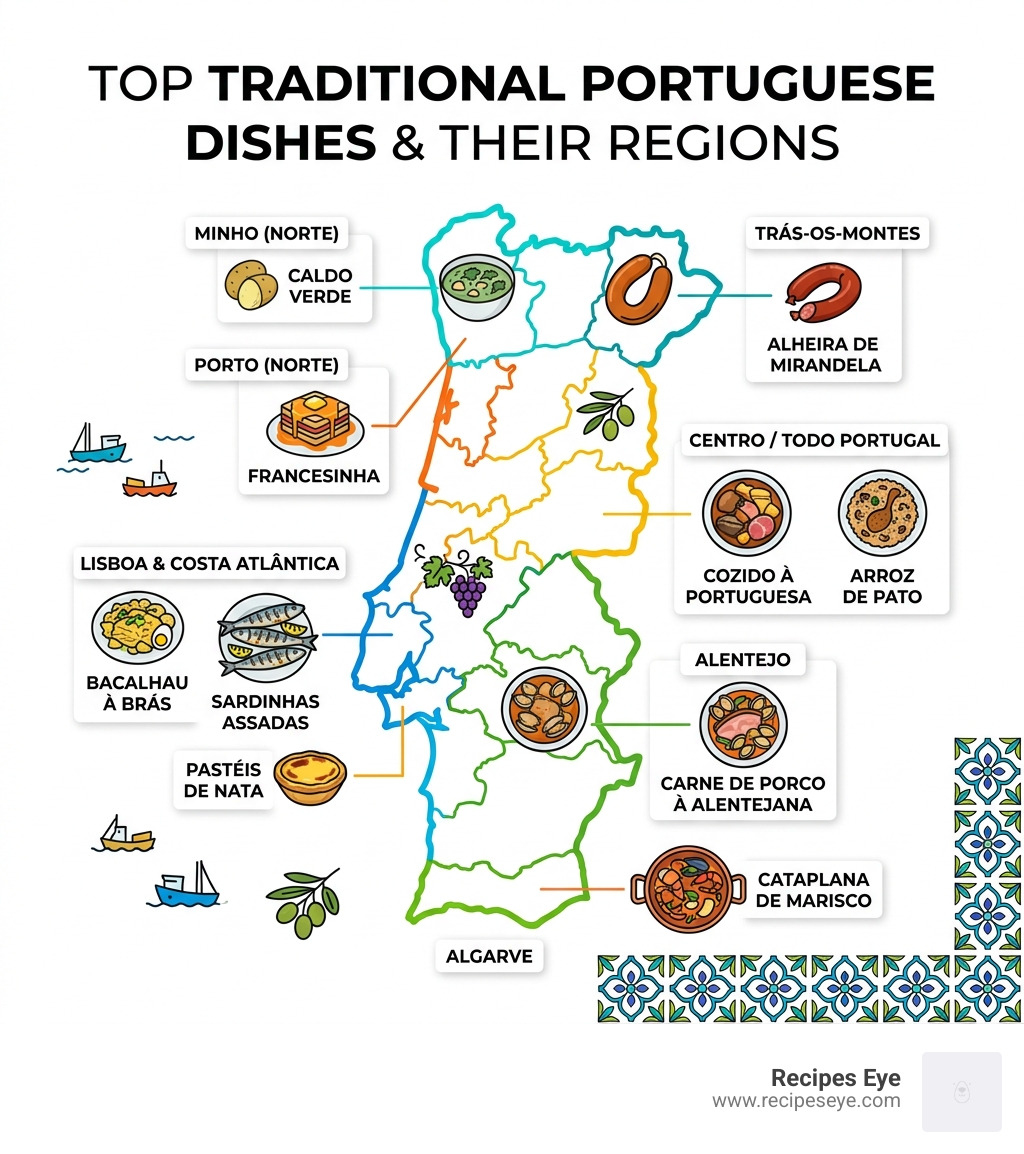
If you are looking for the essential dishes to discover, here is a quick summary:
| Dish | Type | Region |
|---|---|---|
| Bacalhau à Brás | Fish | Lisbon / all of Portugal |
| Caldo Verde | Soup | North (Minho) |
| Cozido à Portuguesa | Stew | All of Portugal |
| Pastéis de Nata | Sweet | Lisbon / all of Portugal |
| Sardinhas Assadas | Grilled fish | Atlantic Coast |
| Francesinha | Sandwich | Porto |
| Carne de Porco à Alentejana | Meat | Alentejo |
| Alheira de Mirandela | Sausage | Trás-os-Montes |
| Cataplana de Marisco | Seafood | Algarve |
| Arroz de Pato | Rice | North |
Portugal has the highest fish consumption rate per capita in Europe — and is among the top four in the world. This says a lot about what you will find on your plate.
Portuguese cuisine is not complicated. It is honest. It uses fresh ingredients, quality olive oil, plenty of garlic, and aromatic herbs. The result is food that feeds both the body and the soul.
And the best part? Many of these dishes are affordable, nutritious, and easy to replicate at home — wherever you are in the world.
The Soul of comida tradicional portuguesa: History and Influences
To understand comida tradicional portuguesa in 2026, we need to look back. Portugal’s gastronomy is a “gastronomic narrative” that tells the story of a people who took to the sea. During the Age of Discovery, Portuguese navigators established trade routes that brought ingredients to Europe.
Imagine European cuisine before black pepper, cloves, cinnamon, or nutmeg. It was the Portuguese who integrated these spices from India and Southeast Asia into their daily lives. From Africa, they brought piri-piri (chili), which is now the favorite condiment for grilled chicken. From Brazil and the Americas came tomatoes, potatoes, corn, and beans, which are now fundamental pillars of the national diet.
But the base is much older. Mediterranean roots come from the Romans, who consolidated the culture of wheat, wine, and, above all, olive oil. Later, the Moorish heritage introduced irrigation techniques and the use of dried fruits, such as almonds and figs, which still shine in southern confectionery today.
Essential Ingredients of comida tradicional portuguesa
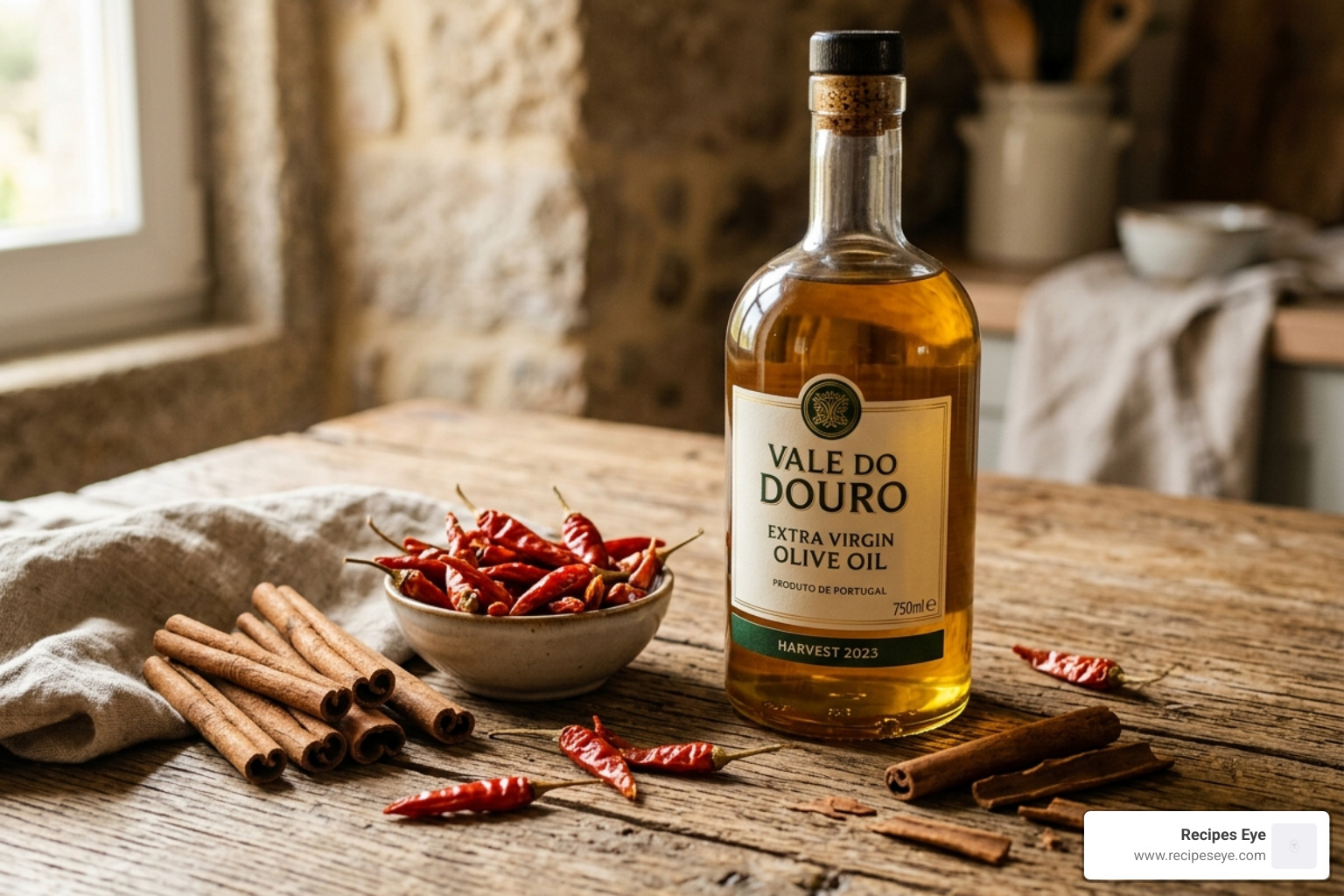
If we enter a typical Portuguese kitchen, we will always find a set of “faithful companions.” Garlic and onion are the base of almost all sautés. Bay leaf is the aromatic herb that perfumes everything from bean stews to boiled dinners.
Olive oil deserves a chapter of its own. In Portugal, olive oil is not just a cooking fat; it is a sacred ingredient. There are very specific acidity classifications that locals respect: oils with 1.5 degrees of acidity are great for cooking, while those with acidity below 0.7 or 0.3 degrees are reserved for drizzling over fish or potatoes once on the plate, preserving the fruity flavor.
Another highlight is the Bísaro Pig, a large native breed that produces exceptional quality meats and sausages, protected by designation of origin labels.
| Herb/Ingredient | Use in the North | Use in the South |
|---|---|---|
| Cilantro (Coriander) | Rare (except specific dishes) | Essential (Açordas, Seafood Rice) |
| Parsley | Ubiquitous (soups, meats, fish) | Common in salads and fish |
| Turnip Greens and Cabbages | Base of almost all meals | More common in soups and stews |
| Paprika (Colorau) | Widely used in marinades and sausages | Used in stews and fish |
The 12 Must-Try Dishes of Lusitanian Gastronomy
Exploring comida tradicional portuguesa is a journey of intense flavors. Here are the dishes that define the country’s identity:
- Cozido à Portuguesa: It is the national dish par excellence. It’s not just a meal; it’s a ritual. It involves the slow cooking of meats (beef, pork, chicken), sausages (chouriço, farinheira, blood sausage), and vegetables (cabbage, carrots, potatoes, turnips). The secret lies in the quality of the sausages and the resting time.
- Produtos Tradicionais Portugueses — Feijoada à Portuguesa : Unlike the Brazilian version that uses black beans, traditional feijoada in Portugal uses white or kidney beans. It is a rustic and nutritious dish, using all parts of the pig.
- Alheira de Mirandela: This sausage has a fascinating history. It was created by Jews during the Inquisition to appear Christian. Since they could not eat pork, they created a sausage made of poultry, game, and bread, deceiving the inquisitors. Today it is a Guaranteed Traditional Specialty (TSG).
- Francesinha: Originating from Porto, this sandwich is a “flavor bomb,” inspired by the French Croque Monsieur, but with steak, sausage, ham, melted cheese, and a secret spicy sauce based on beer and tomato.
- Arroz de Pato: A northern classic, where the duck is cooked and the rice is made in its fatty broth, then baked in the oven with slices of chouriço.
- Caldo Verde: Portugal’s most famous soup. Made with a base of mashed potatoes and onions, it features very thinly sliced kale and a slice of chouriço. It is comfort in a bowl.
- Sardinhas Assadas: The symbol of summer. Eaten on a slice of bread that absorbs the fish’s fat, they are essential at the Popular Saints festivals.
- Polvo à Lagareiro: Octopus boiled and then roasted with plenty of olive oil (the “lagareiro” is the owner of the olive oil press) and punched potatoes.
- Amêijoas à Bulhão Pato: A summer snack where clams are sautéed in olive oil, plenty of garlic, cilantro, and lemon.
- Leitão à Bairrada: Suckling pig roasted in a wood-fired oven until the skin is crispy and the meat is tender, served with pepper sauce.
- Arroz de Marisco: A “runny” rice (with lots of broth) loaded with the best the Atlantic offers: shrimp, clams, crab, and cilantro.
- Bifana: The national sandwich. Pork marinated in garlic and wine, served on a crusty roll. Simple and perfect.
The Role of Cod in comida tradicional portuguesa
It is said that in Portugal there are more than 365 cod recipes — one for every day of the year. Cod is the “faithful friend” of the Portuguese, but the irony is that it is not caught in national waters, coming mostly from Norway and Iceland since the 15th century. The tradition of drying and salting it allowed it to be transported and stored for months, becoming an accessible protein for the whole country, even inland.
Among the hundreds of ways to prepare it, some stand out:
- Bacalhau à Brás : Created by a tavern keeper in Bairro Alto, Lisbon. It is a delicious mixture of shredded cod, thin matchstick potatoes, onion, and beaten eggs, finished with black olives and parsley. It is even the favorite dish of celebrities like Cristiano Ronaldo!
- Bacalhau com Natas: A creamy and comforting version, where the cod is folded into béchamel sauce, cream, and diced fried potatoes, then baked to brown with cheese.
- Bacalhau à Gomes de Sá: Originating from Porto, it features cod flakes marinated in milk, boiled potatoes, onion, garlic, boiled eggs, and olives.
Regional Variations: From Minho to the Algarve
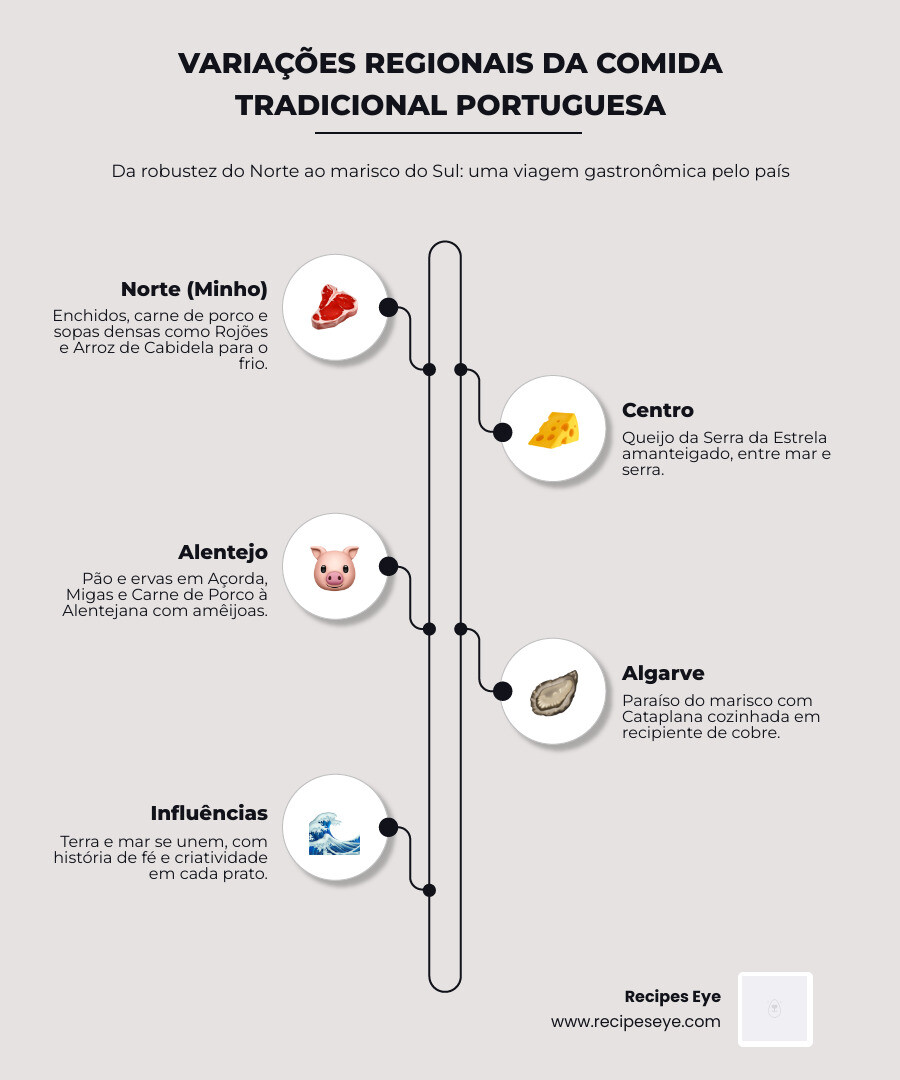
comida tradicional portuguesa changes drastically as we travel from north to south. In the North (Minho and Trás-os-Montes), the food is robust and made to face the cold. Here, sausages, pork, and dense soups reign. It is the land of Rojões (fried pork pieces) and Arroz de Cabidela.
In the Center, the tradition is divided between the sea and the mountains. This is where we find the famous Queijo da Serra da Estrela, a buttery sheep’s cheese that should be eaten with a spoon.
The Alentejo is the region of bread and herbs. Dishes like Açorda Alentejana (a bread, garlic, and cilantro soup) and Migas show how creativity can transform simple ingredients into banquets. It is also here that Carne de Porco à Alentejana is born, a unique dish that combines fried pork with clams — a mixture of land and sea that, legend has it, served to test the faith of New Christians (converted Jews), as it contained two ingredients forbidden in their original religion.
Finally, the Algarve is a seafood paradise. The Cataplana de Marisco is the star dish, cooked in a clam-shaped copper vessel that retains all the vapors and flavors of the sea.
Sweets and Drinks: Portugal’s Final Touch
No meal in Portugal is complete without a sweet. Portuguese confectionery is famous for its “conventual” nature. In the 15th century, nuns used egg whites to starch their habits and to clarify wine. The yolks were left over, and they were combined with sugar from the colonies to create divine sweets.
The Pastel de Nata is the global ambassador. With its crispy puff pastry and burnt custard cream on top, it is an irresistible temptation. But there is much more: Ovos Moles de Aveiro, Arroz Doce (rice pudding) with cinnamon, and Bolo de Bolacha (cookie cake).
To accompany, Portugal offers world-class wines. Vinho Verde, light and slightly effervescent, is perfect for fish and seafood. Port Wine, fortified and intense, is the ideal partner for desserts or strong cheeses. And we cannot forget the full-bodied red wines from the Douro and Alentejo, which elevate any meat dish to another level.
Frequently Asked Questions about Portuguese Food
What is the national dish of Portugal?
Although Bacalhau is considered the national ingredient, Cozido à Portuguesa is often cited as the official national dish, as it represents the diversity of products from across the country in a single pot. However, if you ask a Portuguese person, they will likely say that cod (in any of its 365 forms) is the true king.
How is a typical Portuguese meal structured?
A full meal usually starts with a “couvert” (bread, olives, cheese, or pâtés). This is almost always followed by a soup (the Portuguese are large consumers of soup, both at lunch and dinner). The main course can be fish or meat, accompanied by rice, potatoes, and salad. It ends with a sweet dessert and, obligatorily, an espresso coffee (the “bica” or “cimbalino”).
Why is cod so important if it’s not caught in Portugal?
The importance of cod is historical and economic. During the centuries of navigation, salted cod was the only fish that could withstand long journeys without spoiling. It became a pillar of the diet because it was easy to preserve and transport to the interior of the country, where fresh fish did not reach. Over time, it became so ingrained in the culture that today it is impossible to imagine a Portuguese Christmas without the “faithful friend” on the table.
Conclusion
comida tradicional portuguesa is a testament to the resilience, curiosity, and hospitality of a people. It is a cuisine that celebrates the product, respects cooking time, and values sharing at the table. From the mountainous north to the beaches of the Algarve, each dish tells a part of Portugal’s history.
At Recipes Eye, we believe that food should be nutritious, but it should also tell a story and bring joy. Portugal’s Atlantic diet, rich in fish, olive oil, and fresh vegetables, is a perfect example of how to eat well and healthily. We hope this guide inspires you to bring a bit of Portugal into your kitchen.
Discover more healthy and traditional recipes and start your journey through the flavors of the world today!

