
Lunch or Breakfast? Translating Almoço Like a Pro
What “Almoço in English” Actually Means (And Why It’s More Than Just Lunch)
Almoço in English translates directly to lunch — the midday meal eaten between morning and evening.
Here’s the quick answer if that’s all you need:
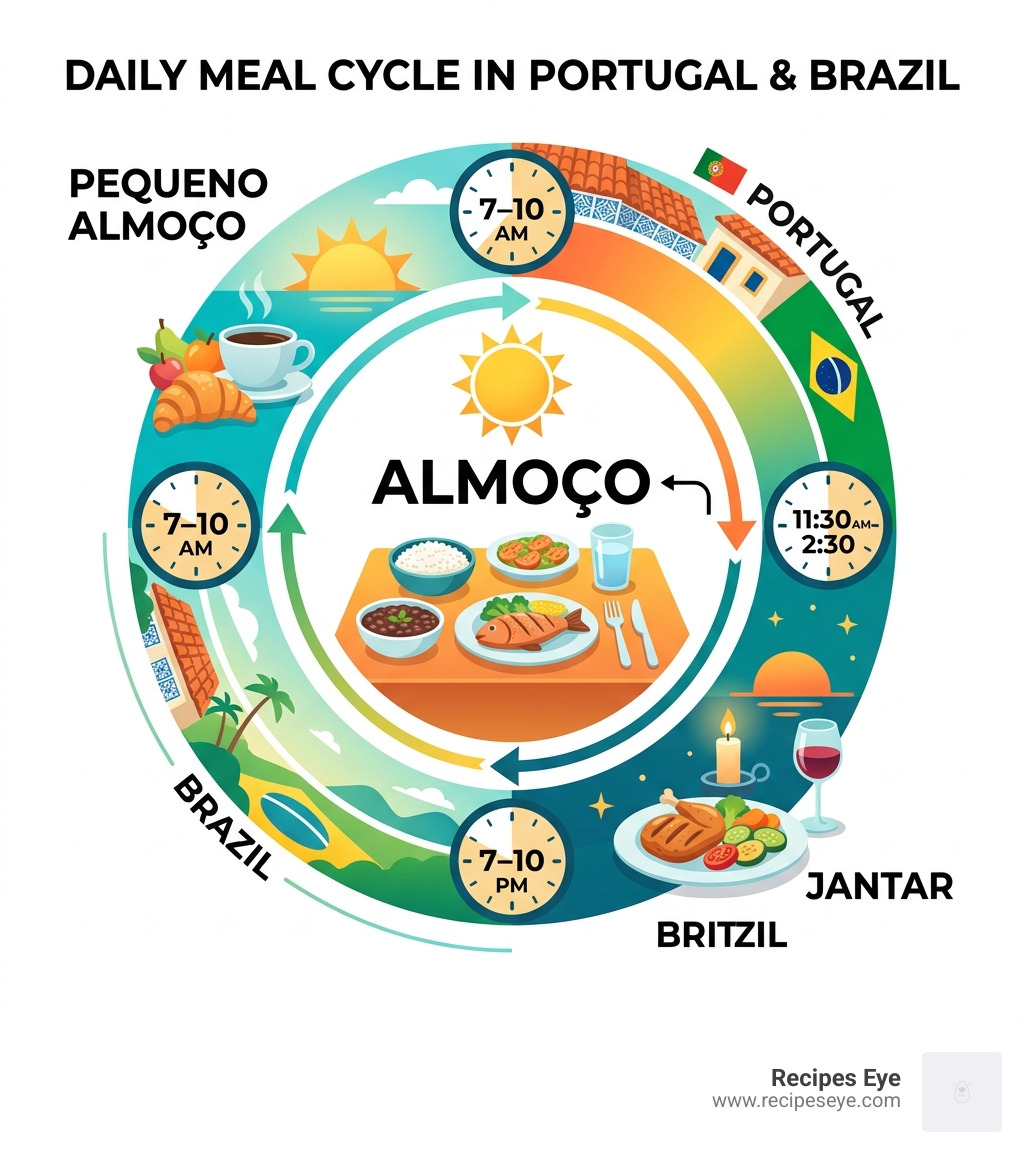
| Portuguese | English | Meal Timing |
|---|---|---|
| Pequeno almoço | Breakfast | Morning (7–10 AM) |
| Almoço | Lunch | Midday (11:30 AM–2:30 PM) |
| Jantar | Dinner | Evening (7–10 PM) |
But if you’ve ever sat down at a Brazilian family table on a Sunday, or watched a Portuguese worker take a two-hour midday break, you already know — almoço is a lot more than just lunch.
In Portuguese-speaking cultures, the midday meal carries real cultural weight. It’s where families gather, deals get made, and traditions get passed down. The word itself has roots in Arabic, tracing back to al-ghada, a term for early sustenance brought to the Iberian Peninsula through Moorish influence centuries ago.
For budget travelers heading to Brazil or Portugal, understanding almoço isn’t just a language lesson. It shapes when restaurants are open, what’s on the menu, and how locals structure their entire day.
The Core Meaning of Almoço in English

When we look for the Tradução de almoço — Dicionário português-inglês, the result is consistently “lunch.” In a linguistic sense, it is a masculine noun (o almoço) that refers to the meal eaten in the middle of the day.
However, the English language can be a bit tricky depending on where you are. While “lunch” is the universal standard, some regional dialects in the UK or the Southern United States might occasionally use the word “dinner” to refer to a heavy midday meal, though this is becoming less common in modern business settings. For most of us in 2026, almoço in english is simply lunch.
According to the English translation of ‘almoço’, it is the primary midday meal. Unlike a quick sandwich at a desk—which is common in many English-speaking corporate cultures—an almoço in the Lusophone world is often a sit-down affair involving multiple courses.
Linguistic Nuances and Pronunciation
If you are trying to say it like a local, the pronunciation is key. In the International Phonetic Alphabet (IPA), it is typically represented as [al.ˈmo.su]. The stress falls on the second syllable (the “mo”), making it a paroxytone word.
The “ç” (c-cedilla) functions exactly like an “s” in English words like “sun” or “sea.” You can find detailed phonetic breakdowns at almoço – Dicionário Português-Inglês WordReference.com. Whether you are in Lisbon or Rio de Janeiro, the rhythm of the word stays relatively similar, though the “l” at the beginning might sound more like a “u” in certain Brazilian accents (sounding almost like au-MO-su).
Common Phrases and Example Sentences
To help you master the term, here are some common ways you’ll hear the word used in daily life, as noted in the LUNCH | Portuguese translation – Cambridge Dictionary:
- Almoço comercial: This is a staple of Brazilian work life. It refers to a “standard workday lunch”—usually a fixed-price, hearty meal that includes a main dish, rice, beans, and sometimes a small dessert.
- Marmita / Almoço em marmita: This is the equivalent of a “packed lunch” or “brown bag lunch.”
- Hora do almoço: Lunchtime.
- O que tem para o almoço?: “What’s for lunch?”
In everyday conversation, you might say, “Eu comi muito no almoço” (I ate a lot for lunch) or “Podemos marcar um almoço?” (Can we schedule a lunch?).
Regional Variations: Brazil vs. Portugal

While the translation of almoço in english remains the same, the plate looks very different depending on which side of the Atlantic you are on.
In Brazil, the almoço is arguably the most important meal of the day. It is almost always a hot meal. The “sacred trinity” of the Brazilian table consists of rice, beans (feijão), and a protein (beef, chicken, or fish), accompanied by farofa (toasted cassava flour) and salad. On weekends, especially Sundays, the almoço becomes a massive family event that can last all afternoon.
In Portugal, the meal is equally significant but often features different staples. You’ll find a heavy emphasis on seafood—especially bacalhau (salted cod)—and soups. According to almoço in Portuguese: Meaning, Usage and Examples | PortugueseLearn.com, Portuguese customs often prioritize a slower pace, with many shops closing for an hour or two so employees can enjoy their meal properly.
In African Portuguese-speaking countries like Angola or Mozambique, almoço often blends these colonial influences with local ingredients like cassava, okra, and palm oil, creating a unique culinary fusion that is both hearty and spicy.
Understanding Pequeno Almoço in English
This is where many English speakers get confused. In Portugal, if you ask for “almoço” at 8:00 AM, people will look at you funny. That’s because breakfast in Portugal is called pequeno almoço (literally “small lunch”).
In Brazil, they use the term café da manhã (morning coffee) for breakfast. So, if you are translating “breakfast” into Portuguese:
- In Portugal: Pequeno almoço
- In Brazil: Café da manhã
Despite the name, a pequeno almoço is usually a continental-style breakfast: a galão (milk coffee), some bread with butter, or a pastry like the famous pastéis de nata.
Timing and Duration Across Cultures
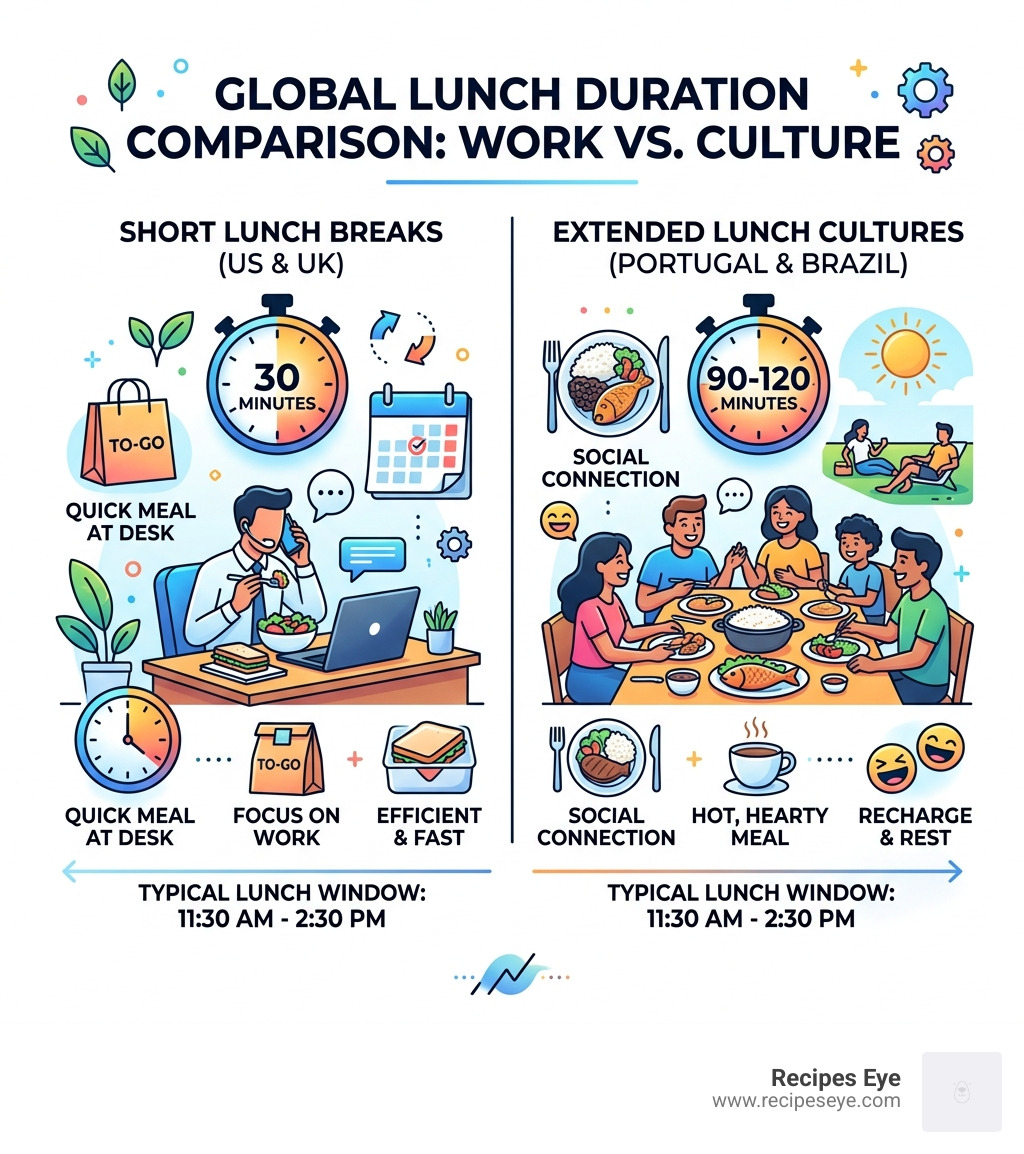
In the US or UK, a lunch break might be a 30-minute window where you eat a salad while answering emails. In Portugal and Brazil, that would be considered a tragedy!
The typical window for almoço is between 11:30 AM and 2:30 PM. In many Portuguese towns, an extended two-hour break is standard. This isn’t just about the food; it’s about social interaction and “recharging” for the afternoon. This Mediterranean influence on work-life balance is something many visitors find refreshing (and sometimes frustrating when they find the shops closed!).
Cultural Significance and Social Customs
We cannot talk about almoço in english without mentioning its social soul. For Lusophones, the midday meal is the glue of the community.
The etymology of the word is fascinating. It traces back to the Arabic al-ghada, which originally referred to a morning meal. During the Moorish occupation of the Iberian Peninsula (8th to 13th centuries), this term entered the local dialects. Over hundreds of years, a “semantic shift” occurred—the time of the meal moved from early morning to midday, eventually becoming the almoço we know today.
Business Customs and Almoço in English Contexts
If you are doing business in Brazil or Portugal, the almoço de negócios (business lunch) is your most powerful tool. Unlike the “power lunch” of New York, which is often fast and aggressive, a Portuguese-speaking business lunch is about building rapport.
Networking happens between the appetizer and the coffee. It is often considered rude to start talking about contract details the second you sit down. You talk about family, football (soccer), and the food first. Only when the main course is finished do you transition into professional matters.
Idiomatic Expressions and Sayings
The word almoço has even made its way into the wisdom of the streets.
- “Não há almoço grátis”: This is the direct translation of the English idiom “There is no such thing as a free lunch.” It means everything has a cost, even if it isn’t immediately apparent.
- “Pagar o almoço”: To “pay for lunch” is a common social gesture. If a friend helps you move, you might say, “Eu te pago um almoço” (I’ll buy you lunch) as a way of saying thank you.
Typical Dishes and Recipes for the Midday Meal
If you’re looking to bring the spirit of almoço into your own kitchen, we have some fantastic ideas. While traditional dishes like Feijoada (black bean and pork stew) are the heavy hitters, modern midday meals are leaning toward healthier, quicker options.
One interesting cross-cultural recipe is the Muffin Inglês (English Muffin). While we usually associate these with breakfast in the English-speaking world, in Portugal and Brazil, they are often used as a base for a light “almoço” sandwich. Unlike traditional muffins, these are denser and cooked on a griddle.
Another creative option is the Nuvem de Ovos (Egg Clouds). These are made by whipping egg whites into stiff peaks, folding in some cheese or chouriço, and baking them with the yolk in the center. It’s a visually stunning, high-protein midday meal that fits perfectly into a healthy lifestyle.
For those of us looking for More healthy meal ideas, focusing on the Brazilian “rice and beans” logic is a great start. It provides a complete protein profile and keeps you full until dinner.
Frequently Asked Questions about Almoço
What is the difference between almoço and jantar?
The main difference is timing and often the “weight” of the food. Almoço is the midday meal (lunch), while jantar is the evening meal (dinner). In many families, the almoço is actually the larger, more caloric meal, whereas jantar might consist of leftovers or a lighter soup, especially on weeknights.
Is almoço always translated as lunch?
In 99% of cases, yes. However, in formal contexts, you might translate it as luncheon. Additionally, if you are in certain parts of the UK, you might hear a midday meal called “dinner,” but when translating from Portuguese to English, “lunch” is always the safest and most accurate bet.
What time is almoço typically served?
In a professional setting, it usually starts at 12:00 PM or 1:00 PM. Restaurants in Portugal and Brazil typically serve almoço from 11:30 AM until about 3:00 PM. After 3:00 PM, many kitchens close to prepare for the dinner service.
Conclusion
Understanding almoço in english is your first step toward truly connecting with Portuguese-speaking cultures. It is a word that represents more than just calories; it represents time, family, and a historical legacy that stretches back to the Moors.
Whether you are preparing a quick “almoço comercial” at home or sitting down for a three-hour Sunday feast, the heart of the meal is the same: good food and better company. At Recipes Eye, we believe that every meal is an opportunity to nourish your body and your relationships.
Discover nutritious recipes for your next almoço and start cooking something incredible today!

