
Lanches baratos e saudáveis para sobreviver a viagens longas
The reality of eating well (and cheap) during a long trip
Healthy backpack travel snacks are the best strategy to save money and maintain energy without depending on airports, gas stations, or roadside diners.
Here are the best snacks to carry in your backpack on any trip:
- Nut mix (cashews, almonds, walnuts) — long-lasting, nutritious, no refrigeration needed
- Dried fruits (apricots, raisins, bananas) — lightweight and provide quick energy
- Protein or cereal bars with a good ingredient composition
- Tapioca puffs or whole-grain crackers — practical and resistant
- Peanut butter in individual sachets with fruit
- Roasted chickpeas — crunchy, high in protein, and easy to pack
- 70% dark chocolate — antioxidant and satisfying in small amounts
- Homemade baked sweet potato chips
Anyone who has been stuck at an airport hungry knows how it is: the options are expensive, not very nutritious, and full of questionable ingredients. The bill for an industrial snack at the airport can cost three times more than preparing something at home — and still be worse for your body.
The good news is that preparing healthy travel snacks does not require extra time or money. With a little planning the night before, you can assemble a backpack stocked with delicious, nutritious options that fit your budget.
You will find simple recipes, packaging tips, what to avoid, and how to plan your snacks by trip type — short, medium, or long.
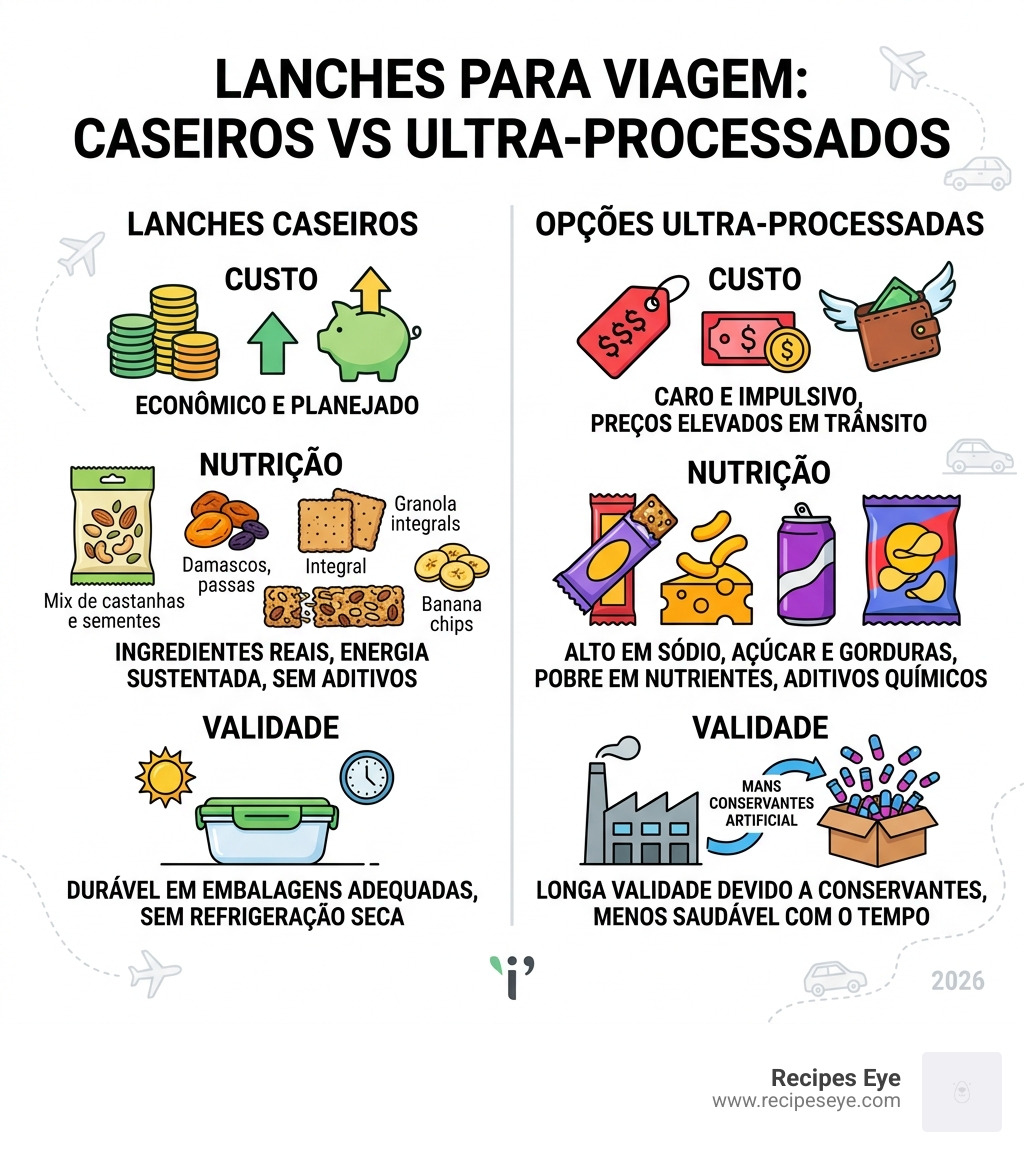
Why prioritize healthy backpack travel snacks over processed ones?
When we are in transit, convenience usually dictates our choices. However, what seems “practical” on a gas station shelf is often a nutritional trap. Most industrial snacks are composed of refined flours, low-quality vegetable oils, excess sodium, and an endless list of chemical additives.
By choosing healthy backpack travel snacks prepared by ourselves, we gain total control over what we are consuming. Instead of sugar spikes followed by a sharp drop in energy (the famous “travel fatigue”), we ensure a constant supply of fuel for the body.

Nutritional benefits and financial savings
Nutrition on the move doesn’t have to be complex. The secret lies in the combination of three pillars: fiber, protein, and healthy fats.
- Fiber: Keeps the gut functioning (which is a challenge during travel) and increases satiety.
- Proteins: Help with muscle maintenance and prevent hunger from returning 30 minutes after the snack.
- Healthy fats: Like those found in nuts, provide dense and long-lasting energy.
Financially, the difference is brutal. In the 2026 scenario, with service inflation, a basic sandwich and juice combo at passenger terminals can compromise a considerable part of the tour budget. Planning your healthy travel snacks allows you to invest that money in experiences at your destination, rather than empty calories along the way.
Best foods that don’t need refrigeration for your backpack
The biggest challenge for those traveling with a backpack is preservation. We don’t always have access to a thermal bag or refrigerator, so selecting items that resist room temperature well (especially in tropical climates like Brazil in April 2026) is fundamental.

- Nuts and Seeds: Brazil nuts, almonds, walnuts, and sunflower seeds are “pocket fuels.” They last 2 to 3 months at room temperature if well stored in airtight containers.
- Dried Fruits: Apricots, dates, and raisins are excellent. They don’t get crushed and satisfy the sweet tooth without the added sugar of industrial candies.
- Roasted Chickpeas: An incredible protein option that replaces fried snacks. Just season with paprika, salt, and olive oil and bake until crispy.
How to combine proteins, fibers, and fats for prolonged energy
To avoid mental fatigue during long hours of driving or waiting, we need low glycemic index foods. If you eat only a fruit (carbohydrate), your energy will rise fast and fall fast. If you combine that fruit with some almonds (fat and protein), the sugar absorption will be slow and stable.
A golden rule for healthy backpack travel snacks is to assemble small kits:
- A handful of mixed nuts (fat).
- A portion of dried or hardy fresh fruit like an apple (fiber/carbohydrate).
- A boiled egg (if the trip is short) or a high-quality protein bar (protein).
What to take for trails, camping, and long-duration trips
If your destination involves physical effort or many days away from markets, caloric density and weight matter.
- Freeze-dried food: For long trails, they are lightweight and preserve nutrients.
- 70% Chocolate: A quick source of magnesium and energy that holds up well if not exposed to direct sun.
- Peanut butter: It is one of the most complete foods. It can be consumed plain or with whole-grain rice crackers.
Planning healthy backpack travel snacks by transport type
Each means of transport has its own “etiquette rules” and space limitations. Organizing your logistics avoids stress with airport security or mess inside the car.
Tips for plane, car, or bus trips
- Plane: Remember liquid restrictions. Pastas (like hummus or yogurt) can be barred if the container is large. Prioritize dry foods. Also, avoid foods with very strong smells (like tuna or onion) out of respect for other passengers in a closed environment. To learn more about maintaining a balanced routine, visit our homepage.
- Car: Here you have more freedom. You can take a small thermal bag to keep fresh fruits and natural sandwiches for longer. Use airtight containers to prevent food smells from spreading through the vehicle.
- Bus: Practicality is the keyword. Choose snacks that don’t need cutlery and don’t create many crumbs.
Fun snacks that please children and adults in the family
Traveling with children requires creativity. If the snack is visually appealing, the chance of them accepting the healthy option is much higher.
- Savory Mini Muffins: Made with oat flour, chopped vegetables, and cheese. They are easy to hold and don’t make a mess.
- Vegetable Sticks: Carrots and cucumbers cut into thin strips. They can be accompanied by a small pot of hummus (chickpea paste).
- “Interactive” Fruits: Seedless grapes or already peeled tangerine segments facilitate immediate consumption.
Fit recipes and options for specific diets
Preparing your own healthy backpack travel snacks ensures you don’t stray from your diet, whether it’s vegan, low carb, or focused on hypertrophy. Here are some practical ideas we love:
- Hummus and Tofu Wrap: Use a whole-wheat tortilla, spread hummus, add smoked tofu strips and spinach leaves. Roll tightly in aluminum foil.
- Banana and Oat Cookies: Mash two ripe bananas, mix with a cup of rolled oats and dark chocolate chips. Bake for 15 minutes. They last 3 days in the backpack.
- Sweet Potato Chips: Cut very thin slices, season with rosemary, and bake until crispy. It’s the perfect substitute for industrial potato chips.
Practical vegan, low carb, and protein options
- Low Carb: Roasted almonds, dried coconut chips (unsweetened), cured cheeses (like parmesan, which holds up well out of the fridge for a few hours), and olive sachets.
- Vegan: Pumpkin and sunflower seed mix, dates stuffed with peanut butter, and roasted edamame.
- Protein: Beef jerky, boiled eggs (consume within the first 2-3 hours), or protein shakes in powder form that you just need to mix with water at the time.
Simple homemade recipes to prepare before boarding
One of our favorites is the Skillet Cereal Bar. Just mix oats, honey (or molasses), chopped nuts, and seeds. Heat slightly to bind, press into a mold, let cool, and cut. It is much cheaper and more nutritious than supermarket versions, which are often just “sugar candies” in disguise.
How to organize your backpack and reduce waste on the road
Sustainability must travel with us. In 2026, environmental awareness is more than a trend; it is a necessity. Organizing your healthy backpack travel snacks intelligently helps optimize space and protects nature.
Smart packaging and organic waste disposal
The use of disposable plastics should be minimized. See our container comparison:
| Container Type | Advantages | Disadvantages |
|---|---|---|
| Glass | Does not retain smell, easy to clean | Heavy and can break |
| Plastic (BPA Free) | Lightweight and cheap | Can stain and retain odors |
| Reusable Silicone | Foldable, saves space, lightweight | Higher initial cost |
Golden Tip: If you are hiking, follow the “Leave No Trace” principle. This includes fruit peels and seeds. They may seem harmless, but they take time to decompose and can interfere with the local fauna’s diet. Always carry a small bag to bring all your trash back.
Frequently Asked Questions about Travel Snacks
What foods should I avoid taking in my travel backpack?
Avoid any highly perishable items that degrade without refrigeration, such as mayonnaise, fresh cheeses (ricotta, cottage), yogurts (unless consumed immediately), and undercooked meats. Also avoid foods that crush easily (like ripe peaches or very thin crackers) and items with intense odors that might bother others.
How to choose snacks for different travel durations?
- Short (up to 3h): Something light like an apple and a handful of nuts is enough.
- Medium (3h to 6h): Include something more substantial, like a whole-grain bread sandwich with chickpea paste or a homemade savory muffin.
- Long (more than 6h): Focus on dry and stable foods. Nut mixes, dried fruits, protein bars, and plenty of water. If possible, take a freeze-dried meal or a complete meal in an airtight container for the first few hours.
How to keep snacks fresh without a refrigerator?
The best technique is thermal insulation. Even without ice, a small thermal bag protects food from external temperature fluctuations. Additionally, choose thick-skinned fruits (like bananas and oranges) and avoid leaving the backpack exposed to direct sun or inside hot trunks for long periods.
Conclusion
Traveling is one of the best experiences in life, and being well-fed makes all the difference in how we enjoy every moment. By planning your healthy backpack travel snacks, you ensure more energy to explore, save money for that special dinner at your destination, and keep your health on track.
Remember: the secret lies in simplicity and anticipation. With nuts, fruits, and some homemade recipes, your backpack becomes your best ally. For more nutrition tips and amazing recipes that make your routine easier, keep following Recipes Eye. Safe travels and bon appétit!

