
Como Montar o Roteiro Gastronômico dos Seus Sonhos sem Passar Fome
The Ultimate Guide to Food Tours for Budget Travelers
Food tours are thematic routes that connect travelers to local producers, typical restaurants, and authentic culinary experiences of a region — all organized into an itinerary that you can follow at your own pace.
If you want to discover the best destinations to eat well without spending much, here is a quick summary:
Main food tours in Brazil:
- Minas Gerais — artisanal cheese, cachaça, cornmeal pastry (pastel de angu), and ora-pro-nóbis
- Bahia — acarajé, moqueca, vatapá, and cocada
- São Paulo (interior) — Vale do Ribeira, heart of palm (pupunha), and 5 new coffee routes
- Paraná — Grape & Wine Route with 60 properties in more than 30 municipalities
- Florianópolis — fresh seafood and Azorean recipes (city recognized by UNESCO as a Creative City of Gastronomy)
International destinations worth the culinary trip:
- ���� Italy — Neapolitan pizza, fresh pasta from Emilia-Romagna, Tuscan wines
- ���� France — gourmet cheeses, Bordeaux wines, Lyon brasseries
- ���� Argentina — roasts (asados), empanadas, and dulce de leche in Buenos Aires and Mendoza
- ���� Japan — izakayas in Tokyo, street food in Osaka, tea houses in Kyoto
Exploring a destination through food is one of the cheapest and richest ways to travel. You don’t need expensive restaurants or luxury packages. Many of the most memorable experiences happen in open-air markets, family farms, and small artisanal distilleries — places where the price is low and the authenticity is very high.
In 2026, culinary tourism remains one of the strongest trends for those who want to live a place, not just visit it. Local cuisine tells the story of a people, reflects its geography, and carries traditions passed down from generation to generation.
This guide was made to help you set up the right itinerary — without going hungry, without breaking the budget.
What are food tours and why do they enchant travelers?
Food tourism goes far beyond simply “eating out” during vacation. Food tours are, in fact, a journey of cultural immersion. When we choose to follow a specific route — whether focused on cheeses, coffees, or wines — we are seeking a direct connection with the origin of what we consume.

In 2026, we realize that the modern traveler values intangible heritage. It’s not just about the finished dish, but the know-how: the technique of the lace-maker who also makes dulce de leche, the secret of natural yeast passed down through generations, or the manual coffee harvest. This type of tourism promotes sustainability and regional development, as the money invested circulates directly among small producers and local cooperatives.
By participating in a tour like Explore os Sabores Aromas Encantos da roça, you are not just a customer; you become part of the preservation of a tradition. It’s a chance to see up close how the ingredient leaves the earth and reaches the table, valuing family farming and the cycles of nature.
The Best Brazilian Destinations for a Flavor Immersion
Brazil is a continent of flavors. Each state offers a palette of ingredients that tell the story of colonizations, migrations, and the creativity of the Brazilian people. If you are planning your next food tours, you need to know these standout regions:
| Region | Iconic Dishes and Products | Unique Experience |
|---|---|---|
| Bahia | Acarajé, Moqueca, Vatapá, Cocada | African influence and vibrant spices |
| Minas Gerais | Artisanal cheese, Cachaça, Feijão Tropeiro | Comfort food and wood-fired stoves |
| São Paulo | Coffee, Heart of Palm (Pupunha), Mortadella Sandwich | Cosmopolitan diversity and rural routes |
| Paraná | Wine, Grapes, Carne de Onça | Grape & Wine Route with 60 properties |
| Santa Catarina | Oysters, Sequilhos, Seafood | Azorean heritage and UNESCO titles |
One of the major recent highlights in the South of the country is the Grape & Wine Route in Paraná. With 60 rural properties spread across more than 30 Paraná municipalities, this route shows that Brazilian wine production is increasingly decentralized and accessible, offering tastings that rival international destinations.
Exploring the food tours of Minas Gerais
To talk about Minas Gerais is to talk about hospitality. The state is a master at creating tours that warm the heart. The Turismo em Minas Gerais | Rota Gastronômica Ouropretana is a perfect example of how to unite history and palate. Traveling along the Estrada Real, the traveler finds everything from the famous Minas cheese (recently recognized by UNESCO as intangible heritage) to delicacies like cornmeal pastry (pastel de angu) and dishes made with ora-pro-nóbis — a nutritious plant that we at Recipes Eye love to recommend for its high protein content.
Another unmissable option is the Rota Gastronômica – Entre trilhas: Sabores e Aromas, part of the Gold Circuit. In it, cities like Sabará and Itabirito show the potential of jabuticaba and artisanal cachaças. Imagine visiting a century-old candy factory or participating in a festival dedicated entirely to ora-pro-nóbis? It is the definition of experience tourism.
The diversity of food tours in São Paulo
São Paulo is much more than the capital. The state’s interior and coast hold gastronomic treasures that are gaining visibility. The Rota Gastronômica Vale do Ribeira – Lugarzinho highlights sustainable pupunha heart of palm and the caiçara tradition, uniting the sea with the Atlantic Forest.
Furthermore, for caffeine lovers, the state launched 5 new coffee routes in the interior. Among them, Mantiqueira Vulcânica stands out for the exceptional quality of the beans grown in volcanic soil. It’s worth remembering that the Southeast states account for about 85% of national coffee production, and visiting these farms is understanding why Brazil is a world reference in the sector.
If you are looking for something internationally recognized, be sure to check out the Rotas | Floripa Cidade Criativa UNESCO da Gastronomia. Although it is in Santa Catarina, the route structure in Florianópolis serves as a model for the entire country, connecting the oyster production of Ribeirão da Ilha with contemporary gastronomy.
International Tours: Comparing the World’s Culinary Capitals
If your budget allows crossing the border, the world offers legendary food tours. Italy remains the number one destination for many, where Neapolitan pizza and fresh pasta from Emília-Romanha are treated with religious reverence.
In France, Lyon holds the title of gastronomic capital, offering the famous brasseries where classic technique meets simple, perfect ingredients. For those who prefer something closer, Argentina is unbeatable with its roasts and empanadas in Mendoza, while Uruguay aims to double the number of Brazilian tourists in four years, investing heavily in Tannat wine routes and colonial cheeses.
On the other side of the world, Japan offers a unique sensory experience. Far beyond sushi, izakayas (Japanese pubs) and okonomiyaki (savory pancake) from Osaka show a diverse cuisine deeply linked to the season of the year.

Statistical curiosity: The Sagrada Família in Barcelona received 4.8 million visitors in 2025, proving that major cultural icons continue to attract crowds, but 2026 travelers are increasingly swapping museum lines for local market tables.
Practical Guide: How to Plan Your Trip and Support Local Producers
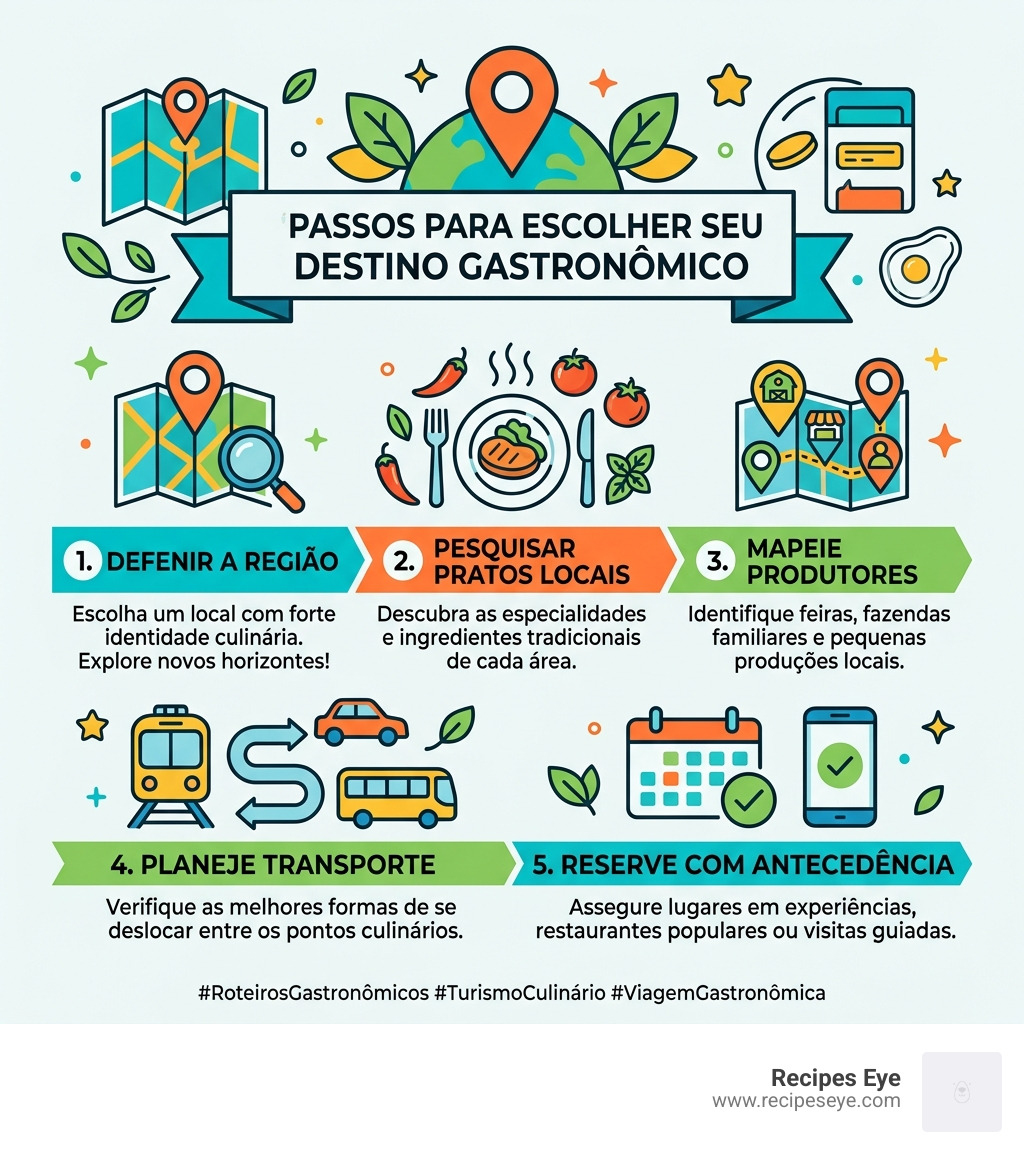
Planning food tours requires a bit more strategy than a common trip. Here are our essential tips:
- Support Family Farming: Prioritize visiting properties that are part of cooperatives. This ensures your money supports the local community.
- Transportation: In rural routes, access can be difficult. Many regions offer charming options like the “countryside little train” or executive vans for groups.
- Group Size: For an immersive experience in artisanal distilleries or cheese shops, groups of 10 to 15 people are ideal to ensure the producer’s attention.
- Hands-on: Look for itineraries that include cooking classes or cachaça workshops. Learning how to make it is as fun as eating it.
Recipes Eye Tip: The best time to visit rural routes is during harvest festivals or seasonal festivals (like the Jabuticaba festival in Sabará or the grape harvest in the South). Always check the local calendar before booking!
Frequently Asked Questions about Food Tours
What is the best time to take a rural food tour?
It depends on the focus product. For wines and grapes in the South, summer (January and February) is the harvest season (vindima). For coffee in the Southeast, the harvest and drying period occurs between May and August. Always research the seasonality of the route’s main ingredient.
How do food tours benefit the local economy?
They eliminate intermediaries. By buying directly from the producer, the amount paid supports the farming family and preserves artisanal production methods that could disappear in the face of industrialization. Additionally, it generates jobs in hospitality and transport in rural areas.
Is it possible to do food tours on a self-guided basis?
Yes! Many routes, such as the Vale do Ribeira Food Route, are perfect for road trips. However, for tastings of alcoholic beverages (such as cachaça and wine), we recommend hiring a guide or transport to ensure everyone’s safety.
Conclusion
Food tours are proof that eating is a political, cultural act and, above all, a shared pleasure. By choosing these destinations, we not only satisfy our appetite but also contribute to the preservation of traditions that form the identity of a people.
At Recipes Eye, we believe that good food should be nutritious for the body and the soul. Whether exploring the trails of Minas Gerais or the coffee routes in São Paulo, take with you curiosity and respect for the producers who make every dish possible.
Now that you know how to set up your itinerary, how about starting to practice at home? Discover healthy recipes for your routine and bring a bit of the flavor of these routes to your kitchen while planning your next big adventure!

