
Sopas e refeições diárias que nutrem o corpo
Why refeições saudáveis diárias make all the difference
refeições saudáveis diárias are the foundation of a life with more energy, health, and well-being. And the good news? Assembling a balanced plate in your daily life is simpler than it seems.
Quick response: how to assemble refeições saudáveis diárias
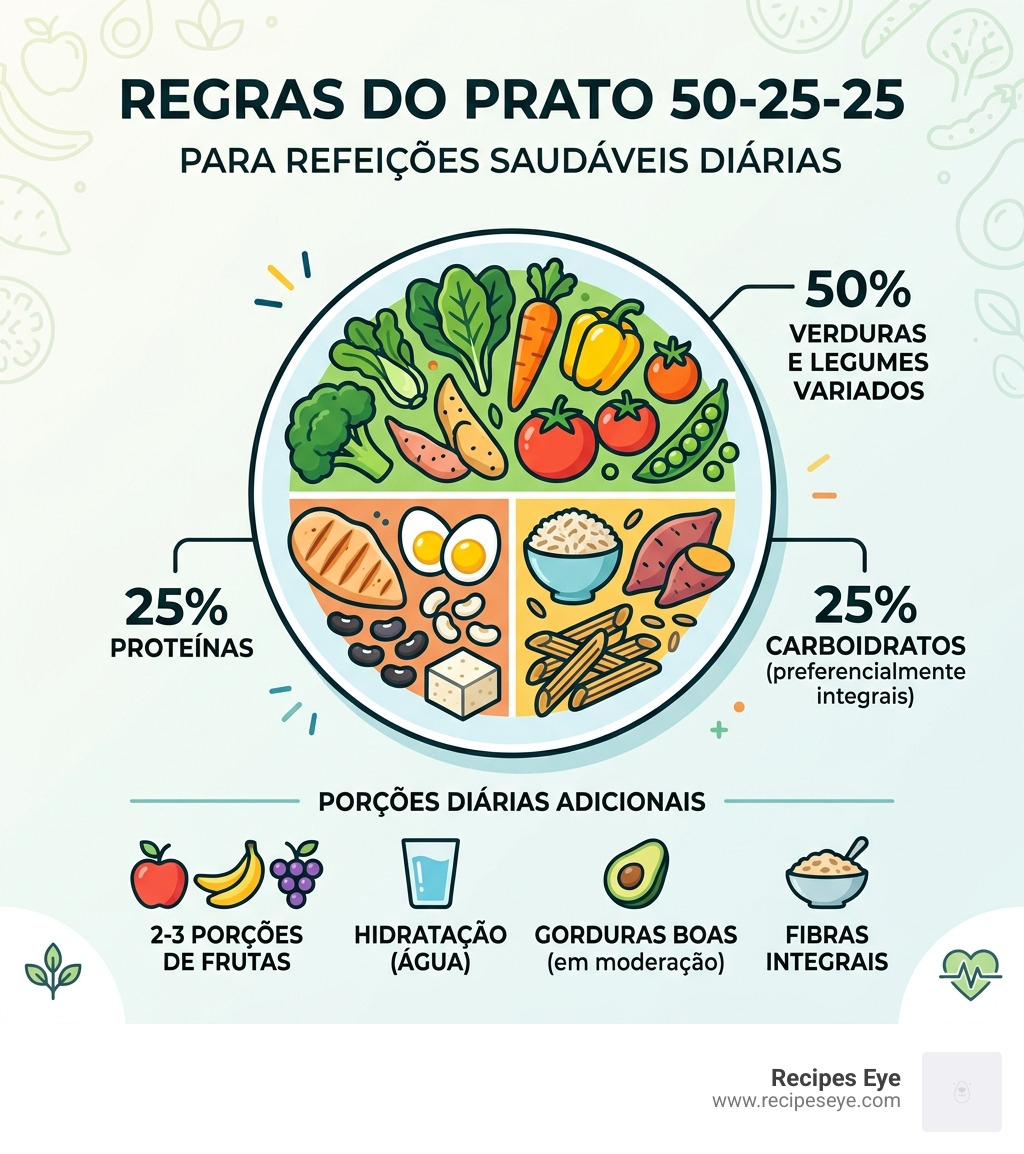
- 50% of the plate: varied vegetables and greens
- 25% of the plate: proteins (chicken, eggs, beans, tofu)
- 25% of the plate: preferably whole carbohydrates (brown rice, sweet potato, whole wheat pasta)
- Include 2 to 3 servings of fruit throughout the day
- Prefer natural or minimally processed foods
- Reduce ultra-processed foods, free sugars, and trans fats
Maintaining a balanced diet in daily life can seem challenging with a busy routine and the huge supply of industrial foods. But the truth is simple: healthy meals don’t have to be complicated or expensive.
The classic rice and beans, for example, is already one of the most nutritious combinations that exist. Together, they form a complete protein, complementing each other’s amino acids.
According to World Health Organization (WHO) guidelines, adults should consume at least 400g of fruits and vegetables per day (equivalent to five servings), plus 25g of fiber. These numbers may seem high, but they are easily distributed throughout the day’s meals.
In this guide, you will find everything you need to plan, assemble, and maintain a routine of healthy meals — from breakfast to dinner, including practical snacks and preparation tips.
What defines refeições saudáveis diárias and balanced meals?
For us here at Recipes Eye, a healthy meal is not about punitive restriction, but about smart nutrition. In April 2026, the concept of “real food” is stronger than ever. But what does this mean in practice?
A balanced meal is one that provides all the nutrients the body needs to function: carbohydrates for energy, proteins for muscle building, good fats for the brain, and fiber, vitamins, and minerals for metabolic balance.
According to WHO and PAHO guidelines, a healthy diet must follow four fundamental principles: adequacy, balance, moderation, and diversity. This means that there is no single “superfood,” but rather a combination of various groups in correct proportions. To better understand how this harmony works, you can check out this How to assemble a healthy and complete plate: Basic guide.

Natural vs. Ultra-processed: The Great Divider
The secret to successful refeições saudáveis diárias is to prioritize whole or minimally processed foods. Ultra-processed foods usually have long ingredient lists, full of additives and preservatives that our bodies do not recognize well.
| Category | Food Examples | Why choose/avoid? |
|---|---|---|
| In Natura | Fruits, vegetables, eggs, grains, fresh meats | They are rich in nutrients and fiber in their original form. |
| Minimally Processed | Polished rice, dried beans, pasteurized milk | They have undergone simple changes to facilitate consumption, maintaining nutrition. |
| Ultra-processed | Sodas, instant noodles, filled cookies | Rich in free sugars, sodium, and trans fats; poor in nutrients. |
Weekly menu planning and organization
We know that lack of time is the biggest enemy of healthy eating. Who hasn’t come home exhausted and ended up ordering greasy delivery? Planning is your shield against these impulsive decisions.
1. Batch Cooking: Our golden tip is to set aside a few hours of your Sunday (or your day off) to prepare the bases. Cook a large amount of beans, roast some vegetables, and grill proteins. Storing these bases in organized containers in the refrigerator or freezer makes it easy to assemble refeições saudáveis diárias in a few minutes during the week.
2. Smart Shopping List: Never go to the market without a list based on what you intend to eat. Prioritize the produce aisles. Buying seasonal ingredients not only ensures tastier and more nutritious food, but also helps your wallet, as they tend to be cheaper.
3. Essential Pantry Items: Always keep on hand:
- Grains: Brown rice, quinoa, oats.
- Legumes: Beans, lentils, chickpeas (can be frozen cooked).
- Natural Seasonings: Garlic, onion, fine herbs, turmeric, oregano.
- Good Fats: Extra virgin olive oil, nuts, chia seeds.

Nutritional structure and food groups
For our refeições saudáveis diárias to truly nourish the body, we need to understand the function of each group. The Ministry of Health, in its Dietary Guide for the Brazilian Population, emphasizes that the basis of the diet should be of plant origin, complemented by high-quality protein sources. For those looking for specific tips for the end of the day, it’s worth reading these Dinner time: Five tips for a healthy meal — Ministry of Health.
Ideal proportions for refeições saudáveis diárias
If you visualize your plate as a chart, the division should be clear to ensure satiety and glycemic control:
- 50% Vegetables: Half of the plate should be colorful. Mix green leaves (lettuce, kale, spinach) with cooked or roasted vegetables (carrots, zucchini, broccoli). This ensures the 25g of daily fiber needed for adults.
- 25% Proteins: Divide between animal proteins (such as chicken breast, tilapia, or eggs) and plant proteins (such as beans or lentils). Remember: rice and beans are unbeatable!
- 25% Complex Carbohydrates: Choose options that release energy gradually, such as sweet potato, brown rice, or pumpkin.
Essential food groups in refeições saudáveis diárias
- Cereals and Tubers: 3 to 5 servings per day. They are our main source of energy.
- Legumes: 1 to 2 servings per day. Essential for fiber and iron.
- Fruits: 2 to 3 servings per day. Prefer the whole fruit over juice so as not to lose the fiber.
- Fats: Should make up between 15% to 30% of total calories, prioritizing unsaturated ones (fish, avocado, olive oil).
Practical examples of nutritious and quick dishes
Many people ask us: “What do I eat when I’m in a hurry?”. Here are some real suggestions for your daily life:
Breakfast (Low Glycemic Index):
- Overnight Oats: Oats soaked in plant-based milk with chia seeds and red fruits. Practical because you make it the night before!
- Egg White Omelet with Vegetables: Quick, high in protein, and satiating.
Balanced Lunch:
- Traditional Plate: Brown rice, black beans, ground beef with grated carrots, and a generous salad of lettuce and tomato.
- Healthy Poke: Base of quinoa or brown rice, salmon or tofu, cucumber, edamame, avocado, and mango. It’s a complete meal in a bowl.
Light Dinner:
- Pumpkin Soup with Chicken: Perfect for cold days. Use ginger for a thermogenic touch.
- Zucchini Noodles: Sautéed with garlic, olive oil, and grilled chicken strips. Low in carbs and very nutritious.
Practical Snacks:
- Mix of oilseeds (cashews and walnuts).
- Natural yogurt with homemade granola.
- Carrot sticks with hummus (chickpea paste).
Benefits of the routine and foods to avoid
Maintaining consistency in refeições saudáveis diárias brings benefits that go far beyond the mirror. We are talking about preventing chronic diseases such as type 2 diabetes and high blood pressure.
What to avoid (or drastically limit):
- Free Sugars: Should not exceed 10% of daily calories (about 50g in a 2,000 kcal diet). The ideal, according to the WHO, is less than 5% for extra benefits.
- Trans Fats: Present in many ultra-processed foods and industrial fried foods. They should be avoided as much as possible.
- Excess Sodium: The limit is 5g of salt per day (one level teaspoon). Excess raises blood pressure.
What to prioritize for metabolic health:
- Potassium: Found in bananas, potatoes, and spinach, it helps relax blood vessels and balances the effect of sodium.
- Hydration: Water is the main vehicle for all nutrients in our body. Drink water regularly, without waiting to feel thirsty.
- Chewing: Eating slowly and savoring the food is as important as what is on the plate. This helps the brain process satiety signals.
Frequently Asked Questions about refeições saudáveis
What can’t be missing in a healthy meal?
Balance between macronutrients cannot be missing. The plate should always have a source of fiber (vegetables), a source of energy (complex carbohydrates), and a source of building (proteins). A variety of colors is also essential, as each color represents different phytonutrients and vitamins.
How to save time in preparing daily meals?
The “advance preparation” strategy is the best. Wash and chop vegetables as soon as you get home from the market. Cook grains and legumes in large quantities and freeze in individual portions. Having healthy “lunch boxes” ready in the freezer prevents you from resorting to ultra-processed foods when hunger strikes.
Is it necessary to cut carbohydrates to have a balanced diet?
Not at all! Carbohydrates are the body’s main source of energy. The secret is quality and proportion. Instead of eliminating them, prefer complex and whole carbohydrates (brown rice, oats, tubers) which have more fiber and keep blood sugar stable, occupying about 25% of your plate.
Conclusion
At Recipes Eye, we believe that the journey to vibrant health starts in the kitchen, but it doesn’t have to be a burden. Adopting refeições saudáveis diárias is an act of self-care that becomes easier with time and practice. Consistency is more important than perfection; small gradual changes lead to lasting results.
We hope this guide has inspired you to plan your next menu with more confidence and creativity. After all, eating well is celebrating life with flavor and vitality!
Discover more nutritious recipes

