
Comer bem não custa caro se você seguir este guia
Eating well on a budget is easier than you think
Eating well on a budget is totally possible — and it doesn’t require expensive diets, trendy superfoods, or a lot of time in the kitchen.
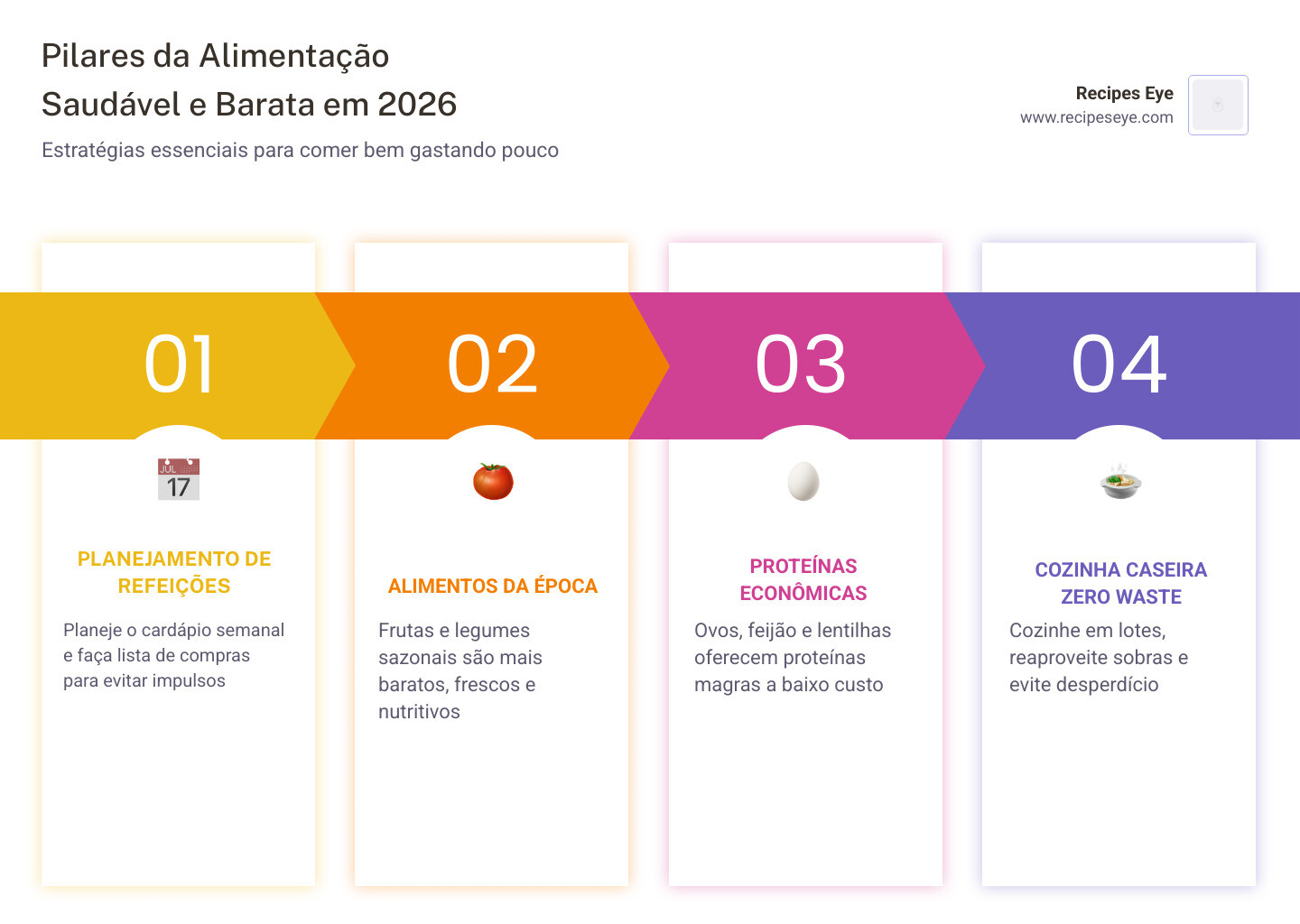
Here is a quick summary of the main strategies:
- Plan the week’s meals before going to the market
- Make a shopping list and stick to it strictly
- Choose seasonal foods — they are cheaper and more nutritious
- Prefer economic proteins like eggs, beans, and lentils
- Cook at home and prepare lunchboxes for the week
- Avoid ultra-processed foods — they cost more and nourish less
- Use everything from the food — peels, stems, and leftovers become new meals
- Compare prices and prefer store brands for basic items like rice and pasta
Many people believe that eating healthily is a privilege for those with extra money. But that is a myth.
Simple foods like rice, beans, eggs, seasonal vegetables, and local fruits form the basis of a balanced diet — and cost much less than industrialized products or delivery.
According to data from IBGE, more than 40% of Brazilian families spend on superfluous items without realizing it. Just by cutting R$20 per week on snacks and coffees away from home, you already free up R$80 per month to invest in real food.
In this guide, you will learn exactly how to do this — with practical strategies, menu examples, and tips to avoid wasting either money or food.
What does eating well on a budget mean in 2026?
In 2026, with inflation still being a recurring theme in our conversations, the concept of “eating well” has evolved. It’s not about buying the most expensive ingredient or the package with the “gourmet” seal. Eating well means providing your body with the nutritional balance necessary to function with energy and health.
For us here at Recipes Eye, the basis of eating well on a budget is nutrient density. This means choosing foods that offer many vitamins, minerals, and fibers in relation to their cost. In natura foods (such as grains, roots, and vegetables) are the champions here. They sustain you for longer, avoid glucose spikes, and best of all, go much further in the pot.
A complete diet needs fibers (for digestion), proteins (for muscles), and good fats. The secret is knowing where to look for these elements without emptying your wallet. If you want to understand more about making smart choices, check out this guide on how to eat well and spend little: 10 valuable tips.
Hydration also counts. Swapping sodas and boxed juices for filtered water is probably the fastest and healthiest saving you can make today.
Smart swaps for everyday life:
- Instead of: Flavored yogurt with sugar -> Use: Natural yogurt with chopped fruit
- Instead of: Packaged snacks -> Use: Stovetop popcorn or toasted pumpkin seeds
- Instead of: Ready-made seasoning cubes -> Use: Bulk dried herbs, garlic, and onion
- Instead of: Soda -> Use: Water with lemon slices or mint
Why avoiding ultra-processed foods helps you eat well on a budget
It might seem like that instant noodle or frozen lasagna is cheap, but the cost-benefit is very low. These products are full of chemical additives, sodium, and hidden sugars that inflame the body and, worse, do not bring real satiety.
When you consume ultra-processed foods, you feel hungry faster, which leads to eating more and spending more. Furthermore, in the long run, the health expenditure (medicines and consultations) due to a poor diet ends up being much higher. Saving on industrialized food today is investing in your savings for tomorrow.
Smart planning and shopping strategies
The supermarket is designed to make you spend. But we have the weapons to fight against it! The first step is the pantry inventory: never leave home without knowing what you already have. Buying a second bag of rice just because it was “on sale” when you already have three at home is idle money.
The famous shopping list is your best friend. Research shows that people who shop without a list spend between 20% and 40% more. And the golden rule: never go to the market hungry! Hunger turns any filled cookie into a “vital necessity.”
Another crucial point in 2026 is the choice of brands. Supermarket store brands (the famous white labels) offer savings of up to 30% on basic items like rice, beans, and pasta, while maintaining the same nutritional quality as market leaders.
Savings Comparison (Monthly Estimate)
| Basic Item | Premium Brand | Store Brand | Estimated Savings |
|---|---|---|---|
| Rice (5kg) | R$ 32.00 | R$ 24.00 | R$ 8.00 |
| Beans (1kg) | R$ 9.50 | R$ 7.00 | R$ 2.50 |
| Pasta (500g) | R$ 6.00 | R$ 4.20 | R$ 1.80 |
| Oats (200g) | R$ 8.00 | R$ 5.50 | R$ 2.50 |
To master these techniques, see this Complete Guide on how to shop smartly and save money. And remember, buying items like oats, lentils, and seasonings in bulk is usually much cheaper, as you don’t pay for the packaging marketing. For more tips on healthy habits, visit Recipes Eye.
How to eat well on a budget with seasonal foods
Seasonality is nature’s law in favor of your pocket. Seasonal foods are cheaper because the supply is abundant and the transport cost is lower. Furthermore, they are much more nutritious and flavorful, as they were harvested at the right moment of maturation.
In 2026, supporting the local producer at neighborhood fairs is a smart strategy. At the end of the fair, prices usually drop even further (the famous “hora da xepa”).
Examples of foods by season in 2026:
- Autumn (Current): Pumpkin, persimmon, tangerine, sweet potato, and eggplant.
- Winter: Kale, broccoli, pine nuts, orange, and carrot.
- Spring: Pineapple, asparagus, spinach, strawberry, and artichoke.
- Summer: Watermelon, corn, tomato, mango, and zucchini.
Economic proteins and the power of legumes
Red meat is usually the most expensive item on the list. To eat well on a budget, we need to diversify protein sources. Eggs are the perfect protein: cheap, versatile, and complete in amino acids.
But the real “superpower” lies in legumes. Beans, lentils, chickpeas, and soy are rich in iron, fiber, and vegetable proteins. They go a long way and can be the basis for incredible main dishes.

Replacing meat with legumes two or three times a week drastically reduces the market bill. A kilo of lentils costs a fraction of a kilo of meat and feeds many more people. If you want more practical tips, see what really works to save at the supermarket.
Efficient kitchen: one-pot meals and lunchboxes
Cooking at home is the ultimate strategy. Batch cooking saves time and gas. Dedicate a few hours of your Sunday to prepare the week’s bases: a large pot of beans, brown rice, and roasted vegetables.
“One-pot meals” are wonderful. You throw the rice, vegetables, a protein (like egg or shredded chicken), and seasonings into the same pot. The flavor concentrates, and you have less washing up. Furthermore, preparing lunchboxes prevents you from falling into the temptation of delivery or expensive snacks on the street.
Avoiding delivery just three times a week can save about R$100 per month. It’s an amount that makes a big difference in the family budget. To understand how these small cuts help, read about how to cut small expenses and save R$200 every month without struggle.

Weekly menu for eating well on a budget
Here is a suggestion for a simple and nutritious menu to inspire your week:
Monday (Meatless Monday):
- Lunch: Rice, black beans, sautéed kale, and fried egg.
- Dinner: Lentil soup with vegetables (carrot and potato).
Tuesday:
- Lunch: Whole grain pasta with homemade tomato sauce and canned tuna.
- Dinner: Omelet stuffed with spinach and tomato salad.
Wednesday:
- Lunch: Saffron rice, beans, and shredded chicken with zucchini.
- Dinner: Baked rice (reusing leftovers) with vegetables and cheese.
Thursday:
- Lunch: Chickpea salad with tomato, onion, cucumber, and boiled egg.
- Dinner: Sweet potato mash with ground beef and sautéed cabbage.
Friday:
- Lunch: “One-pot” rice, lentils, and mixed vegetables.
- Dinner: Chicken sandwich with grated carrots and lettuce.
Zero waste and tips for students or those living alone
For those living alone or students, waste is the biggest enemy. Buying in large quantities might seem cheap, but if the food spoils in the fridge, the loss is certain. The tip here is full utilization.
Did you know that kale and broccoli stems have more fiber than the leaves? Use them in soups or stir-fries. Potato peels, well-washed, can be baked with olive oil and salt to become a crispy and healthy snack.
If you share a house with friends, buy basic items like rice (5kg bags) and cleaning products together. This reduces the unit price. And don’t forget: saving on food doesn’t mean stopping having fun. There are smart strategies to enjoy life while spending less.
Frequently Asked Questions about budget eating
Is it possible to have a complete diet without eating meat every day?
Yes! Legumes (beans, lentils, chickpeas) combined with cereals (rice, corn, oats) provide all the essential amino acids the body needs. Eggs and dairy are also great sources of high biological value protein at an affordable cost.
What is the best way to sanitize and preserve vegetables to make them last longer?
Wash the leaves, dry them very well (a salad spinner helps a lot), and store them in containers with paper towels between the layers. This avoids the excessive moisture that makes leaves rot. Vegetables like carrots and beets last longer in the lower part of the fridge, inside closed bags.
Is buying frozen a good option for saving money?
Yes, especially frozen vegetables like broccoli, peas, and mixed vegetables. They are harvested and frozen at the peak of freshness, maintaining nutrients, and avoid waste, as you use only the amount you need for the meal.
Conclusion
Eating well on a budget is an act of care for yourself and your pocket. By choosing real food, planning your shopping, and avoiding waste, you build a sustainable lifestyle that brings immediate benefits to your health and your bank account.
Preventive health starts on the plate, and the habits you cultivate today in 2026 will be the pillars of your well-being in the coming years. Don’t pressure yourself to be perfect from day one; start with small swaps and see how your body (and your budget) respond.
Want to discover incredible, nutritious recipes that fit your budget? Explore nutritious recipes at Recipes Eye and transform your relationship with food right now!

