
Alimentação saudável para crianças sem o famoso aviãozinho
Why healthy eating for children defines health for a lifetime
Alimentação saudável crianças is one of the most searched topics by parents and caregivers — and for good reason. What a child eats in the first years of life directly shapes their physical, cognitive, and emotional development.
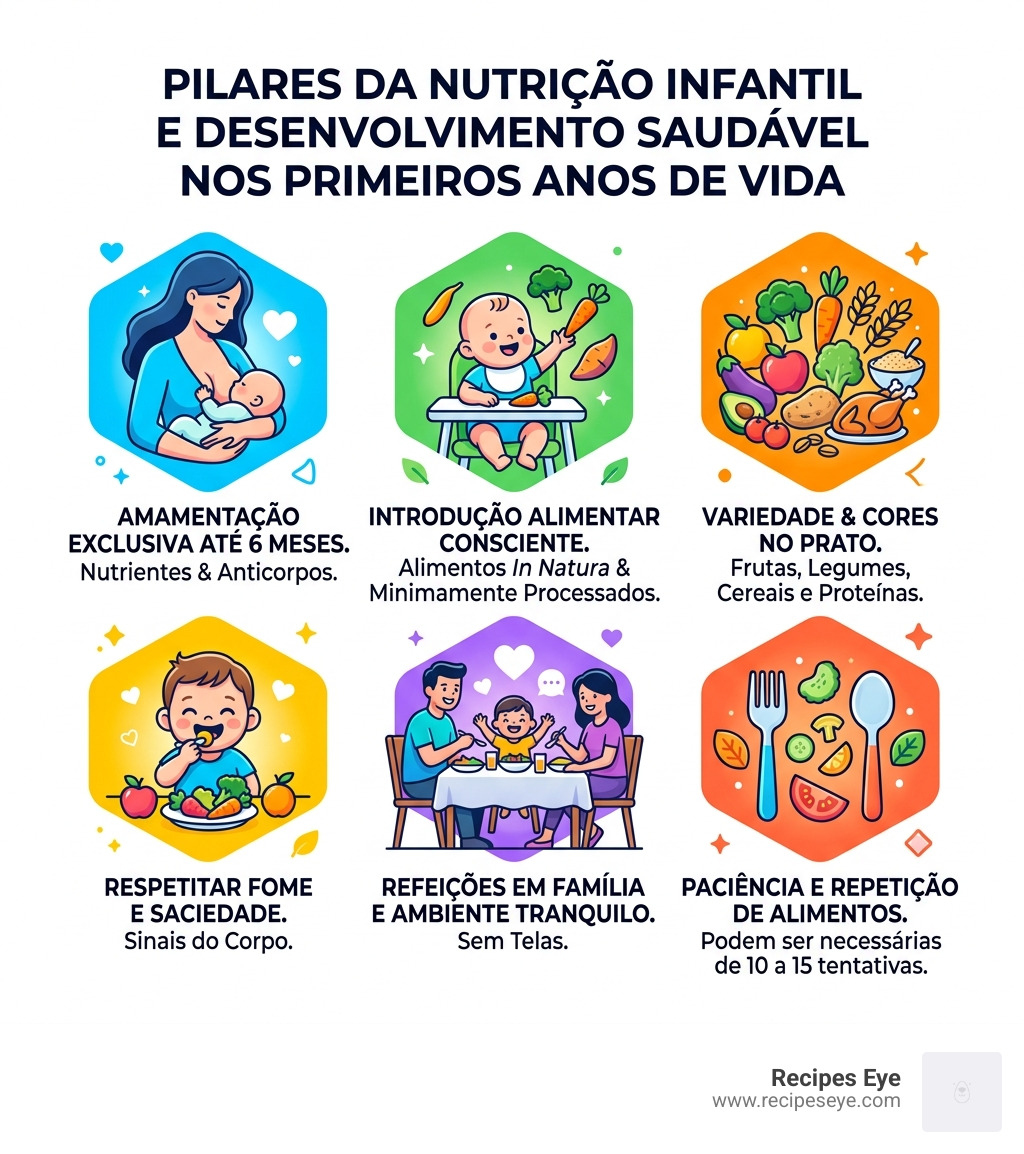
Quick response: how to ensure healthy eating for children?
- Exclusive breastfeeding until 6 months
- Food introduction starting at 6 months with whole and minimally processed foods
- Avoid sugar and ultra-processed foods until age 2 (and beyond)
- Offer a variety of fruits, vegetables, grains, and animal proteins
- Respect hunger and satiety signals of the child
- Have family meals, without screens, in a calm environment
- Repeat new foods with patience — it can take 10 to 15 attempts
Science is clear about this. The first 1,000 days of life — from gestation to age 2 — are a critical period. The dietary choices made in this window influence metabolism, the immune system, and even eating habits in adulthood. Researchers call this metabolic programming.
And the problem many parents face is not a lack of love. It is a lack of practical information.
How do you convince a child to try broccoli without turning dinner into a battle? How do you structure meals that are both nutritious and enjoyable? The famous “airplane” trick might work for one night — but it doesn’t build lasting habits.
In this guide, you will find evidence-based guidelines — from the Ministry of Health, the WHO, and child nutrition specialists — translated into concrete, uncomplicated steps.
First steps: Breastfeeding and food introduction

The journey of alimentação saudável crianças begins long before the first spoonful of puree. Breast milk is the gold standard food, providing not only nutrients but also essential antibodies. The recommendation from the World Health Organization (WHO) and entities like ESPGHAN is clear: exclusive breastfeeding until 6 months of age.
During this period, the baby does not need water, teas, or juices — even in hot climates, breast milk meets all hydration needs. The use of infant formulas should be reserved for cases where breastfeeding is not possible, always under professional guidance. Additionally, it is important to avoid the use of bottles and pacifiers, which can cause “nipple confusion” and hinder the correct latch on the breast.
At 6 months, the nutritional transition occurs. This is the moment when the child’s digestive system and motor development are ready for new challenges. According to the Dietary Guide for Children Under 2 Years Old — Ministry of Health, food should have a pasty consistency (purees mashed with a fork) and never be blended or passed through a sieve. Keeping small pieces helps in the development of facial muscles and prepares for future chewing.
How to start healthy eating for children at 6 months
Introduction should be gradual and diversified. We start with one fruit meal and one savory meal (lunch), evolving to two fruit meals and two savory meals (lunch and dinner) at 7 months.
To build a balanced plate, we should include one food from each group:
- Vegetables and Greens: Carrots, pumpkin, broccoli.
- Cereals and Tubers: Rice, corn, potatoes, cassava.
- Legumes: Beans, lentils, chickpeas.
- Animal Protein: Beef, chicken, fish, or eggs.
A vital detail: from 6 months onwards, the baby’s iron reserves decrease. Therefore, offering animal protein is fundamental. About 30g per day of meat or fish (raw weight) is recommended. Offering foods separately on the plate is an excellent strategy for the child to learn individual flavors and the colors of each ingredient, instead of a monotonous mixture.
The importance of water and dairy control
With the introduction of solids, water becomes mandatory. We should offer potable water several times a day, preferably in transition cups or regular cups, so the child learns the mechanism of drinking.
Regarding dairy, in the second half of the first year (6 to 12 months), breast milk remains important, but the sum of all dairy (milk, natural yogurt, cheese) should not exceed 500ml to 700ml per day. Excess cow’s milk can interfere with iron absorption and lead to anemia. Avoid juices, even natural ones, as they lose fruit fibers and concentrate too much sugar (fructose), which can habituate the palate and reduce water satiety. For more details on the initial phases, consult the guidelines for Healthy Eating — Ministry of Health.
What to avoid and what to prioritize on the child’s plate
To ensure alimentação saudável crianças, we need to understand the classification of foods. The Dietary Guide for the Brazilian Population teaches us to prioritize what comes from nature.
| Category | What to include / What to avoid | Examples |
|---|---|---|
| In Natura / Minimally Processed | Always prioritize | Fruits, vegetables, greens, fresh meats, eggs, rice, beans. |
| Processed | Consume in moderation | Simple cheeses, preserves in brine, artisanal breads. |
| Ultra-processed | Avoid as much as possible | Sodas, packaged snacks, instant noodles, nuggets, filled cookies. |
The golden rule is: no sugar until age 2. Honey is also prohibited for children under 1 year old due to the risk of botulism, a serious infection. Additionally, we must be careful with foods that pose a choking hazard, such as whole grapes, cherry tomatoes, or popcorn. Salt should be used with extreme moderation, prioritizing natural seasonings like onion, garlic, parsley, and basil. For specific food safety guidelines, see How to take care of the feeding of children under 2 years old — Ministry of Health.
Essential nutrients for development and healthy eating for children
Some nutrients are true “superheroes” in child growth:
- Vitamin D: Fundamental for immunity and bone health. Studies show that children with good vitamin D levels are less susceptible to respiratory infections.
- Omega-3: Found in fish, it is essential for cognitive development and eye health.
- Palatinose: This low-glycemic index carbohydrate provides sustained energy. A study in the UK demonstrated that children who consumed Palatinose at breakfast had better concentration and memory after 3 hours.
- Soluble Fibers: Help with intestinal health and promote satiety.
- Tryptophan: Present in bananas and oats, it aids in serotonin production, improving sleep quality.
The 12 steps for a successful nutritional routine
The Ministry of Health synthesizes alimentação saudável crianças into 12 fundamental steps for the first two years:
- Breastfeed until age 2 or more, being exclusive until 6 months.
- Offer in natura or minimally processed foods starting at 6 months.
- Offer water instead of sugary drinks.
- Offer mashed food (not blended).
- Do not offer sugar until age 2.
- Do not offer ultra-processed foods.
- Cook the same food for the child and the family (with seasoning adjustments).
- Make mealtime a positive and affectionate moment.
- Pay attention to hunger and satiety signals.
- Take care of hygiene at all stages.
- Offer healthy food outside the home as well.
- Protect the child from child advertising (which often misleads about nutritional value).
Strategies for healthy eating for children without stress
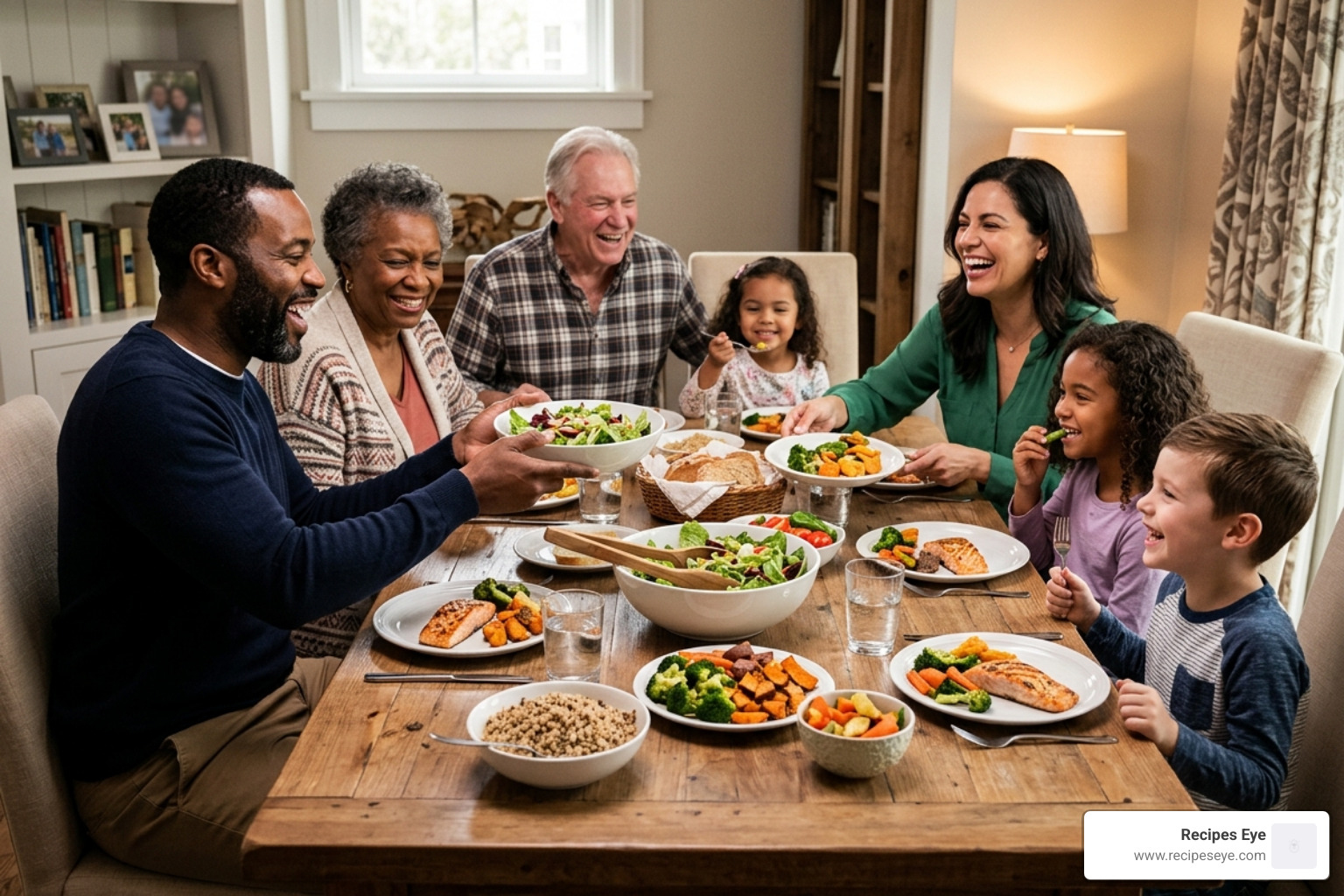
Often, the challenge is not what is on the plate, but the behavior at the table. Responsive feeding is the key: parents decide what, when, and where to eat, but the child decides how much to eat. Respecting satiety signals (such as turning the face away or pushing the spoon) prevents the child from losing their natural capacity for self-regulation.
Food neophobia (fear of the new) is common between ages 2 and 6. The solution? Loving persistence. It may be necessary to offer the same food between 10 to 15 times, in different preparations, for it to be accepted. The “democratic style” of parenting — where there are clear rules, but also affection and listening — is what shows the best results in forming healthy habits.
Educational practices and involvement in the kitchen
Want your child to eat better? Take them to the kitchen! Involving the child in preparation — washing leaves, mashing a banana, or helping choose vegetables at the market — sparks curiosity and reduces resistance.
Additionally, we can use playful tools:
- Fun plates: Creating faces with food or using cutters of different shapes.
- Routine cards: Help the child visualize the sequence of the day, bringing security.
- Home garden: Planting herbs in small pots teaches where food comes from. These practices stimulate motor coordination, self-esteem, and supervised autonomy.
School meals and the nutritious lunchbox
The lunchbox is an extension of home eating. To keep it healthy, focus on three pillars:
- A drink: Water (always!), coconut water, or natural juice without sugar (in a thermal bottle).
- A fruit: Fresh and, if possible, whole or in large pieces.
- A complex carbohydrate/protein: Homemade cheese bread, whole grain bread sandwich with shredded chicken, natural yogurt with granola, or homemade sugar-free cakes.
Avoid chocolate milks and boxed juices, which are loaded with dyes and preservatives. Weekly planning is the best friend of busy parents to avoid falling into the temptation of convenient industrial products.
Frequently asked questions about child nutrition
Why is sugar prohibited until age 2?
The child’s palate is still forming. Sugar is a very “powerful” flavor that habituates the taste buds, making fruits and vegetables seem bland. Additionally, early consumption causes insulin and dopamine spikes, followed by irritability (the famous glycemic roller coaster), besides drastically increasing the risk of obesity, cavities, and early diabetes.
What to do when the child refuses a new food?
Stay calm. Do not force, do not bargain (“eat everything and get dessert”), and do not replace the meal with a snack they like. Simply remove the plate without fighting and offer the food again on another day, with a different texture or seasoning. The parents’ example is the greatest influencer: if you don’t eat salad, your child likely won’t either.
How to differentiate selectivity from eating difficulty?
Selectivity is common: the child refuses some items but maintains healthy growth and eats foods from other groups. Eating difficulty is more serious: the child has a repertoire of fewer than 20 foods, excludes entire groups, presents extreme anxiety at meals, or has a stagnant growth curve. In these cases, follow-up with a pediatrician, behavioral nutritionist, and sometimes a speech therapist is essential.
Conclusion
At Recipes Eye, we believe that alimentação saudável crianças does not have to be an arduous task, but rather a journey of discovery and affective bonding. By prioritizing functional gastronomy and respecting the rhythm of each little one, we are investing not only in today’s growth but in tomorrow’s longevity and well-being.
Remember: every meal is an opportunity to teach. No rush, no “airplane” tricks, and with plenty of real food. Discover more in our library and find nutritious recipes that will delight your entire family!

