
Typical Madeira Food: Everything You Need to Know Before Visiting the Island
Typical Madeira food is one of the richest and most diverse in Portugal, with dishes that mix local ingredients, historical influences, and flavors from the sea and the land. Here is a quick summary of the essentials:
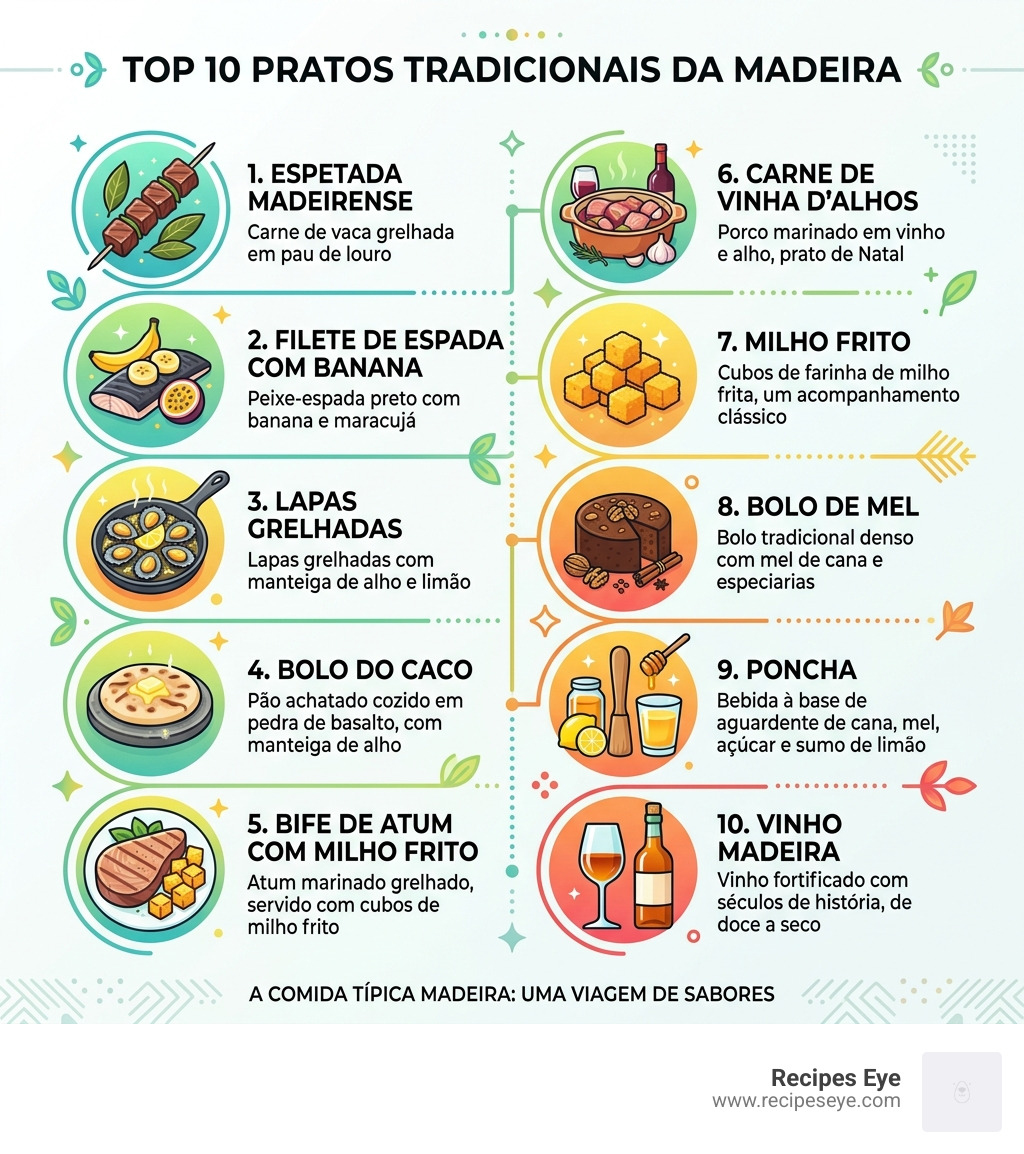
The dishes you cannot miss in Madeira:
- Madeiran Espetada – beef on a laurel skewer, grilled over coals
- Scabbard Fish Fillet with Banana – deep Atlantic black scabbard fish
- Grilled Limpets – shellfish with garlic butter and lemon
- Bolo do Caco – flatbread on basalt stone, served with garlic butter
- Tuna Steak – marinated local tuna, served with fried corn
- Carne de Vinha d’Alhos – pork marinated in wine and garlic, a typical Christmas dish
- Milho Frito – classic side dish made of fried cornmeal
- Honey Cake – dense cake with cane honey and spices
- Poncha – alcoholic drink based on cane spirit, honey, and lemon
- Madeira Wine – fortified wine with centuries of history
Visiting Madeira without trying its gastronomy is like going to Rome and not seeing the Pope. Madeiran cuisine tells the story of the island — from the simplicity of island life to the richness of the Atlantic.
The dishes are generous, prices are affordable, and almost all restaurants serve at least one version of the most traditional recipes. For travelers on a budget, it is easy to eat very well without spending much.
In this guide, you will find everything you need to know: the most emblematic meat and fish dishes, the island’s breads and sides, traditional sweets, and the drinks that define Madeira.
The Most Iconic Meat Dishes of Typical Madeira Food
When we talk about typical Madeira food, meat occupies a place of honor, especially in celebrations and family gatherings. The island’s geography and its agricultural tradition have shaped recipes that use simple but extremely effective seasonings, such as garlic, bay leaf, and coarse salt.

Beef is the main star, but pork also plays a fundamental role, especially during festive seasons. The secret of Madeiran cooking lies not in complex techniques, but in the quality of the ingredients and respect for the wood fire. If you are looking for an authentic experience, prepare to find dishes that are true symbols of hospitality.
The Queen of the Tables: Espetada and Typical Madeira Food
The Espetada is, without a doubt, the most famous dish on the island. Originally, this delicacy was reserved for “arraiais” (religious festivals and pilgrimages), as beef was an inaccessible luxury for most families in their daily lives.
The true Espetada on a laurel skewer uses juicy cubes of beef sirloin, seasoned only with coarse salt, crushed garlic (with the skin on!), and bay leaves. The great differentiator is the skewer: traditionally, a fresh laurel branch is used. The heat of the coals releases the essential oils of the laurel, which perfume the meat from the inside out.
Although many modern restaurants use metal skewers for practical reasons, the tradition was born in Estreito de Câmara de Lobos. It was there that Francisco da Silva Freitas opened the first restaurant specialized in espetadas in the 1950s, popularizing the dish that is now consumed throughout the island. When eating an espetada, it is common to see the skewer hanging vertically from an iron stand in the center of the table, allowing the meat juices to drip onto the side dish below.
Picadinho and Carne de Vinha d’Alhos
If the espetada is the queen of parties, the Picadinho (or Picado) is the king of casual gatherings. It is the perfect dish to share with friends. It consists of small cubes of beef fried with garlic and bay leaf, served on a platter surrounded by French fries. The secret lies in the rich sauce left on the platter, often “cleaned up” with pieces of bolo do caco at the end of the meal.
On the other hand, Carne de Vinha d’Alhos is an explosion of flavor with deep historical roots. Traditionally served at Christmas, this recipe uses pork cubes marinated for at least two days in a mixture of white wine, vinegar, plenty of garlic, bay leaf, and savory. After being well marinated, the meat is fried in its own fat and served with homemade bread or slices of fried corn. It is a dish that warms the soul and demonstrates how meat preservation through pickling created one of the most iconic flavors of the region.
Treasures of the Sea: Madeiran Fish and Seafood
Surrounded by the deep and crystal-clear waters of the Atlantic, Madeira offers a variety of fish rarely found elsewhere. Typical Madeira food from the sea is defined by freshness and unique species that inhabit the abyssal depths.
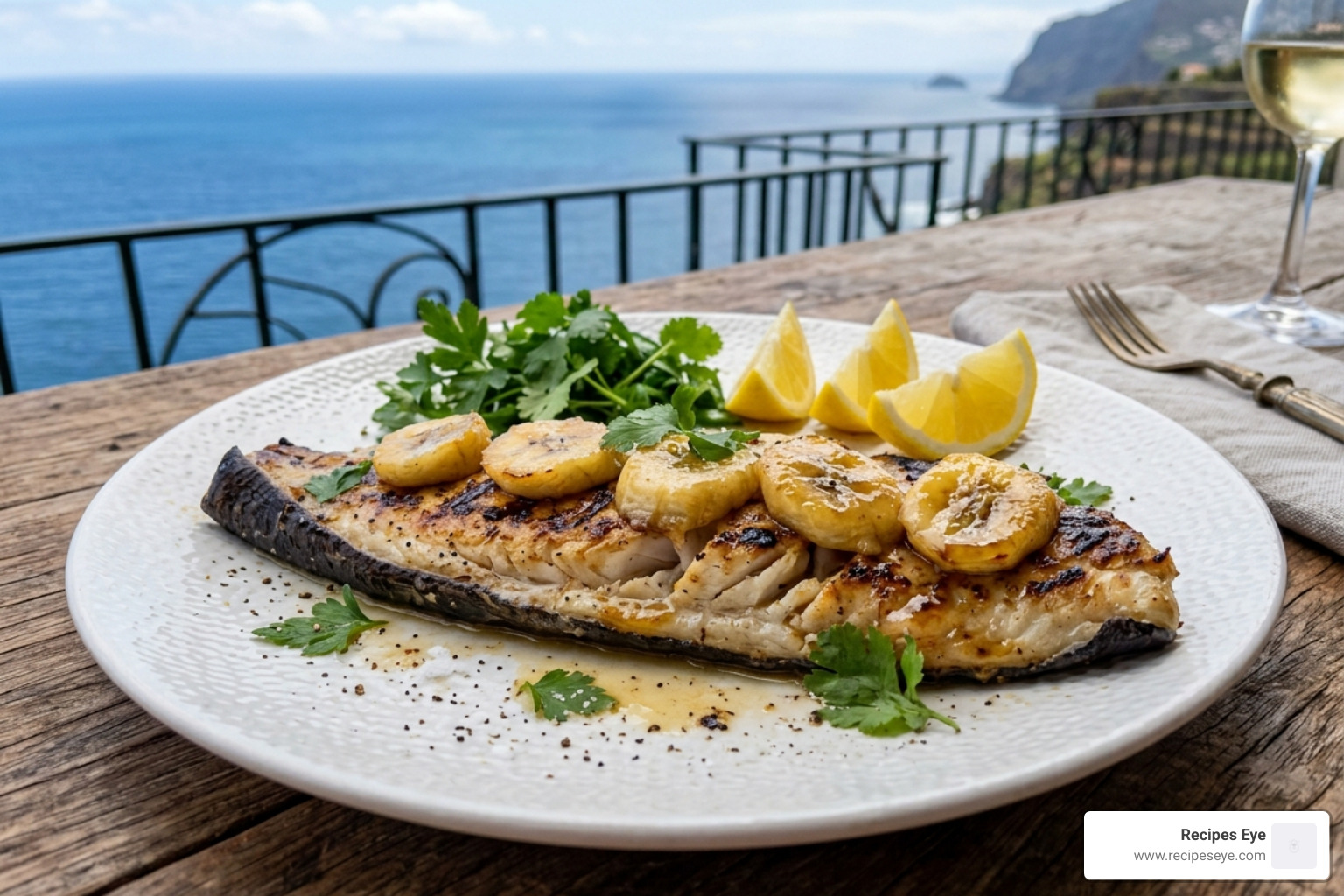
The black scabbard fish and tuna are the absolute protagonists. While the former is known for its delicate and white texture (despite its scary appearance when caught), the latter is firm and robust, often compared to a meat steak.
Here is a quick comparison between the two stars of the Madeiran sea:
| Characteristic | Tuna Steak | Scabbard Fillet |
|---|---|---|
| Texture | Firm and meaty | Soft and juicy |
| Flavor | Intense and marine | Mild and delicate |
| Classic Side | Fried Corn and Onion Sauce | Fried Banana and Passion Fruit |
| Season | More abundant in Summer | Available all year round |
Grilled Limpets and Coastal Seafood
You cannot say you know the traditional gastronomy of the island without trying the Grilled Limpets (Lapas Grelhadas). Served still sizzling in their own iron skillet, these limpets are seasoned with garlic butter and a touch of parsley. The final touch is given by the customer: a generous squeeze of fresh lemon that enhances the sea flavor.
In addition to limpets, the more adventurous should look for Cracas (Barnacles). These crustaceans look like pieces of rock but hide an intense flavor that tastes like pure seawater. They are boiled in salt water and eaten with the help of a small hook, being a mandatory snack to accompany a local beer or a glass of fresh white wine.
Tuna Steak and the Sea Tradition in Typical Madeira Food
Tuna has been fished in the waters of Madeira for centuries, being a pillar of the local diet. The Madeiran-style Tuna Steak is cut into generous slices and marinated in “molho de vilão” — a mixture of vinegar, olive oil, garlic, oregano, and pepper.
The steak is then fried and served with an abundant onion sauce. The mandatory side dish? Milho Frito (Fried Corn). The combination of the tuna’s firm texture with the smoothness of the fried corn creates a perfect balance that satisfies both the appetite and the palate. It is a nutritious meal that reflects the simplicity and abundance of the ocean that surrounds us.
Bread and Side Dishes: The Essence of the Island
In Madeira, the side dish is never “just a side dish.” Often, these elements steal the spotlight from the main meal. Bread, in particular, has a cultural importance that dates back to the first settlers.
Bolo do Caco is perhaps the most ubiquitous item on any Madeiran table. Despite the name, it is not a sweet cake, but a flat, round wheat bread. The name “caco” refers to the basalt stone where the bread was traditionally cooked over wood embers.
Side dishes that cannot be missing:
- Garlic Butter: The inseparable partner of Bolo do Caco, often with chopped parsley.
- Tomato and Onion Salad: Fresh, seasoned with local vinegar and oregano.
- Boiled Semilha: “Semilha” is the Madeiran term for potato, often served with the skin on.
- Boiled Cabbage: Frequently present in wheat soups or as a base for meat dishes.
Fried Corn and Homemade Bread
Milho Frito (Fried Corn) is one of the greatest curiosities of typical Madeira food. It all starts with “milho cozido,” a dense porridge of yellow cornmeal, water, salt, lard, and finely chopped cabbage. After cooling and solidifying, this porridge is cut into cubes and fried in very hot oil until it has a golden and crispy crust, while keeping the interior soft. It is the ideal partner for espetada or tuna.
Another gem of the local bakery is Pão de Casa (Homemade Bread), especially the one from Santana. This bread is made with a mixture of flour and sweet potato, which gives it a moist texture and a slightly sweet flavor. When fresh out of the wood oven, with a little butter, it is an almost transcendental experience.
Traditional Sweets and Drinks: The Taste of History
To end a Madeiran meal, or simply to accompany a coffee in the middle of the afternoon, the island’s confectionery offers dense and aromatic flavors, heavily influenced by the era of “White Gold” — sugar cane.
Madeira Honey Cake (Bolo de Mel) is the most emblematic sweet. Made with cane honey (molasses), flour, dried fruits (walnuts and almonds), and a complex mixture of spices such as cinnamon, cloves, and fennel. By tradition, the honey cake should not be cut with a knife, but broken by hand. It is a cake that can last for months (or even a year!) if well stored, becoming tastier over time.
Other delights include:
- Queijadas: Small sweets made of cottage cheese, eggs, and sugar, with a thin and crispy crust.
- Passion Fruit Pudding: A refreshing dessert that takes advantage of one of the island’s most abundant fruits.
- Broas de Mel: Crunchy cane honey cookies, perfect for dipping in coffee or wine.
Iconic Drinks: From Poncha to Madeira Wine
No gastronomic journey is complete without the right drinks. Poncha is the national drink of Madeira. The “Regional” version is made with sugar cane spirit (agricultural rum), bee honey, and fresh lemon juice, all mixed with the “caralhinho” (the traditional wooden stirrer). There are modern variations with passion fruit or tangerine, but the original remains the local favorite.
Madeira Wine is world-famous for its longevity and complexity. Depending on the grape variety, it can be dry (Sercial), medium-dry (Verdelho), medium-sweet (Boal), or sweet (Malvasia). It is a fortified wine that gains unique characteristics through the heating (estufagem) and aging process in barrels.
For those who prefer something non-alcoholic, Laranjada is an orange soda produced on the island since 1872, being a mandatory presence at any arraial festival, often mixed with wine to make the famous local “sangria.”
Frequently Asked Questions about Madeiran Gastronomy
What is the most famous dish in Madeira?
The most famous dish is the Madeiran Espetada. It consists of beef cubes grilled on laurel skewers over wood embers. It is a symbol of social gathering and the island’s hospitality, present in almost all traditional restaurants and popular festivals.
What is Bolo do Caco and how is it served?
Bolo do Caco is a traditional wheat bread, flat and round, cooked on a basalt stone (the caco). It is typically served hot, spread with garlic butter and parsley. It can be consumed as a starter or as a base for sandwiches, such as the famous “Prego no Bolo do Caco” (steak sandwich on bread).
Which drinks should I not miss?
The three mandatory drinks are Poncha (made with cane spirit, honey, and lemon), Madeira Wine (a historic fortified wine), and Ginja (cherry liqueur, especially famous in Curral das Freiras). For something more exotic, try the Nikita, a creamy mixture of vanilla ice cream, pineapple, and beer (or white wine).
Conclusion
Typical Madeira food is much more than sustenance; it is a celebration of the land, the sea, and the resilience of a people who knew how to transform simple ingredients into unforgettable banquets. From the espetada perfumed by laurel to the deep sweetness of the honey cake, each flavor tells a part of the history of this wonderful archipelago.
At Recipes Eye, we believe that food is the best way to get to know a culture. We hope this guide inspires you to explore the authentic flavors of Madeira on your next visit. Whether you are tasting a tuna steak by the sea or sharing a picadinho in a mountain tavern, Madeiran hospitality will always be present in every bite.
For more healthy and traditional recipes, keep following our blog and discover how to bring a bit of the world’s flavor to your kitchen!

