
Why Planning Your Travel Snacks Can Save You a Lot of Money
Travel snacks are one of the simplest ways to cut costs on any type of commute — whether by car, bus, or plane.
The best travel snacks include:
- Fresh fruits (apple, banana, tangerine) — easy to carry and no preparation needed
- Nut and seed mix — durable, nutritious, and requires no refrigeration
- Sprinkle cookies or homemade cheese bread — practical and tasty Brazilian classics
- Homemade cereal bars — ready in 10 minutes, makes up to 30 units
- Natural chicken and vegetable sandwich — nutritious and easy to pack
- Tuna or chicken wraps — high in protein and keeps you full for hours
- Carrot and cucumber sticks — light, refreshing, and mess-free
Buying food at gas stations, airports, or roadside diners is much more expensive than preparing something at home. And the quality is usually much lower.
The good news: you don’t need much time or culinary skill to put together an incredible travel lunchbox. With a little advance planning, you can eat well, save money, and keep your energy high throughout the journey.
Below you will find practical recipes, packaging tips, and options for all profiles — including children, long trips, and even airplane rules.
Best Travel Snack Options for Kids
Traveling with little ones requires a crisis-proof feeding strategy. Children do not handle long periods of fasting well, and the travel environment can be stressful. Therefore, children’s travel snacks should be familiar, nutritious, and easy to handle.

Food safety is our number one priority. An essential tip from experts is to cut fruits and vegetables (like grapes or carrot sticks) vertically instead of in rounds, which helps prevent choking in young children. Additionally, prioritize foods that don’t make a mess, avoiding excessive crumbs or sauces that could stain the car upholstery.
Good options include:
- Resilient fruits: Apples, pears, and bananas are classics. Tangerines already peeled into segments make life easier.
- Crunchy vegetables: Carrot sticks, cucumber, and cherry tomatoes are refreshing and fun to eat.
- Practical protein: Hard-boiled eggs are excellent energy sources. Keep them in the shell until consumption to ensure freshness.
- Liquid yogurts: They are easier to consume on the move than solids that require a spoon.
Don’t forget hydration. Water is essential and should always be at hand. Avoid processed juices with excess sugar, which can cause energy spikes followed by irritability. If you are looking for inspiration for dishes that little ones love, you can find more information about healthy recipes on our portal.
Practical and Healthy Recipes to Prepare at Home
Preparing your own travel snacks allows for total control over what you consume. Instead of the sodium and preservatives of processed foods, you gain fiber and nutrients. Furthermore, the domestic savings are significant: a batch of homemade cereal bars can cost a third of the price of individually purchased ones.
Below, we compare the difference between choosing homemade versus processed:
| Attribute | Homemade Snack | Processed Snack |
|---|---|---|
| Cost | Low (wholesale price of ingredients) | High (convenience profit margin) |
| Nutrition | Rich in fiber, protein, and good fats | Often high in sodium and sugars |
| Flavor | Fresh and customizable | Standardized and artificial |
| Control | You know exactly what you put in | Long and complex ingredient list |
Brazilian classics like pão de queijo (cheese bread) and chipa are perfect for trips. A simple cheese bread recipe with just 3 ingredients can yield 25 units in just 35 minutes. Chipa, which resembles cheese bread but has a firmer texture, also travels very well without crumbling.
For those seeking long-lasting energy, homemade cereal bars are unbeatable. They can be prepared in 10 minutes and provide portions for the whole family. The use of whole grains like oats is backed by scientific research pointing to benefits for digestion and maintaining satiety, which are essential when we are sitting for a long time.
Quick and No-Bake Travel Snacks
If time is short and you don’t want to turn on the oven in the middle of April 2026, there are “assembly” options that take less than 15 minutes:
- Energy Balls: Mix oats, peanut butter, honey, and chocolate chips. Roll into balls and refrigerate. They don’t need cooking and are super energetic.
- Nut and Date Mix: Combine almonds, Brazil nuts, and dried dates. It’s the “eternal” snack that doesn’t spoil and satisfies the sweet tooth.
- Natural Chicken Sandwich: Use whole-grain bread, seasoned shredded chicken, grated carrots, and a little cream cheese for binding. It’s practical and truly satisfying.
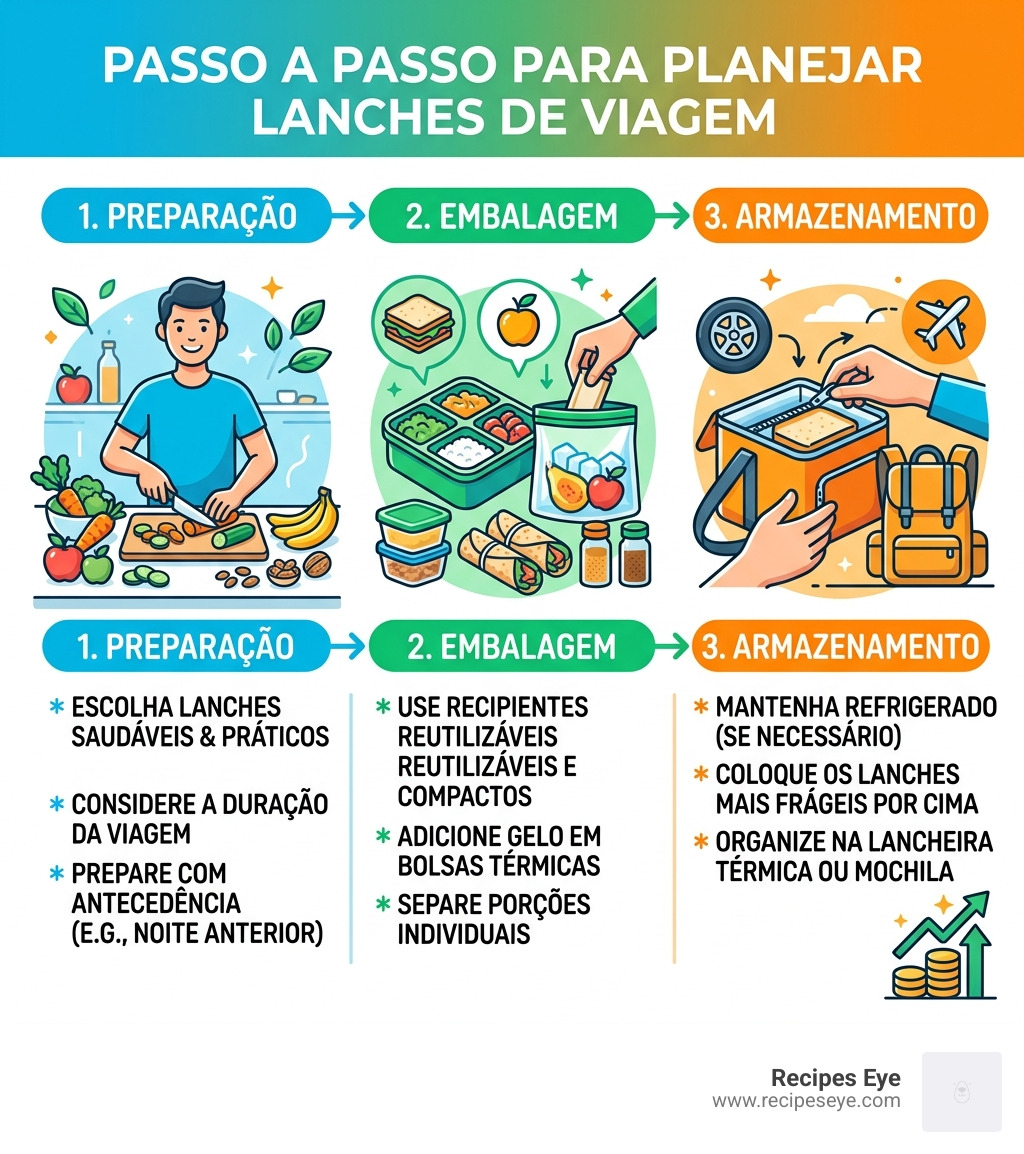
How to Pack and Preserve Your Food on the Road
It’s no use preparing delicious travel snacks if they arrive squashed or spoiled at the destination. Correct storage is the key to food safety.

- Airtight Containers: Use plastic or glass containers with rubber seals to prevent leaks, especially for salads or chopped fruits.
- Thermal Bags and Reusable Ice: Essential for sandwiches with mayonnaise, cheeses, or meats. Thermal insulation keeps the temperature safe for several hours.
- Plastic Wrap and Aluminum Foil: Plastic wrap is great for keeping natural sandwiches visually appealing and fresh. Aluminum foil protects burritos and warm sandwiches.
- Expiration Labels: If you did meal prep for a long trip, write down the preparation date.
Attention to airplane rules: For international flights (and many domestic ones), remember the 100ml rule. Pasty foods like hummus, yogurt, or jams can be considered liquids and barred at security if the container is large. Prioritize solid foods and transparent packaging to facilitate inspection. And never forget hygiene: carry hand sanitizer or wet wipes to clean your hands before eating.
Tips for Keeping Your Travel Snacks Fresh
To ensure durability at room temperature, choose “resilient” ingredients. Whole apples last much longer than sliced ones. Nuts and dry biscuits are practically indestructible. If taking items that need cold, organize the lunchbox by placing the most sensitive items against the reusable ice at the bottom of the thermal bag.
Nutritious Options for Long Journeys (Car, Bus, or Plane)
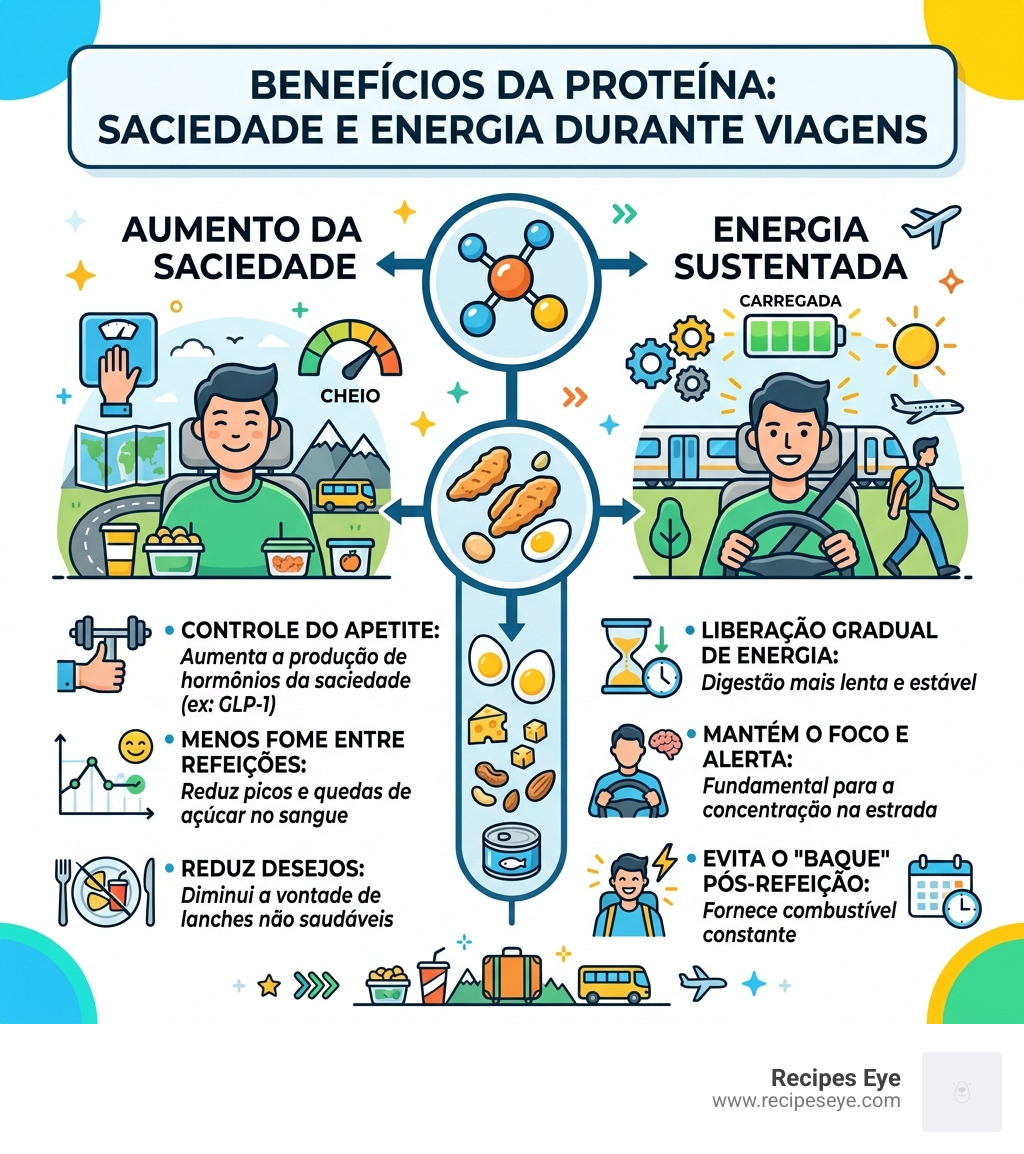
On trips that last all day, we need “pocket fuel.” The secret to not arriving exhausted and hungry is combining protein, complex carbohydrates, and good fats.
Chicken burritos and tuna wraps with avocado are smart choices. Protein is fundamental here; research on protein for satiety and energy indicates that adequate protein consumption increases satiety and keeps energy levels stable, avoiding that post-heavy-snack drowsiness.
A tuna wrap, for example, combines the omega-3 from the fish (great for concentration while driving) with the fiber of the whole-wheat tortilla. Meanwhile, a fruit salad with oats offers a mix of vitamins and minerals that refreshes and nourishes without weighing on the stomach.
Frequently Asked Questions about Travel Snacks
Doubts always arise when closing the suitcase. Here we answer the most common ones to help you plan your next adventure, whether it’s a cheap trip through Portugal or a car crossing through Brazil.
Which snacks do not need refrigeration for long trips?
The best options are dry foods: dried fruits (apricots, raisins), oilseeds (almonds, walnuts), whole-grain crackers, sunflower seeds, and hard-skinned fruits like apples and bananas (if consumed within 1-2 days). Homemade oat muffins and sourdough breads also hold up well out of the fridge for some time.
How to bring food on a plane without violating security regulations?
Follow the rules of aviation authorities: solid foods (sandwiches, cakes, fruits) are usually allowed without problems. Care should be taken with liquids and gels (soups, yogurts, sauces), which must be in containers of up to 100ml. Use transparent packaging and be ready to remove the food from your backpack at the X-ray if requested.
What is the best snack to avoid motion sickness during the journey?
For those who suffer from motion sickness, light and dry foods are ideal. Saltine crackers or whole-wheat toast help “settle” the stomach. Ginger is a powerful natural ally; taking cold ginger tea or cookies containing the root can help a lot. Avoid greasy, fried, or strong-smelling foods, and maintain constant hydration with small sips of water.
Conclusion
Planning your travel snacks is an act of care for yourself and your wallet. By choosing homemade and nutritious options, you ensure that the trip starts well before arriving at the destination, maintaining well-being and the readiness to enjoy every moment.
Here at Recipes Eye, we believe that a healthy lifestyle should be practical and delicious, no matter where you are. With these tips, you are ready to face any road or flight with a lunchbox full of flavor and health. Discover more amazing recipes at Recipes Eye and transform your next journey into an unforgettable gastronomic experience. Safe travels and bon appétit!

