
Do Integral ao Doce: 10 Receitas de Pão para Máquina
The Smell of Homemade Bread Starts Here
receitas de pão para máquina (bread machine recipes) are one of the most popular searches among those who want practicality without giving up homemade flavor.
Here is a quick summary of the most searched recipes:
- Basic Homemade Bread – basic cycle, 900g, medium crust
- French Bread – normal cycle, crunchy and soft texture
- Brioche Bread – sweet cycle, rich in eggs and butter
- Whole Grain Mix Bread – whole grain cycle, wheat flour + rye
- Sweet Bread – sweet bread cycle, 900g, light or medium crust
- Gluten-Free and Lactose-Free Bread – sweet starch, specific cycle
- Orange with Sweet Potato Bread – basic cycle, unique flavor
- Flaxseed Bread – whole grain cycle, rich in fiber
- Garlic and Olive Bread – basic cycle, great for accompanying meals
- Oat and Flaxseed Bread – whole grain cycle, nutritious and fluffy
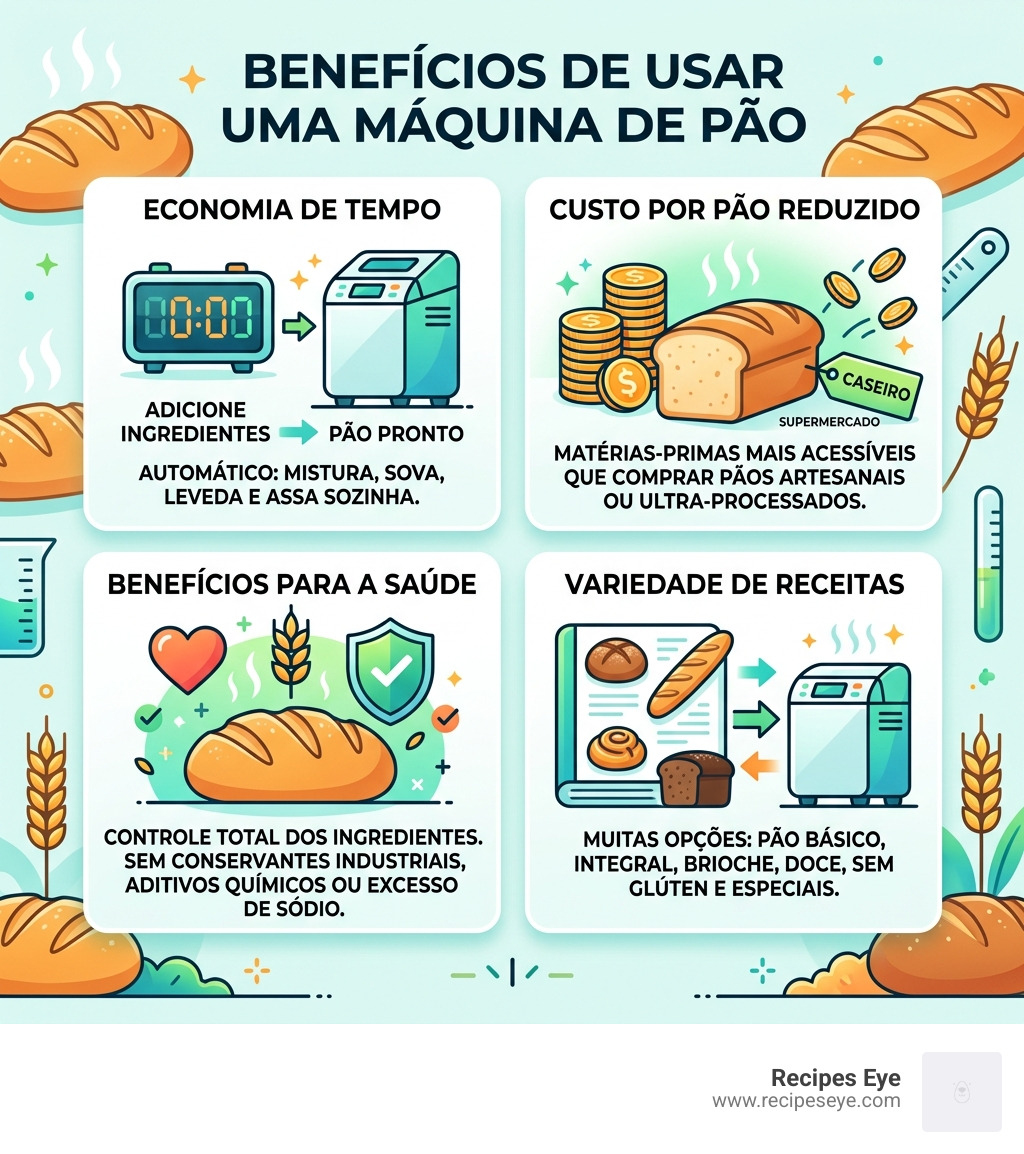
Nothing beats the smell of fresh bread coming out of the machine in the morning. It is simple, automatic, and much cheaper than buying at the bakery.
The bread machine does everything on its own: it mixes, kneads, ferments, and bakes. You just need to put the ingredients in the right order and choose the program.
With more than 150 recipes available for bread makers, the options range from the simplest daily bread to brioches, whole grain versions, and gluten-free options.
Complete Guide to Bread Machine Recipes
Mastering the automatic bread maker is an art that combines science and a little bit of patience. In 2026, with an increasingly routine, receitas de pão para máquina have become essential allies for those seeking a cleaner diet, free of industrial preservatives. Scientific studies indicate that homemade bread, especially whole grain, maintains a better glycemic index and offers more fiber than ultra-processed supermarket versions.

To ensure your bread doesn’t turn into a “brick,” we need to talk about the foundation of everything: technique.
Measurement and Precision
Unlike conventional cooking, where a “handful” of salt works, in the bread maker, precision is king. Always use the measuring cup and standard spoon that come with your appliance. When measuring flour, never pack it into the cup; place it gently with a spoon and level it with the back of a knife. If you have a kitchen scale, even better! The exact weight of the ingredients is the secret to the perfect texture.
The Importance of Ingredient Order
This is the number one mistake for beginners. The golden rule is: liquids first, solids second, yeast last.
- Liquids: Water, milk, eggs, oil, or melted butter go into the basket first.
- Solids: Flour, sugar, salt, and powdered milk come next. Cover the liquids well with the flour.
- Yeast: Make a small hole in the flour (without reaching the liquid!) and place the dry active yeast there.
This separation is vital, especially if you use the timer function to wake up to warm bread. If the yeast touches the liquid or salt prematurely, it will activate too early and the bread will not rise as it should.
10 Must-Try Recipes: From French Bread to Brioche
To make your choice easier, we have prepared a quick comparison between the most loved options in our community.
| Type of Bread | Average Time | Calories (slice) | Difficulty |
|---|---|---|---|
| Basic Homemade | 3h 00min | 135 kcal | Easy |
| French Bread | 3h 20min | 120 kcal | Medium |
| Brioche | 3h 30min | 180 kcal | Medium |
| Whole Grain (Mix) | 3h 40min | 110 kcal | Easy |
| Starch (Gluten-Free) | 2h 50min | 140 kcal | Hard |
receitas de pão para máquina: Classics and Brioches
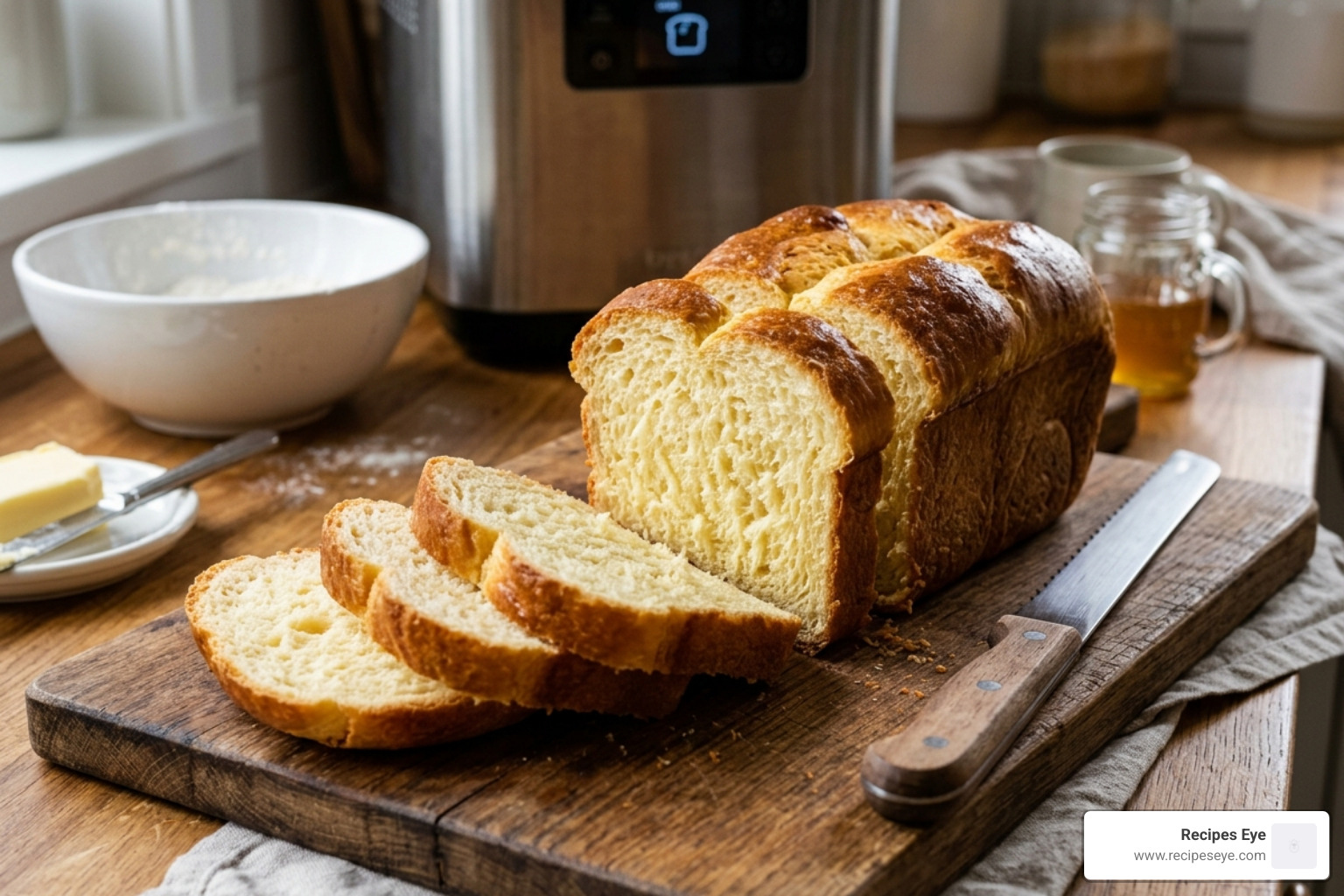
If you are looking for that bread that melts in your mouth, the secret lies in the fat and temperature. For a Brioche Bread worthy of a French bakery, use warm milk (not hot!) and high-quality butter. The “Sweet” cycle is the most suitable, as it allows for a longer fermentation to handle the weight of the eggs and sugar.
Another gem of receitas de pão para máquina is Kneaded Bread (Pão Sovado). It has that thin crust and a densely fluffy crumb. For a special touch, brush a mixture of egg yolk and milk during the last 10 minutes of baking (if your machine allows you to open it quickly).
More delicious ideas can be found at Recipes Eye
receitas de pão para máquina: Whole Grain and Special Options
Health improves when we replace white flour. Mix Bread, which combines T65 wheat flour with rye or oats, is an explosion of fiber. Scientific research reinforces that whole grains aid in digestive health and prolong satiety.
A recipe that is very successful is the Special Flaxseed Bread. It is nutritious, rich in omega-3, and surprisingly light. If you want a more aromatic bread, the Orange with Sweet Potato Bread is “divine,” as our readers say. The sweet potato provides a natural moisture that keeps the bread soft for days, while the orange brings an irresistible citrus scent.
Golden Tips for the Perfect Bread
Even with the best receitas de pão para máquina, small adjustments make the difference between a good bread and a spectacular one.
- The Dough Point: In the first 10 minutes of kneading, open the lid. The dough should form a soft, smooth ball that does not stick to the walls of the basket. If it is too sticky, add a tablespoon of flour. If it is crumbling, add a tablespoon of warm water.
- Liquid Temperature: Cold liquids slow down the yeast; very hot liquids kill it. The ideal is “baby bottle” temperature: warm to the touch of the wrist.
- Sift the Flour: This oxygenates the ingredient and ensures a much more airy crumb.
Common Troubleshooting
- Bread didn’t rise: Old yeast or water too hot. Check the expiration date!
- Sunken top: Excess liquid or excess yeast. The dough rises too much and the structure collapses in the heat.
- Very dense bread (heavy): Lack of liquid or too much flour.
Customization and Add-ins
Your machine probably has a “beep” that warns you when to add extras. It’s time to shine!
- Herbs and Cheeses: Rosemary, oregano, and parmesan cubes.
- Sweets: Chocolate chips, walnuts, or hydrated raisins.
- Bauru Bread: Try adding pieces of ham, cheese, and sun-dried tomatoes for a complete snack.
Storage and Preservation
Homemade bread does not have the preservatives of industrial bread, so it stays fresh for less time. But don’t worry, we have tricks!
- Cooling: Never cut the bread as soon as it comes out of the machine. The internal steam is still finishing “cooking” the crumb. Let it rest on a wire rack for at least 15 to 20 minutes.
- Cloth Bag: For consumption on the same day, a cloth bag keeps the crust crunchy.
- Ziploc: To maintain softness for up to 3 days, use airtight plastic bags after the bread has completely cooled.
How to keep freshness longer
If you live alone or won’t eat everything quickly, sliced freezing is the best solution. Cut the bread, place it in a freezer bag, and remove only the slices you are going to eat. They can go straight to the toaster or oven, recovering their original freshness in minutes. Avoid the refrigerator, as it removes moisture from the bread, leaving it dry and hard.
Frequently Asked Questions
Why didn’t my bread rise in the machine?
Usually, the culprit is the yeast. It may be inactive or have come into premature contact with salt or hot liquids. Another common reason is the use of chemical leavening (baking powder) instead of dry active yeast (bread yeast).
Can I adapt machine recipes for a conventional oven?
Absolutely! Use the machine only on the “Dough” cycle. It will knead and do the first fermentation for you. Then, remove the dough, shape it in a common bread pan, let it rise again for 40 minutes, and bake in a preheated oven at 180°C until golden.
How to make gluten-free and lactose-free bread in the bread maker?
There are specific receitas de pão para máquina that use sweet starch, rice flour, and xanthan gum to replace the gluten structure. For lactose, replace milk with water or plant-based milks (coconut, almond) and butter with coconut oil or olive oil. Always use your machine’s “Gluten-Free” cycle, which has different kneading and resting times.
Conclusion
Having a bread maker at home is a one-way street to a healthier and more pleasurable lifestyle. With the right receitas de pão para máquina, you take control of what your family consumes, save money, and even transform your kitchen into a true artisanal bakery.
Whether it’s a rustic whole grain bread for breakfast or a buttery brioche for an afternoon snack, the practicality of 2026 technology is in your favor. Start with the basics, understand how your machine behaves, and soon you will be creating your own variations.
Explore more nutritious recipes and health tips at Recipes Eye

