
Guia prático para gastar menos no supermercado
How to really save at the supermarket (without giving up what you need)
How to save at the supermarket is simpler than it seems — and it starts long before you grab the cart.
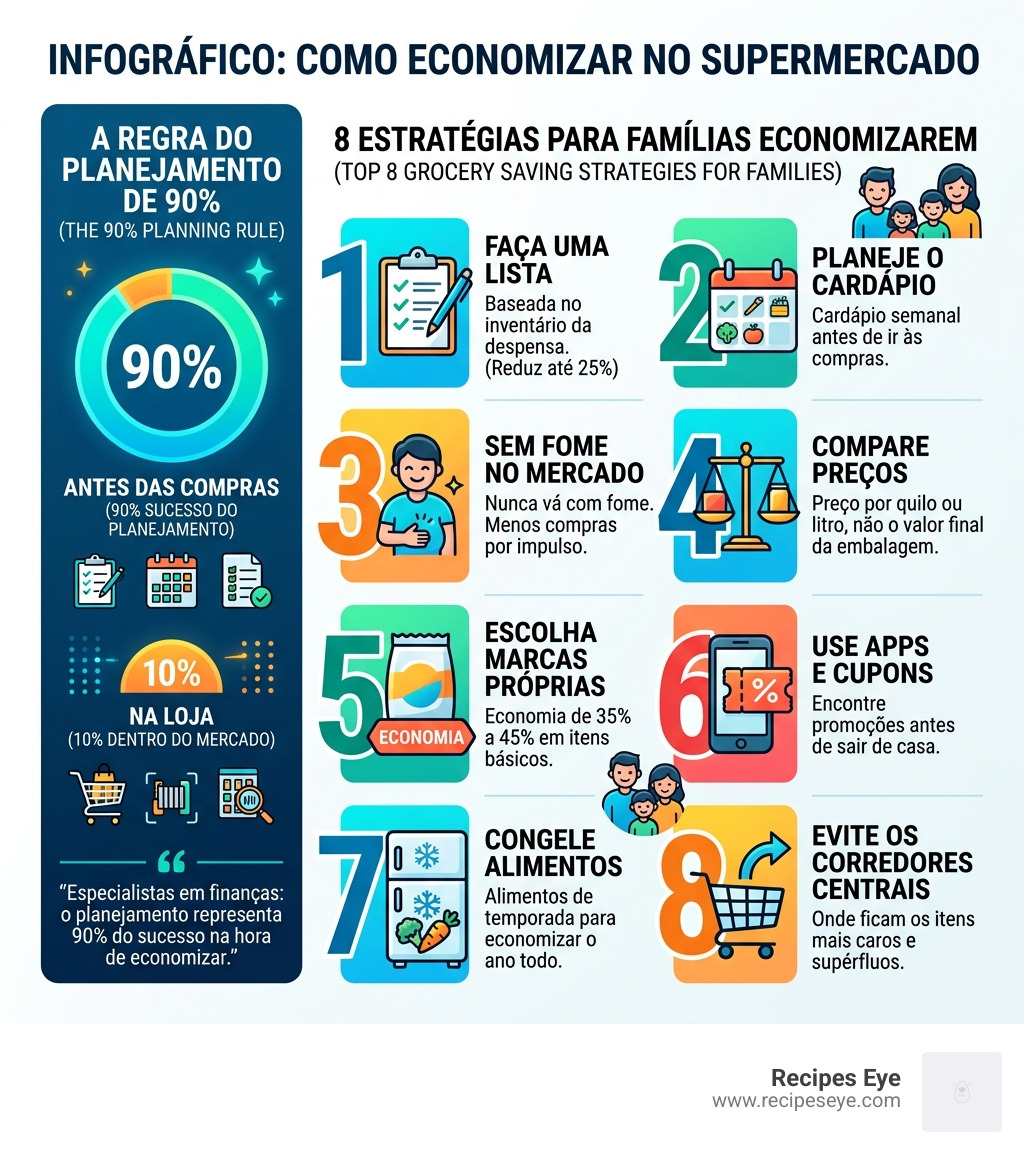
Here is a quick summary of the most effective strategies:
- Make a list based on what you already have at home (can reduce spending by up to 25%)
- Plan the weekly menu before going shopping
- Never go to the supermarket hungry — impulse buys increase spending
- Compare the price per kilo or liter, not the final package price
- Choose store brands for basic products (savings of 35% to 45%)
- Use apps and digital coupons to find deals before leaving home
- Freeze seasonal foods to save all year round
- Avoid the center aisles where the most expensive and tempting products are located
Food prices continue to rise in 2026. For many families, the supermarket bill is one of the largest monthly expenses — and also one of those with the most room for reduction.
The problem is that most people enter the store without a plan. And supermarkets are designed exactly for that: to make you spend more than you intended. Expensive products are at eye level. Essential items are at the back of the store. Promotions seem advantageous but aren’t always.
The good news? With small habit changes, it’s possible to save hundreds of dollars per month — without going without and without giving up quality.
As home finance experts say: planning represents 90% of success when it comes to saving at the supermarket. The rest happens inside the store, with attention and awareness.
Planning is the key to how to save at the supermarket
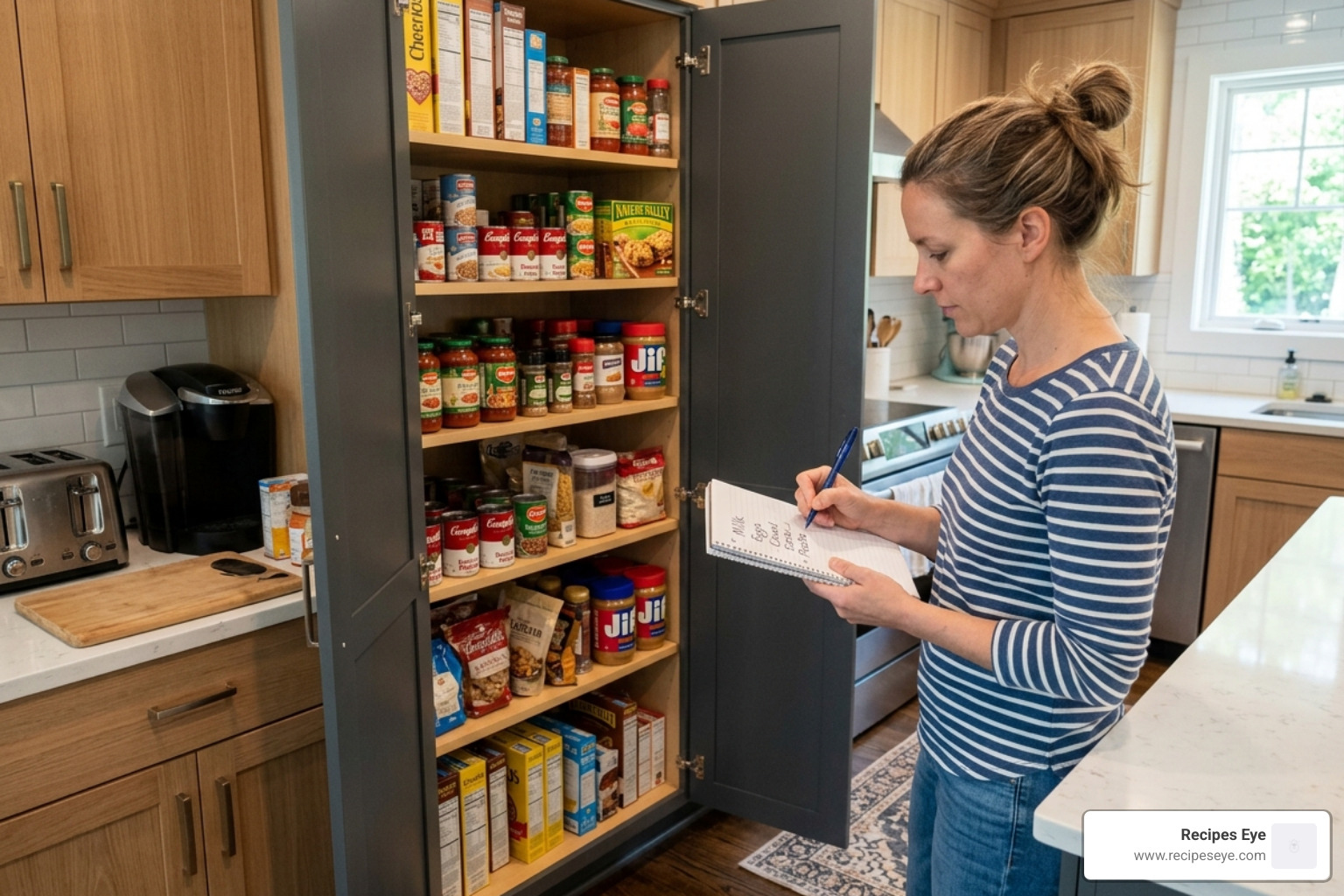
We know that the routine is busy, but if you want to see your money go further, the first step isn’t going to the market, but looking inside your own kitchen. Success in how to save at the supermarket starts with a good inventory.
The inventory and the magic list
Did you know that checking your pantry before leaving can reduce your weekly bill by about $50? Often, we buy a third bag of rice simply because we didn’t see one hidden at the back of the cupboard.
Making an efficient shopping list is our secret weapon. Studies show that using a list can save 25% of monthly expenses, which represents about R$ 100 to R$ 500 depending on the size of your family. For it to work, organize it by categories (cleaning, produce, dairy). This prevents you from wandering back and forth, falling into unnecessary temptations.
The impact of hunger on the budget
Going to the supermarket hungry is one of the biggest mistakes we can make. When we have an empty stomach, everything looks delicious and essential. Science explains: hunger increases our impulsivity, leading us to choose ready-made, high-calorie, and generally more expensive products. Eat a healthy snack before leaving home. Your wallet will thank you.
For an even more detailed guide on this initial stage, we recommend reading this practical guide to spending less.
Essential items that cannot be missing
To avoid extra trips to the market (which always result in unforeseen expenses), keep these basic items always in stock:
- Rice and beans (buying in larger bulk usually pays off).
- Olive oil and oils.
- Natural seasonings (garlic, onion, dried herbs).
- Eggs (a versatile and economical protein).
- Oats and whole-grain flours.
Smart strategies inside the aisle
Once inside the store, the challenge is to resist marketing traps. Supermarkets are masters of consumer psychology. Have you noticed that basic items, like milk and bread, are always at the back? This is to force you to cross all the aisles full of offers.

The shelf rule: look up and down
The products the supermarket most wants to sell — usually the most expensive ones or famous brands that pay for exposure — are positioned exactly at eye level (between 1.20m and 1.60m). To know how to save at the supermarket, you need to train your neck: cheaper brands and wholesale options usually stay on the top shelves or very close to the floor.
The secret of price per unit of measure
Don’t be fooled by the size of the package. Sometimes, an “economy pack” costs proportionally more than the individual package. The only way to know the truth is by checking the price tag on the shelf, which by law must display the value per kilo (kg), liter (L), or unit.
| Product | Total Price | Weight/Qty | Price per Kg/Unit |
|---|---|---|---|
| Rice Brand A | R$ 25.00 | 5 kg | R$ 5.00 / kg |
| Rice Brand B | R$ 6.50 | 1 kg | R$ 6.50 / kg |
| Laundry Detergent X | R$ 18.00 | 1.6 kg | R$ 11.25 / kg |
| Laundry Detergent Y | R$ 10.00 | 800g | R$ 12.50 / kg |
Promotions: 3×2 or 50% off the second unit?
We need to be critical of offers. A “Buy 3, Pay 2” is equivalent to a 25% discount per unit. Similarly, “50% off the second unit” also represents 25% total savings. The best offer is usually “Buy 2, Pay 1” (real 50% discount). Only take it if it’s something you actually use and that won’t expire quickly.
For strategies that go beyond the obvious, it’s worth checking this article on supermarket saving strategies.
Store brands and technology to reduce the bill
In 2026, technology is our greatest ally. In the past, we lost hours flipping through offer newspapers. Today, everything is in the palm of our hand.
Choosing store brands for how to save at the supermarket
Many people still have a prejudice against “white labels” (those that carry the supermarket’s name). However, these brands can be 35% to 45% cheaper than market leaders.
Often, the manufacturer of the famous brand is the same one that produces the store brand! Check the label: if the manufacturer is a well-known company, the quality will be very similar. It is estimated that swapping famous brands for store brands on basic items can generate annual savings of up to 2,500 euros (or more than R$ 10,000). Start by testing cleaning products and pantry items like salt, sugar, and flour.
Apps and loyalty programs: how to save at the supermarket in the digital age
If you don’t use your favorite supermarket’s app, you’re losing money. These apps offer:
- Exclusive discounts: Prices that only appear when you activate the coupon in the app.
- Cashback: Money back to use on your next purchase.
- Digital flyers: Compare prices between chains without leaving home.
We recommend using price comparison apps to identify which market in your region has the most advantageous “Green Tuesday” or “Meat Thursday.” Small actions like this can help you save R$ 1000 at the supermarket with planning.
Reducing waste and saving on proteins
Animal protein is usually the most expensive item on the list. Therefore, learning to substitute it or buy it intelligently is vital to knowing how to save at the supermarket.
Alternative proteins and “ugly” vegetables
We don’t need to eat meat every day. Eggs, beans, lentils, and chickpeas are excellent and much cheaper protein sources. Additionally, look for “imperfect” vegetable sections. Many chains sell fruits and vegetables with small spots or irregular shapes with discounts of up to 40%. Nutritionally, they are identical to the “pretty” ones.
The FIFO method and strategic freezing
Food waste is a silent “leak” in your budget. A family of four can lose up to R$ 1,500 per year throwing food away. Use the FIFO (First In, First Out) method: organize your fridge by placing older items in front to be consumed first.
The freezer is your best friend. See a sale on meat or seasonal vegetables? Buy in larger quantities and freeze in individual portions. This can save about R$ 2,000 annually.
For more organization tips, see these 10 tips for saving at the supermarket.
Extra tips for cleaning products
Avoid buying a product for every function. Most of the time, a good neutral detergent, white vinegar, and baking soda solve 80% of house cleaning for a fraction of the price of scented “multi-purpose” products.
Frequently asked questions about supermarket savings
What are the best days and times to find deals?
Generally, supermarket chains have fixed calendars. Tuesdays and Wednesdays are usually produce days (“Green Tuesday”). Meat promotions usually occur on Thursdays or Fridays. A pro trick: go to the supermarket near closing time. Bakery items and meats close to expiration (but still great for immediate consumption or freezing) usually receive aggressive last-minute discount tags.
What is the real impact of saving at the supermarket on the monthly budget?
Depending on the city and habits, savings can range from R$ 300 to more than R$ 1,000 monthly. In a year, this can mean the difference between being in debt or having the money for a family trip. Beyond the financial value, you gain domestic predictability and reduce the stress of not knowing if the money will last until the end of the month.
What is the simple checklist for beginners to save on their next purchase?
If you want to start today, follow this checklist:
- Eat before leaving: Never shop hungry.
- Take the list: And promise yourself you won’t stray from it.
- Look down: Search for cheaper brands on the lower shelves.
- Check the expiration date: Avoid buying something that will spoil in two days if you won’t use it today.
- Check the receipt at the checkout: Mistakes happen, and sometimes the shelf price isn’t what goes through the system.
Conclusion
Learning how to save at the supermarket is not about deprivation, but about freedom. When we stop spending impulsively on items we don’t need or on brands that charge only for the name, there is money left for what really matters: health, leisure, and our family’s future.
At Recipes Eye, we believe that eating well and nutritiously should be accessible to everyone. With a little planning and the right strategies, you can transform your shopping routine and ensure a full table while spending much less.
Ready to put these tips into practice? Start today by reviewing your pantry and planning your next meal with awareness!
Check out nutritious and economical recipes on our website

